Artwork
Two boys and a girl standing on a carpet.
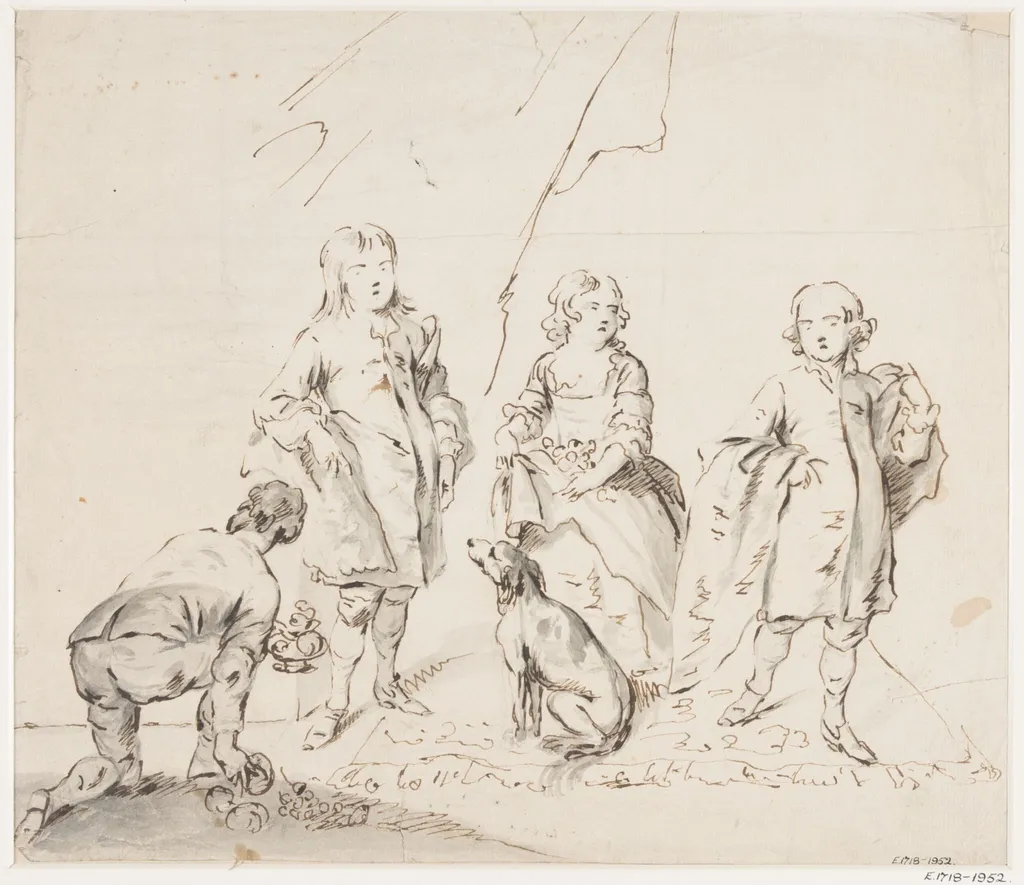
Two boys and a girl standing on a carpet. is a drawing by John Vanderbank. It dates from 1750 and is held in the collection of the Victoria and Albert Museum. This drawing presents three children positioned on an ornate carpet, accompanied by two dogs.
About this work
Overview
This drawing presents three children positioned on an ornate carpet, accompanied by two dogs. Executed with swift, confident strokes, the work captures a moment of informal interaction, with figures arranged in a shallow, stage-like space. The composition balances spontaneity with careful observation, suggesting its role as a preparatory study rather than a finished work.
Subject & Meaning
The scene centers on three children engaged in quiet activity: one boy kneels to offer fruit, another stands idly, while the girl attends to a seated dog.
The scene centers on three children engaged in quiet activity: one boy kneels to offer fruit, another stands idly, while the girl attends to a seated dog. The presence of the animals and the domestic setting imply a genre subject, possibly exploring themes of childhood, responsibility, or social hierarchy within a household. The absence of adult figures directs focus to the children’s gestures and expressions.
Technique & Style
The artist employs loose, economical lines to define forms, with minimal detail reserved for the dogs’ fur and the carpet’s texture. Cross-hatching appears in select areas to model shadows and drapery, while the children’s faces remain broadly sketched, prioritizing posture over individuality. The handling of light and volume reflects a practiced ease, characteristic of studies intended to resolve compositional or figural challenges.
History & Provenance
The drawing’s function as a preparatory study suggests it was created in anticipation of a larger, more refined work in another medium. Its current ownership and early history remain unrecorded, though its style and subject align with European genre traditions of the 17th or 18th century. Such studies typically circulated within artists’ studios before entering private collections or institutional holdings.
Context
Works of this kind emerged from a period in which artists frequently executed detailed drawings to test compositions before committing to paint. The inclusion of everyday scenes—children, animals, and household objects—reflects the era’s interest in domestic life as a subject for art. The drawing’s rapid execution and focus on gesture over detail situate it within the broader practice of academic study.
Artist & collection


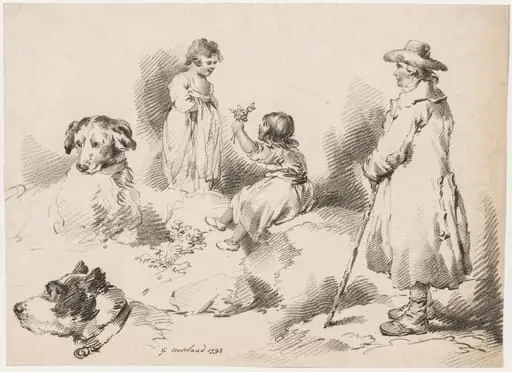 Studies of Children (Two Little Girls); Two Dogs; A Man
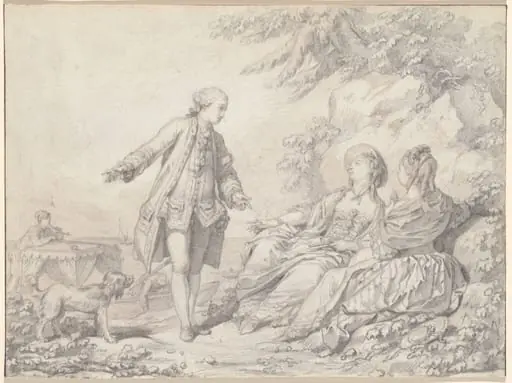 A Man and Two Women on a Rocky Shore
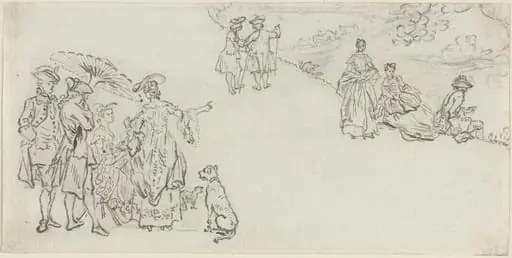 Ladies and Gentlemen in a Country Park
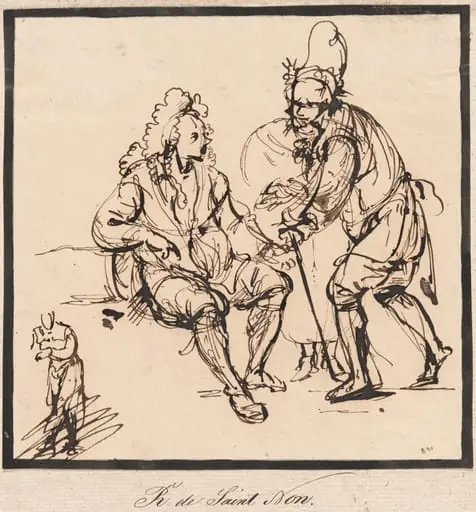 A Gardener and a Gentleman
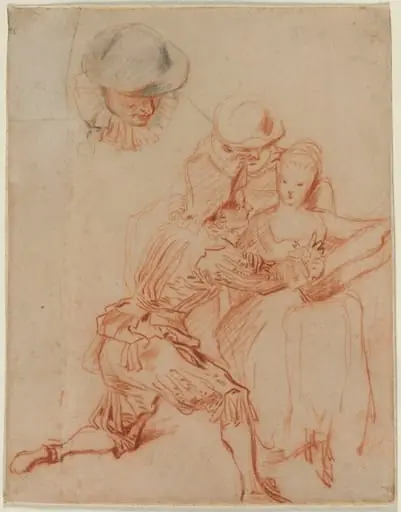 Study for "The Romancer" (Le Conteur)
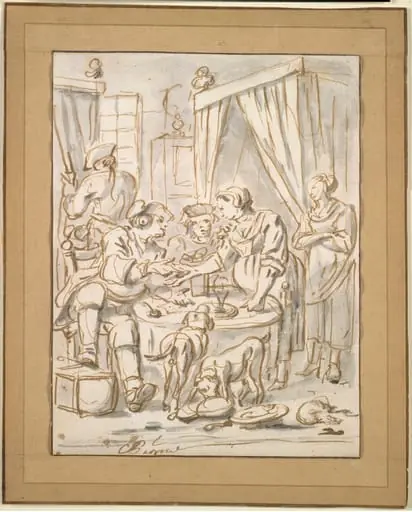 Interior Scene with Soldiers at a Table
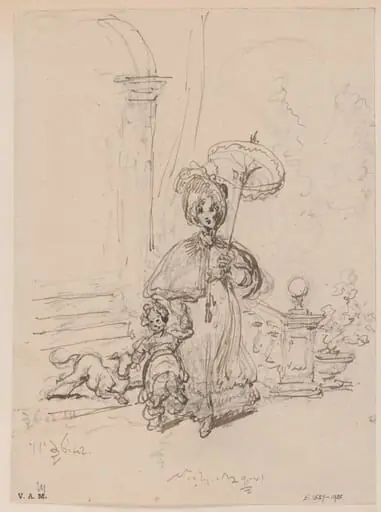 A Western woman with a child and a dog
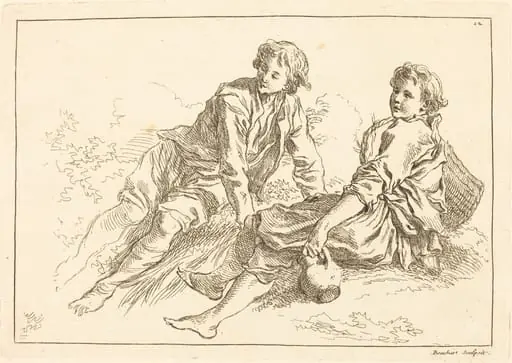 Reclining Shepherd Boys
 Petticoat Lane
 Figure Studies including Standing Boy Holding a Pitcher
 Party with Six Ladies and the Artist
 Group of Six Children (recto)