Artwork
Tamerlan's Doors
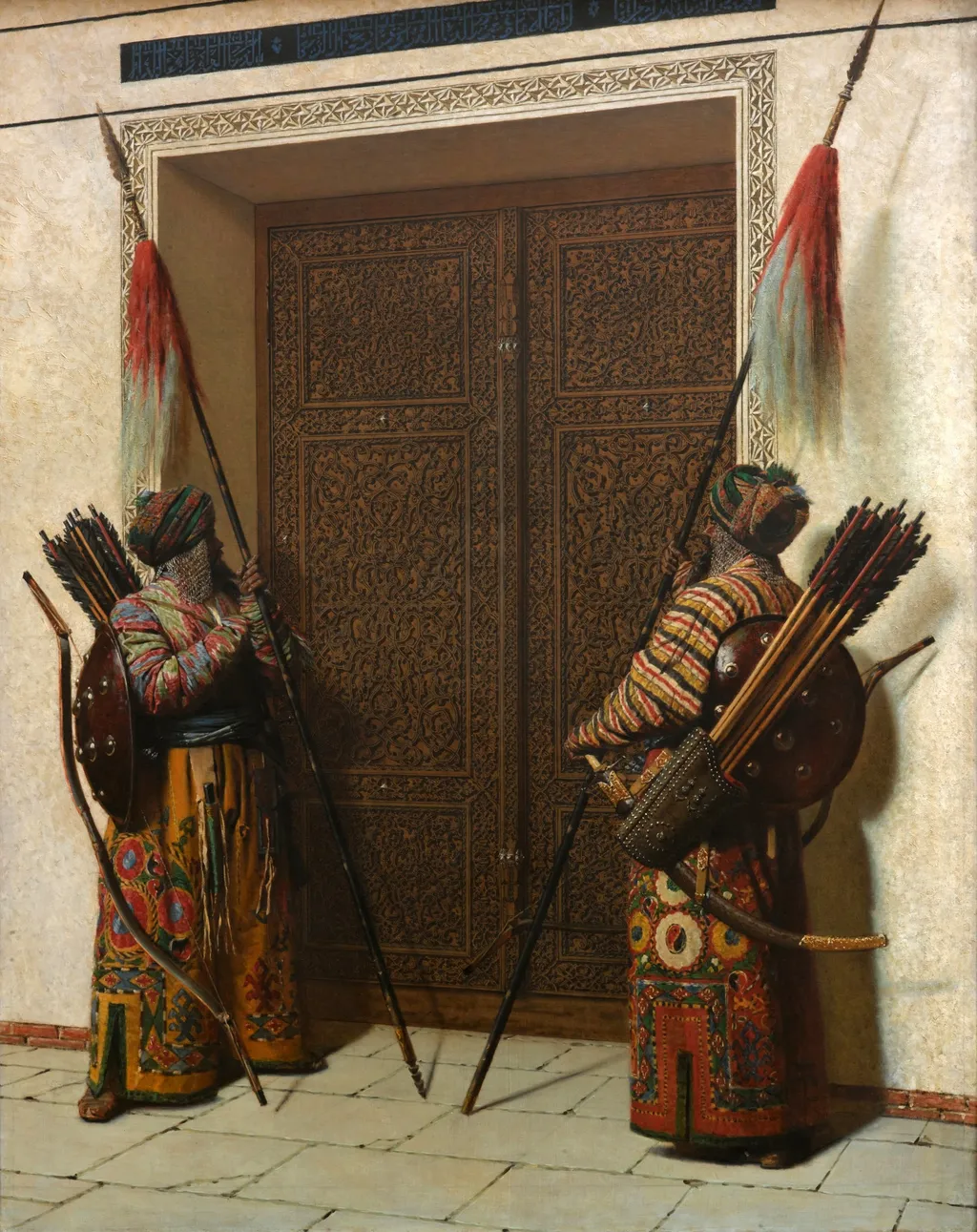
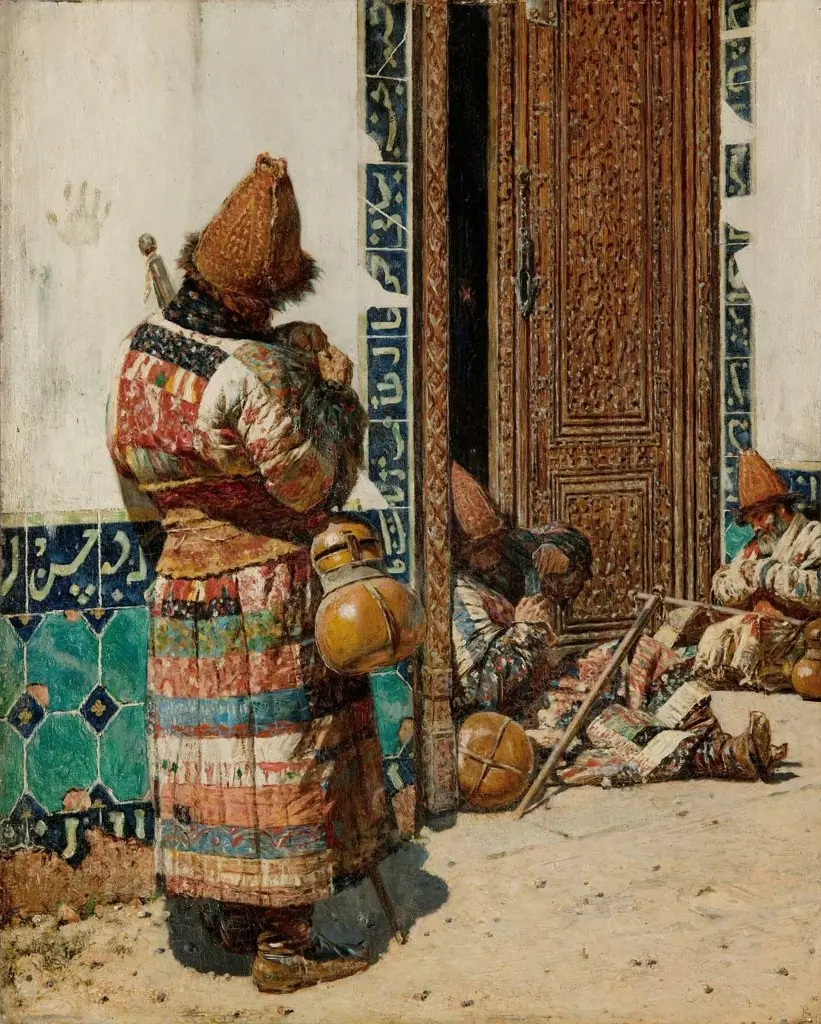
Tamerlan's Doors is an oil painting by the Realist artist Vasily Vereshchagin. It dates from 1872 and is held in the collection of the Tretyakov Gallery.
About this work
Overview
The work is part of a broader series in which Vereshchagin documented historical and military scenes from Central Asia, informed by his own travels.
Vasily Vereshchagin’s 1872 oil painting *Tamerlan’s Doors* presents a quiet, solemn moment before a monumental gateway. Executed in the realist style, it avoids narrative spectacle in favor of atmospheric stillness. The work is part of a broader series in which Vereshchagin documented historical and military scenes from Central Asia, informed by his own travels. Its restrained composition and muted drama reflect his interest in the weight of history rather than its violence.
Subject & Meaning
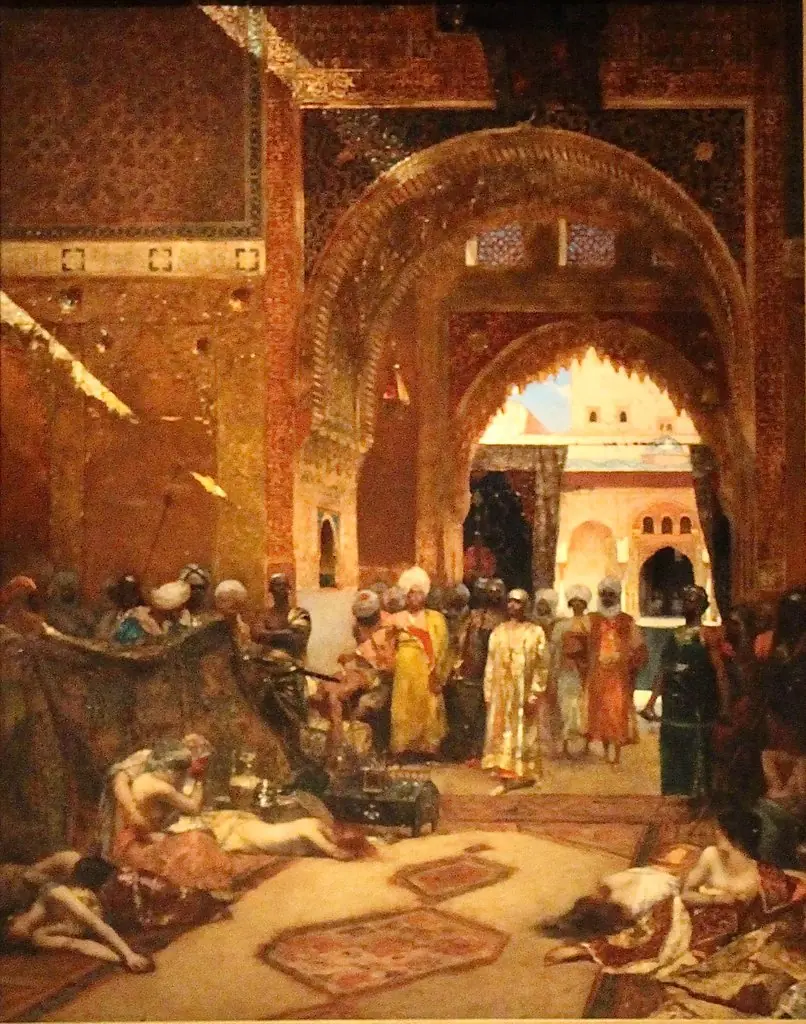
Two figures, clad in Central Asian garments and armed with spears and bows, stand before an elaborately carved door. Their faces are turned away or shadowed, obscuring identity and emotion. The door, adorned with Arabic inscriptions and geometric patterns, suggests a portal to power or sacred space. The absence of action or expression invites contemplation of authority, legacy, and the anonymity of those who guard it, evoking the quiet endurance of imperial symbols.
Technique & Style
Vereshchagin employs chiaroscuro to model form and direct focus toward the door’s intricate carvings and the figures’ silhouettes. The oil paint is applied with precise, controlled brushwork, emphasizing texture in fabric, metal, and stone. Color is subdued, dominated by earth tones and deep shadows, reinforcing the painting’s somber tone. The composition’s balance and spatial depth reflect a commitment to observational accuracy over theatricality.
History & Provenance
Painted during Vereshchagin’s travels through Central Asia, the work was completed in 1872 and later acquired by Pavel Tretyakov for his collection of Russian art. Unlike some of Vereshchagin’s more confrontational war scenes, this piece avoided public controversy and was exhibited during his lifetime. It has remained in the Tretyakov Gallery since its acquisition, preserved as part of the gallery’s core holdings of 19th-century Russian realism.
Context
Vereshchagin painted this during a period of Russian imperial expansion into Central Asia. His travels were partly sponsored by the state, yet his depictions often resisted glorification. *Tamerlan’s Doors* reflects a fascination with the region’s architectural heritage and the lingering presence of Timurid power. Rather than depicting battle, it isolates a moment of stillness, suggesting the quiet persistence of cultural memory amid political change.
Legacy
The painting endures as a quiet example of Vereshchagin’s ability to convey historical gravity without spectacle. It stands apart from his more violent war scenes, offering instead a meditation on monumentality and absence. While less widely known than his battle paintings, it remains a significant work in the Tretyakov collection, illustrating the artist’s nuanced engagement with empire, identity, and the weight of the past.
Artist & collection
Artist
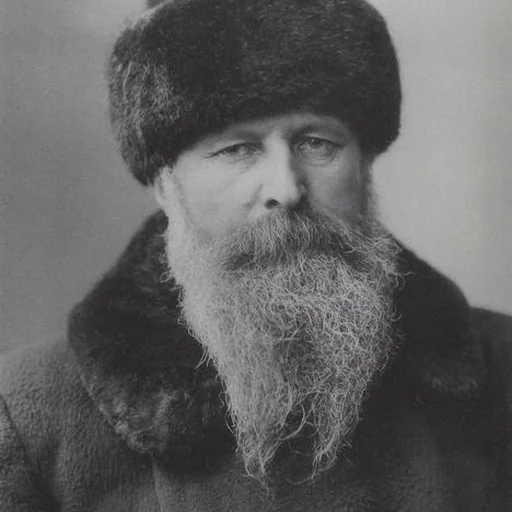
Vasily Vasilyevich Vereshchagin (Russian: Васи́лий Васи́льевич Вереща́гин; 26 October 1842 – 13 April 1904) was a Russian painter, war artist, and traveller.

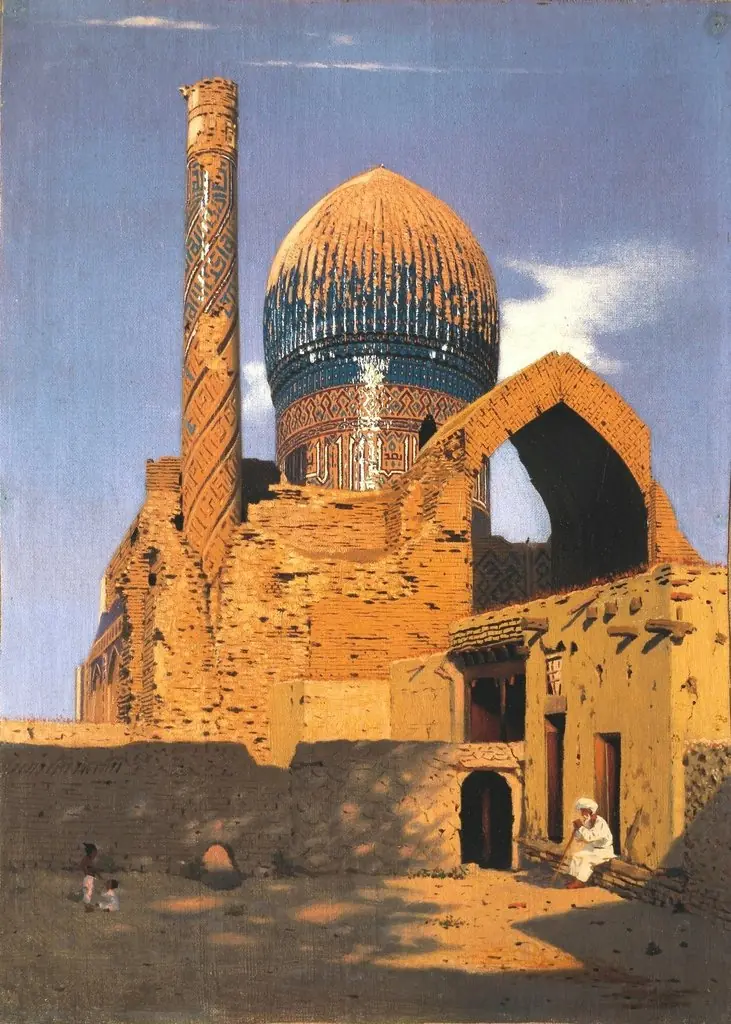
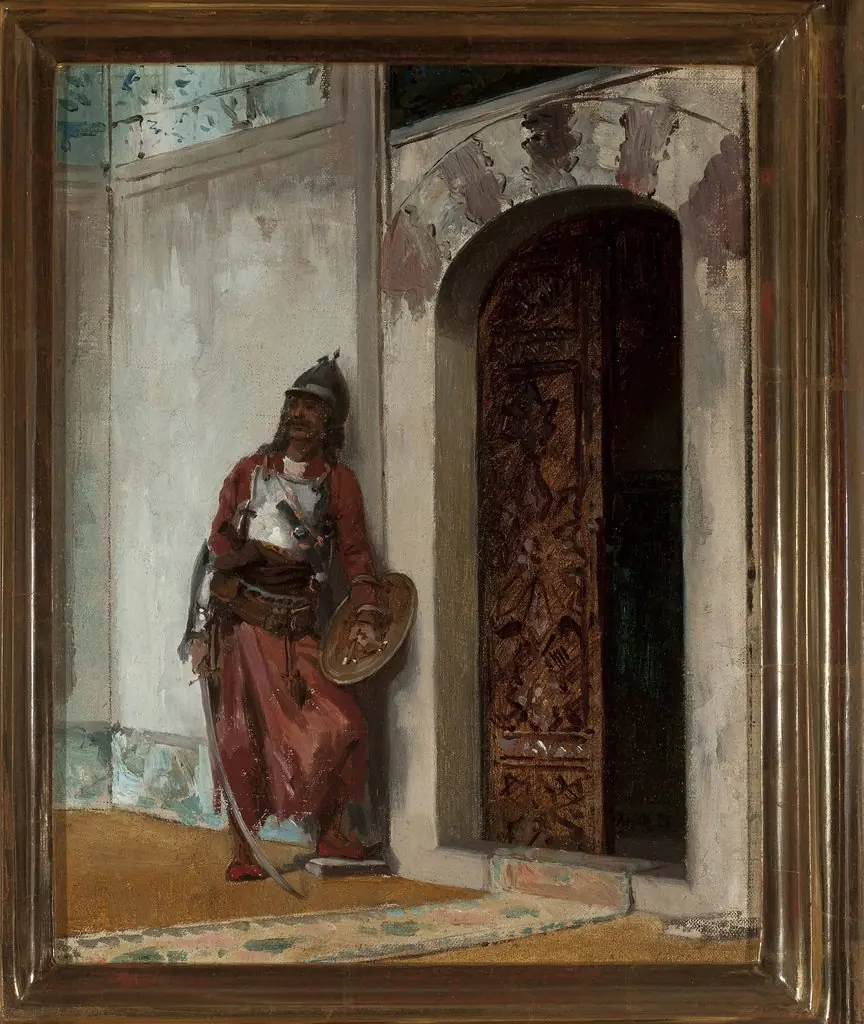 Guard at the entrance to the seraglio
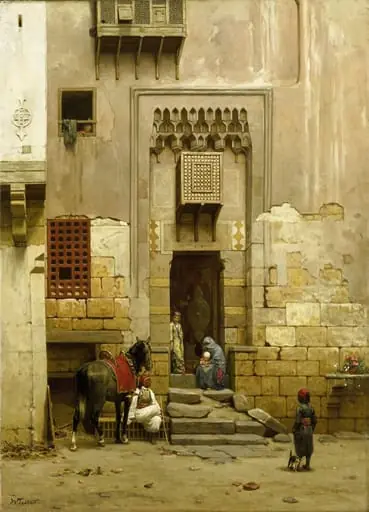 The Courtyard of a house in Cairo
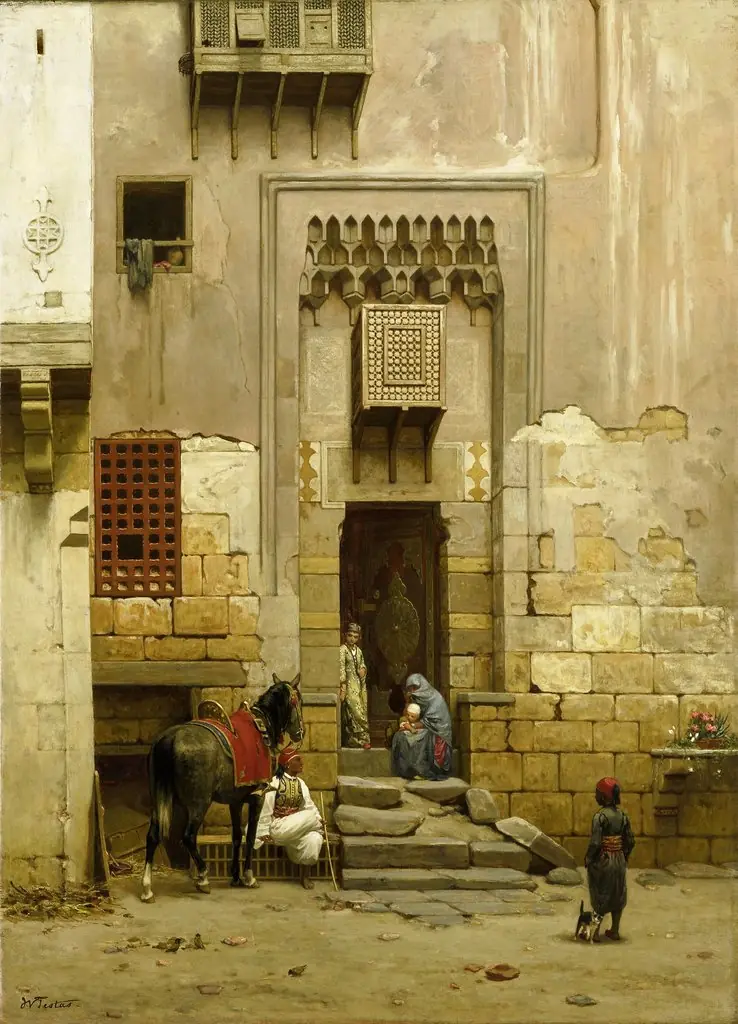 The Courtyard of a house in Cairo
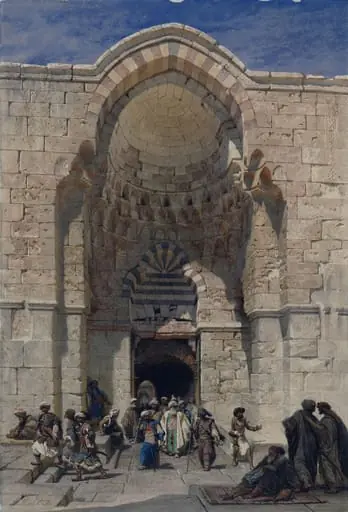 The Gate called Bab-el-Khataneen, at Jerusalem
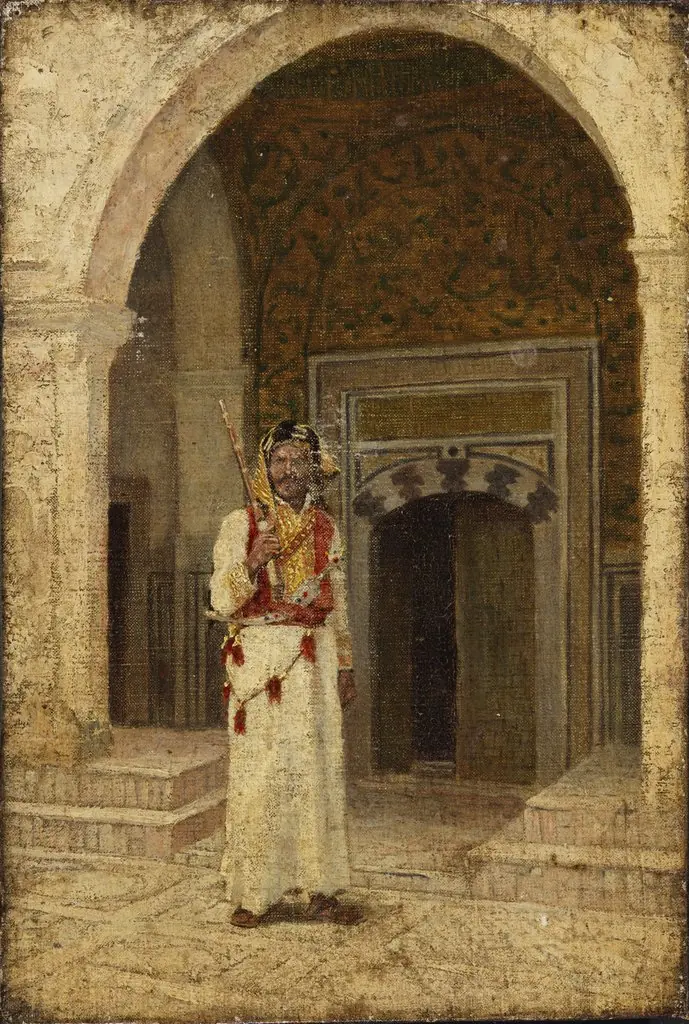 North African Man
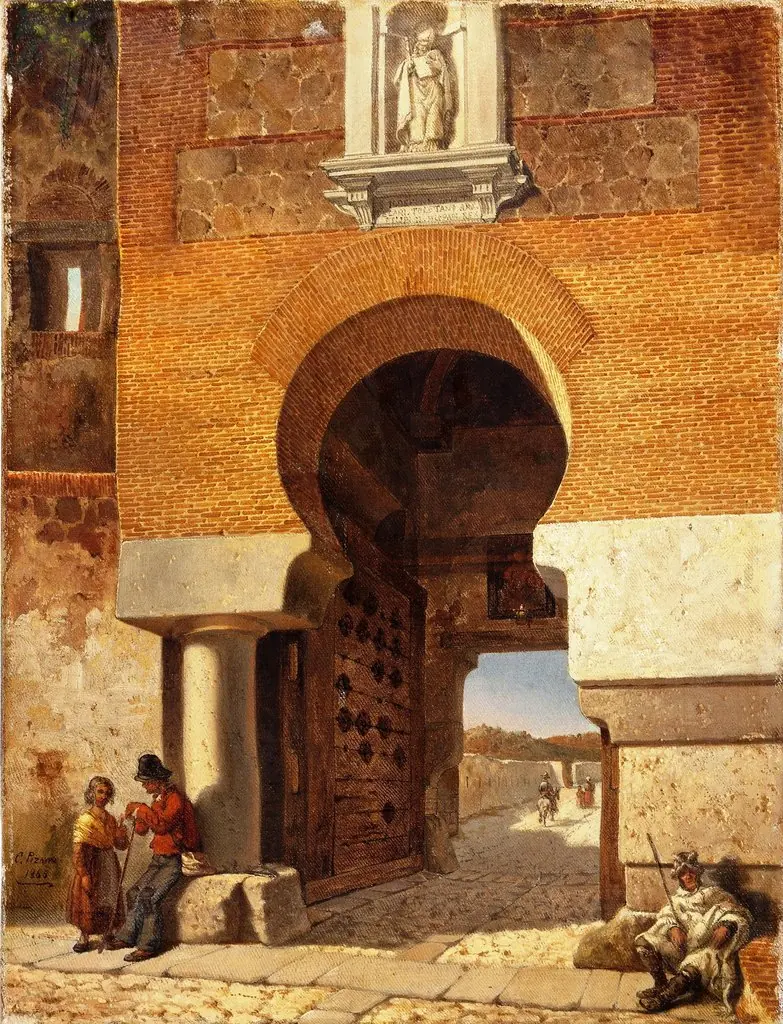 Puerta árabe de la plaza de armas en el puente de Alcántara de Toledo
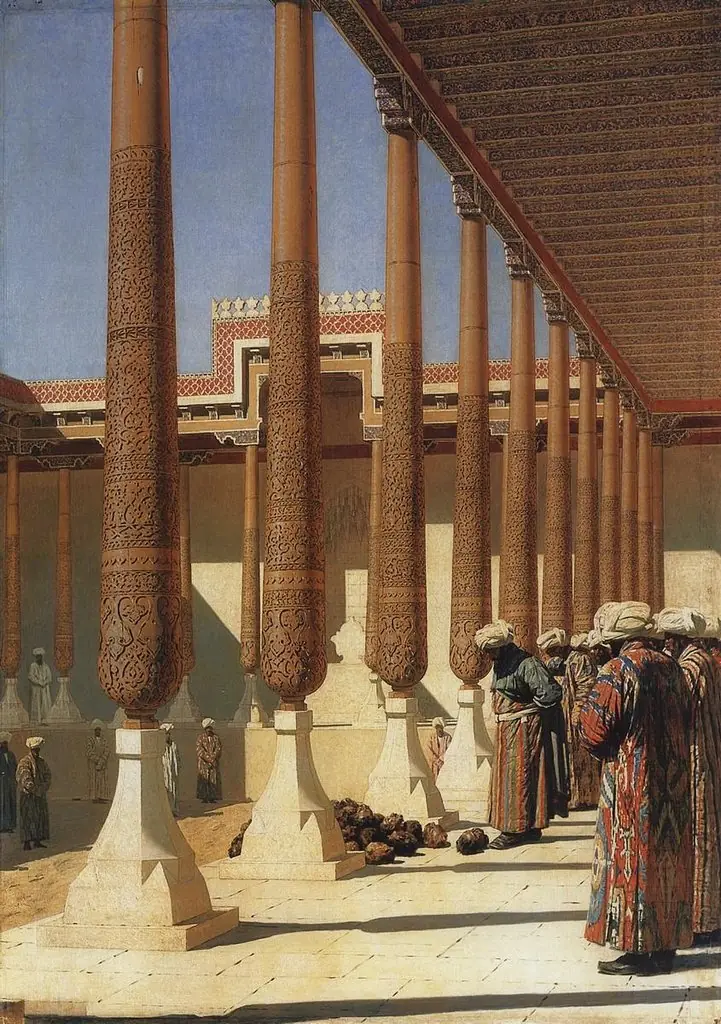 Presentation of the trophies
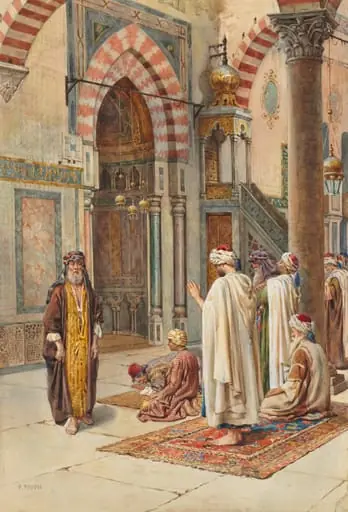 Moslems at Prayer
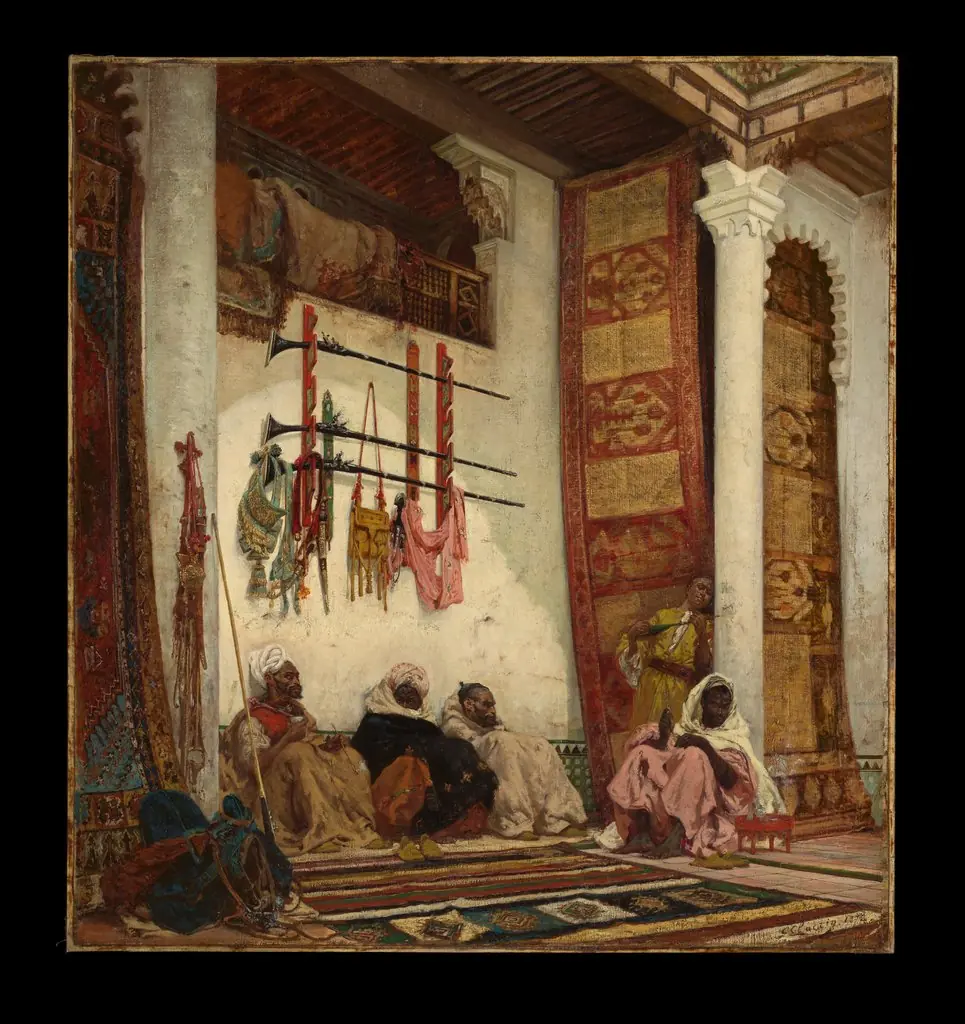 The Opium Smokers
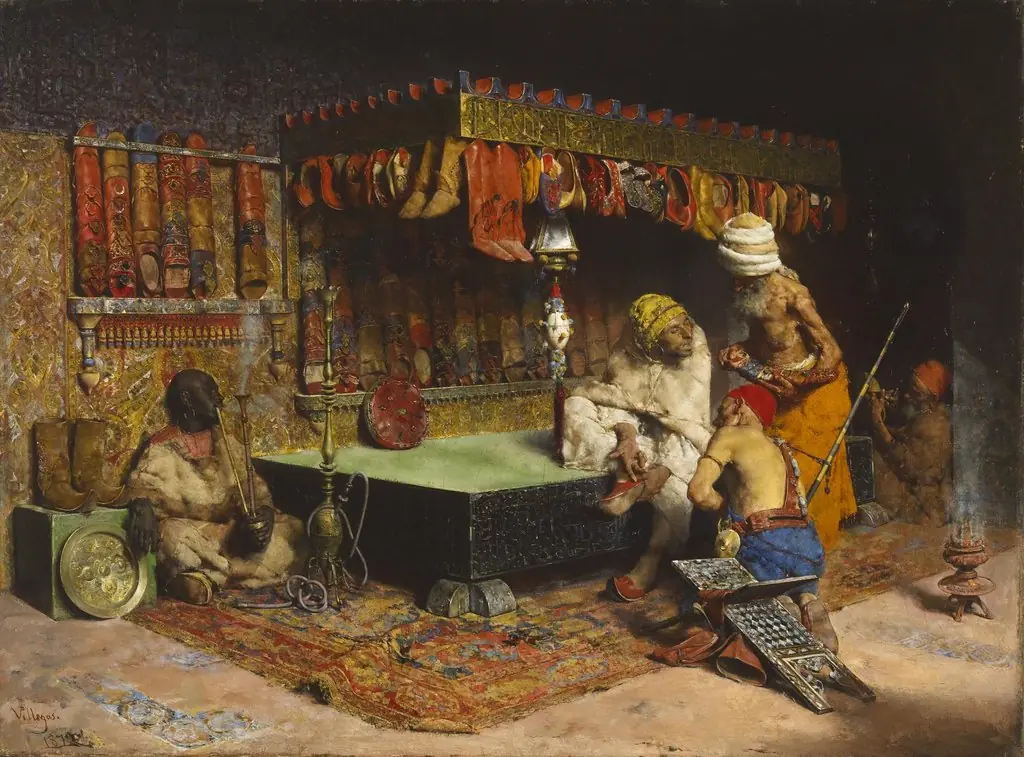 The Slipper Merchant in Morocco
 Le lendemain d'une victoire à l'Alhambra