Artwork
Gur Emir mausoleum. Samarkand
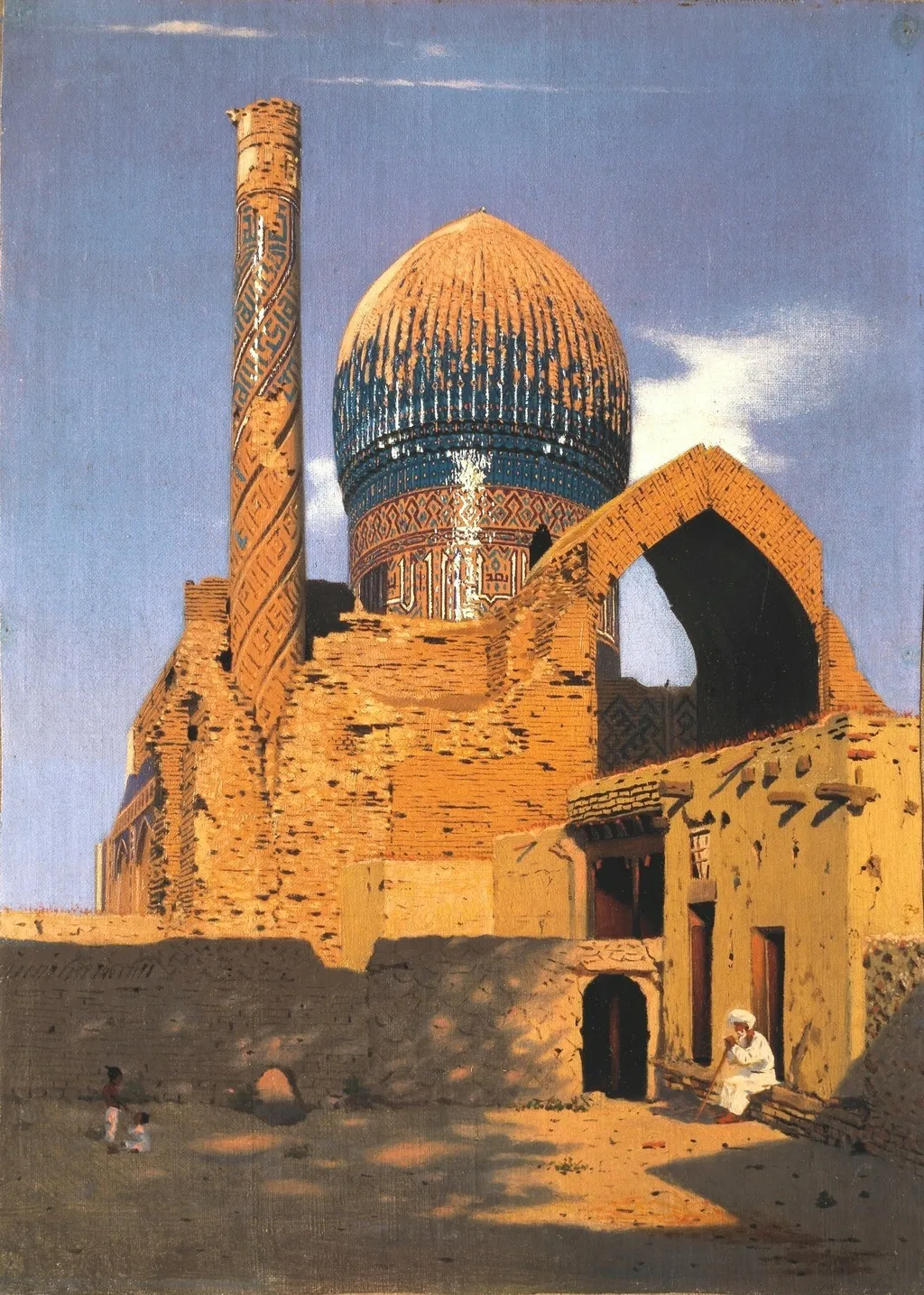
Gur Emir mausoleum. Samarkand is an unspecified painting by the Realist artist Vasily Vereshchagin. It dates from 1869 and is held in the collection of the Tretyakov Gallery.
About this work
Overview
In 1869 Vasily Vereshchagin rendered the Gur‑e Amir mausoleum of Samarkand on canvas. The work, now housed in Moscow’s Tretyakov Gallery, presents the monument under a clear sky, its brick dome and slender minaret dominating the composition. A solitary figure rests on a bench in the foreground, while a distant traveler adds depth, creating a calm, open landscape.
Subject & Meaning
The painting records the architectural splendor of the 15th‑century tomb of Timur, emphasizing its geometric precision and ornamental brickwork. By placing a lone individual beside the structure, Vereshchagin hints at the human scale of monumental heritage, inviting contemplation of history’s permanence against everyday life.
Technique & Style
Executed in the realist tradition, the canvas employs precise brushwork to delineate the mausoleum’s intricate patterns and the subtle gradations of sky. Vereshchagin’s handling of light captures the bright, unclouded atmosphere, while the muted palette of earth tones underscores the solidity of the brick construction.
History & Provenance
Created during Vereshchagin’s travels through Central Asia, the work entered the Tretyakov Gallery’s collection, where it remains a representative example of his early Orientalist output. The painting reflects the artist’s dual role as a war correspondent and explorer, documenting distant locales with a documentary eye.
Own this work as a print
Artist & collection
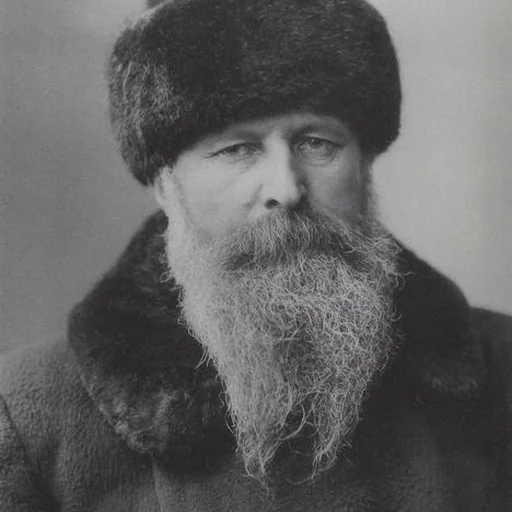
Artist
Vasily Vasilyevich Vereshchagin (Russian: Васи́лий Васи́льевич Вереща́гин; 26 October 1842 – 13 April 1904) was a Russian painter, war artist, and traveller.