Artwork
Houses on the North Side of the Forum with the Basilica of Maxentius Beyond
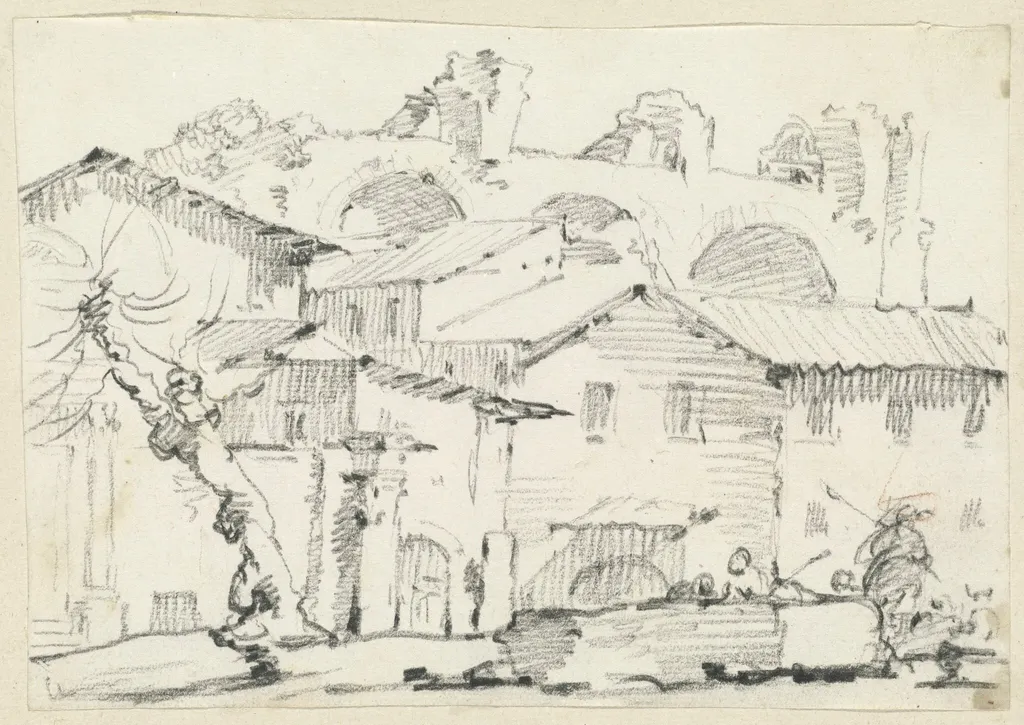
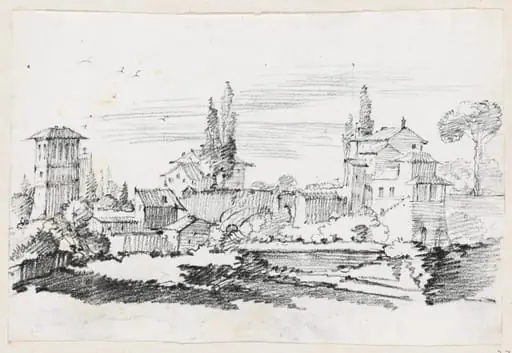
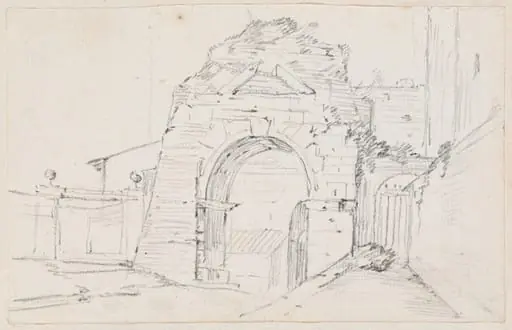
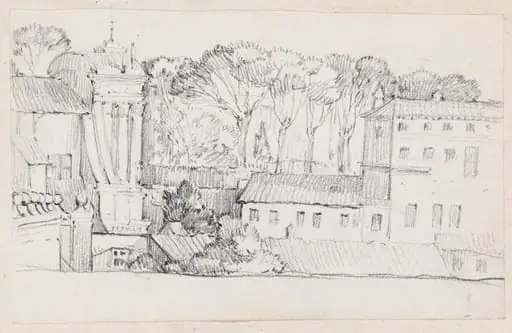
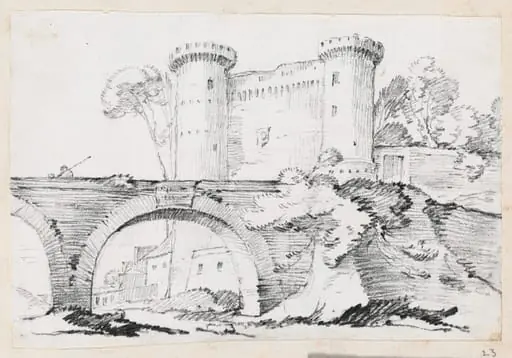
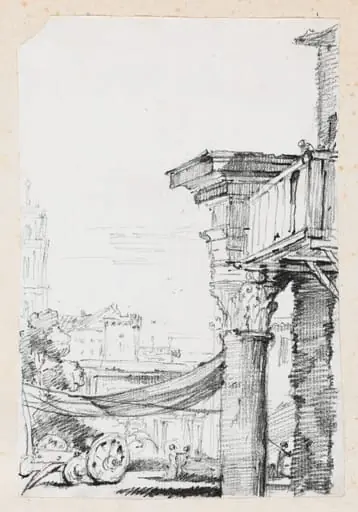
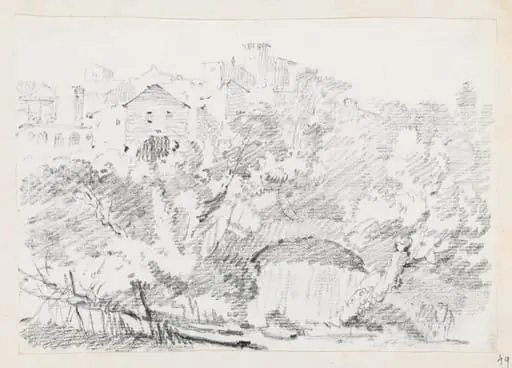
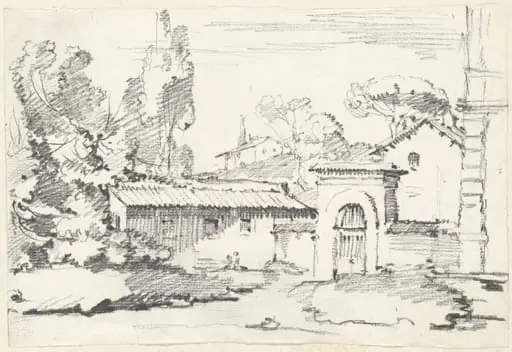
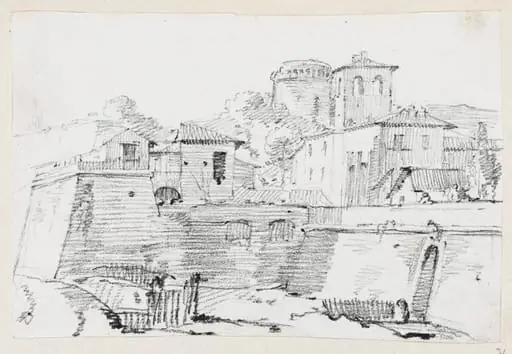
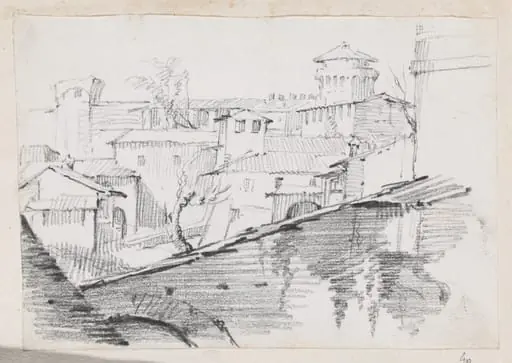
Houses on the North Side of the Forum with the Basilica of Maxentius Beyond is a chalk drawing by the Baroque artist Joseph-Marie Vien. It dates from 1748 and is held in the collection of the National Gallery of Art.
About this work
Overview
Its monochromatic palette and loose lines suggest a direct response to the ruins, capturing their presence without embellishment.
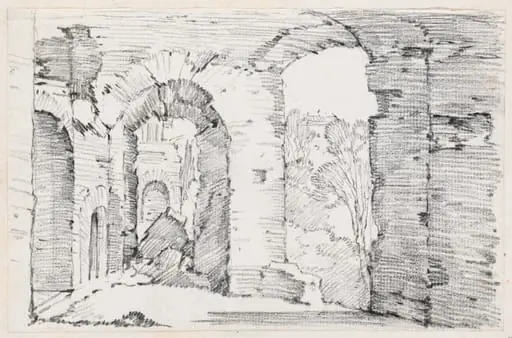
Created in 1748, this drawing by Joseph-Marie Vien captures a view of the Roman Forum using black chalk on laid paper. Executed during the artist’s formative years, it reflects his early engagement with classical architecture. The work is a preparatory sketch, not a finished composition, emphasizing observation over polish. Its monochromatic palette and loose lines suggest a direct response to the ruins, capturing their presence without embellishment.
Subject & Meaning
The drawing portrays modest residential structures along the northern edge of the Forum, with the massive Basilica of Maxentius rising behind them on a slope. The contrast between the humble dwellings and the imperial ruin underscores the layered history of the site. Trees, their branches delicately rendered, frame the scene, suggesting nature’s reclamation of ancient space. The image conveys quiet contemplation rather than grandeur, focusing on the coexistence of decay and daily life.
Technique & Style
Vien employed black chalk to create tonal variations with minimal strokes, relying on pressure and hatching to suggest volume and shadow. The paper’s texture subtly interacts with the medium, enhancing the sketch’s immediacy. Lines are swift and unrefined, indicating an on-site study rather than a studio reconstruction. The absence of color and fine detail reinforces the work’s function as a visual record, prioritizing spatial relationships over finish.
History & Provenance
This drawing dates from Vien’s early travels in Italy, a period critical to his artistic development. It predates his official role as Premier peintre du Roi by over forty years and reflects his growing interest in antiquity before neoclassicism became fully defined. The work remained in private hands until entering a public collection, where it now serves as evidence of his formative engagement with Roman ruins.
Context
In mid-18th-century Europe, artists increasingly traveled to Rome to study ancient monuments firsthand. Vien’s sketch aligns with this trend, part of a broader shift toward empirical observation over idealized representation. While his later works embraced classical order, this drawing reveals a more spontaneous response to the fragmented remains, capturing the Forum not as a monument but as a lived landscape.
Legacy
Though not widely exhibited, this drawing illustrates Vien’s transition from Baroque influences toward the disciplined aesthetics of neoclassicism. It stands as an early example of how artists used sketching to bridge direct observation with historical inquiry. Its modest scale and unadorned technique anticipate later academic practices that valued preparatory studies as essential to understanding antiquity.
Artist & collection
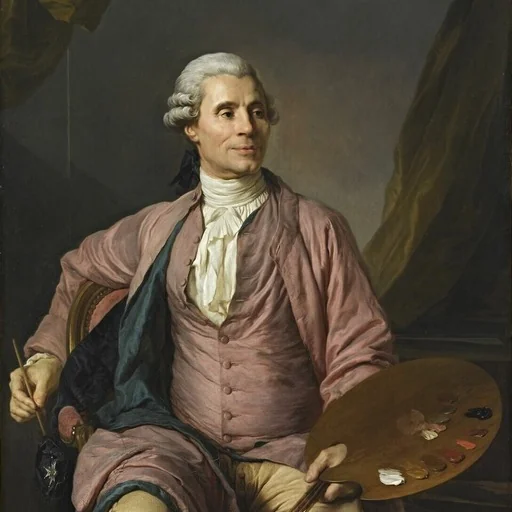
Artist
Joseph-Marie Vien (18 June 1716 – 27 March 1809) was a French painter. He was the last holder of the post of Premier peintre du Roi, serving from 1789 to 1791, before it was abolished during the French Revolution.