Artwork
Old Chairs to Mend
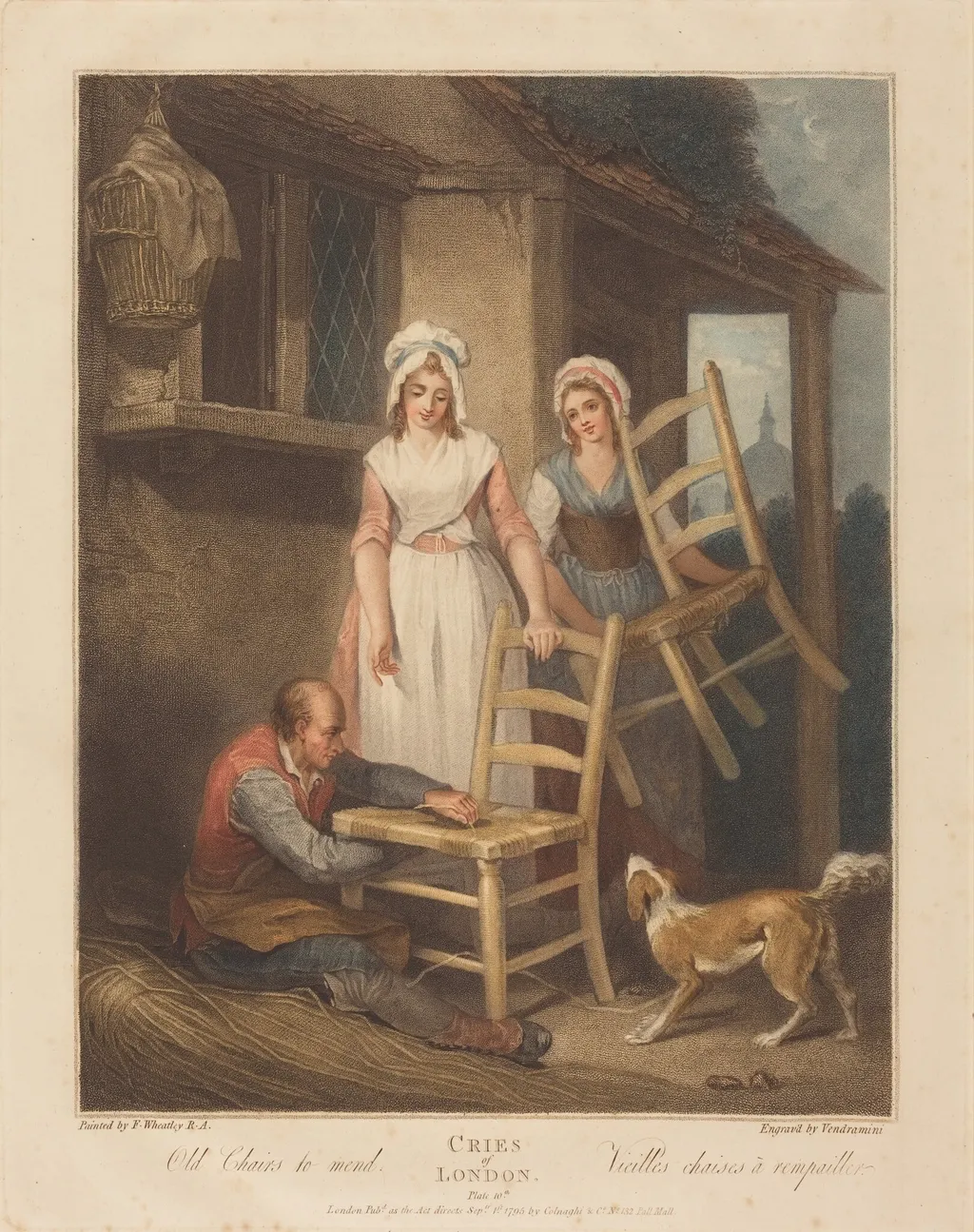
Old Chairs to Mend is an ink print by the Romanticist artist Giovanni Vendramini. It dates from 1795 and is held in the collection of the National Gallery of Art.
About this work
Overview
The scene centers on three figures—a man repairing a chair on the floor, and two women nearby, one ascending a ladder—surrounded by broken furniture and tools.
Created in 1795 by Giovanni Vendramini, this color stipple engraving depicts a modest interior where domestic repair is underway. The scene centers on three figures—a man repairing a chair on the floor, and two women nearby, one ascending a ladder—surrounded by broken furniture and tools. A dog rests near the worker, and a half-finished chair leans against the wall. The title, inscribed at the base, underscores the quiet labor of maintaining ordinary household items.
Subject & Meaning
The image captures the routine, unglamorous work of mending worn furniture, a common domestic necessity in late 18th-century households. Rather than idealizing labor, it presents it as unremarkable yet essential. The presence of women and a man working side by side suggests shared responsibility in home maintenance. The title directs attention to the value of repair over replacement, reflecting a culture where resources were conserved and objects were sustained through skilled hands.
Technique & Style
Vendramini employed color stipple engraving, a method using tiny dots to build tone and texture, allowing subtle gradations in skin, fabric, and wood. The technique enabled delicate rendering of light and shadow without heavy outlines. Fine lines define the chairs’ joints and the ladder’s rungs, while the distant window is rendered with minimal detail, drawing focus to the interior activity. The use of color, though restrained, adds realism to the figures’ clothing and the wooden surfaces.
History & Provenance
The print was produced in Venice during a period when printmaking thrived as a medium for documenting everyday life. Vendramini, active in the late 1700s, was known for genre scenes rendered in stipple engraving, often published for a middle-class audience. While specific early ownership records are scarce, the work aligns with a broader trend of prints circulating as affordable visual narratives, valued for their observation of ordinary routines rather than grand themes.
Context
In late 18th-century Europe, especially in urban centers like Venice, the repair of household goods was a widespread practice due to limited access to new items and the cost of materials. Artistic depictions of such labor were uncommon, making this print a rare glimpse into domestic economy. Unlike grand historical or mythological subjects, it reflects the quiet dignity of manual work, resonating with Enlightenment-era interest in everyday life and social observation.
Legacy
Though not widely exhibited today, the print contributes to a small but significant body of work that documented non-elite labor in pre-industrial Europe. Its focus on repair and reuse anticipates later 19th-century realist movements and modern concerns about sustainability. As a technical example of stipple engraving, it remains a reference for understanding how printmakers translated subtle domestic scenes into reproducible images for public consumption.
Artist & collection


 It's Too Late (Il est trop tard)
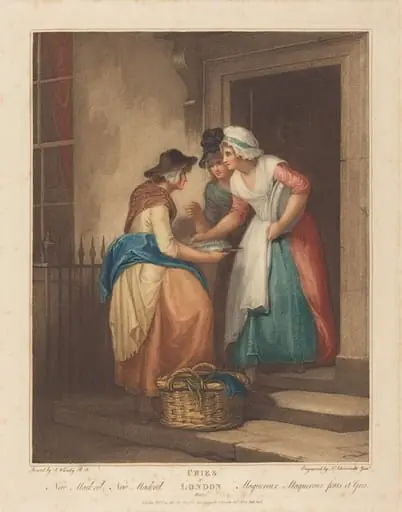 New Mack'rel
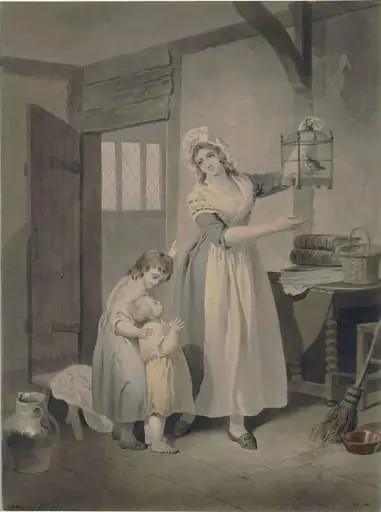 Interior with a woman showing a bird cage to two children
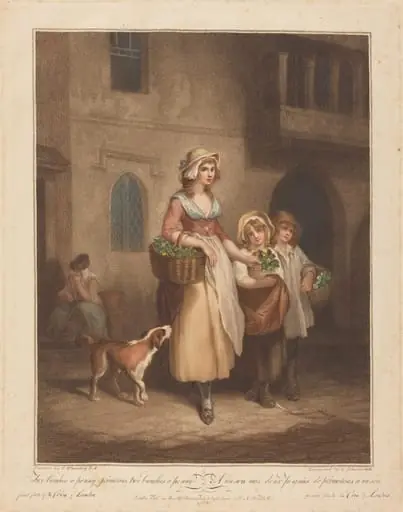 Two Bunches a Penny, Primroses
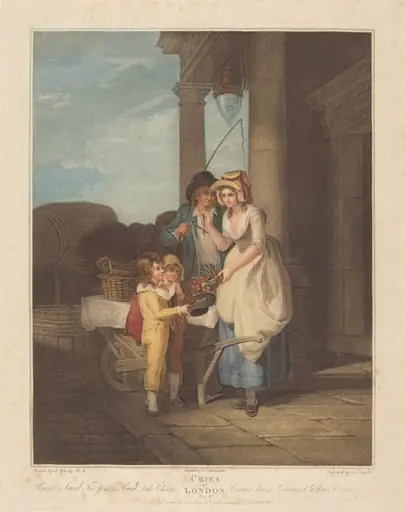 Round and Sound, Five Pence a Pound, Duke Cherries
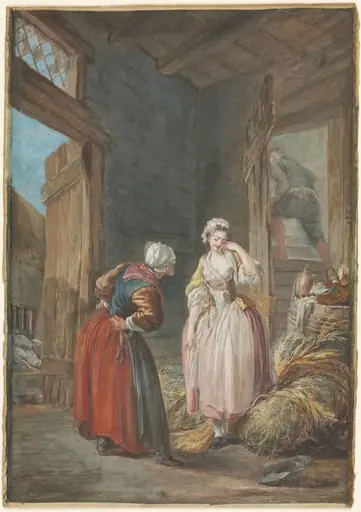 The Surprised Lovers
 Pescadoras
 Young French Marquise in Exile in Lausanne
 Rustic interior: figures of an old man and woman and a girl