Artwork
Leda
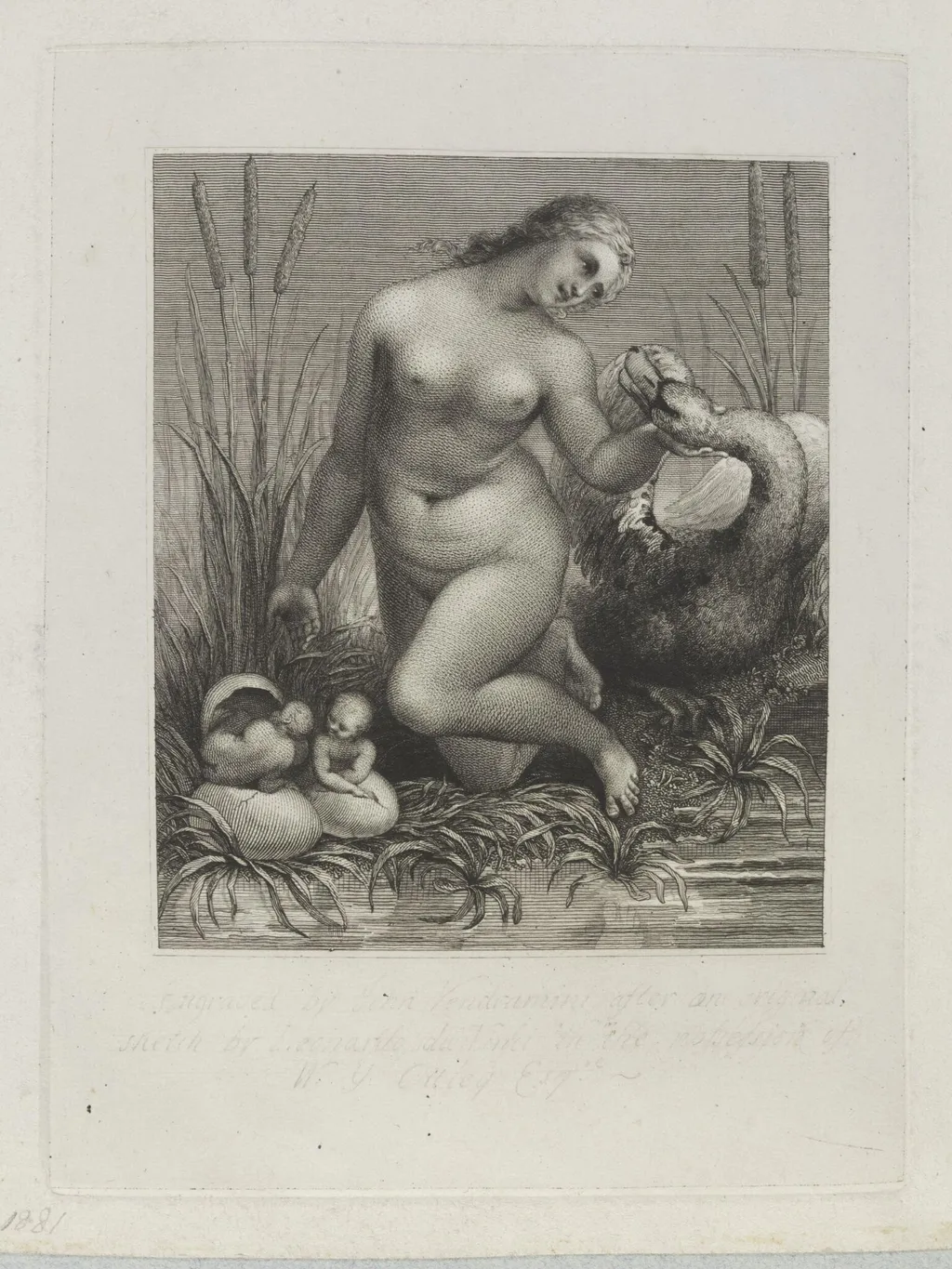
Leda is a print by Giovanni Vendramini. It dates from 1850 and is held in the collection of the Victoria and Albert Museum.
About this work
Overview
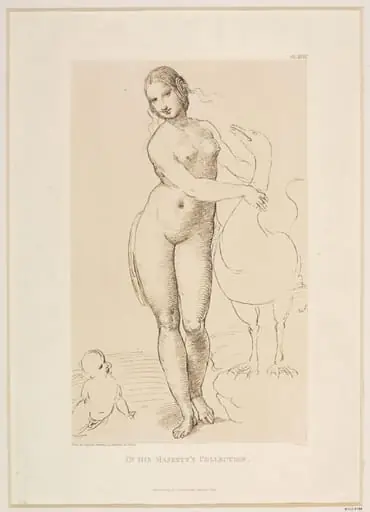
This black-and-white etching presents a scene drawn from Leonardo da Vinci’s lost composition of Leda. Rendered on paper with careful line work, the print retains visible proofing marks and inscribed lettering, indicating its status as a working impression. The image captures a moment of quiet stillness, focusing on the figure’s physical presence and the subtle interplay of light across her form.
Subject & Meaning
Leda, depicted nude except for a draped cloth, sits amid tall grass with a staff and a basket of eggs. Two chicks near her feet and a sleeping dog at her side introduce domestic calm to the mythological subject. The eggs, traditionally linked to her divine offspring, are rendered with unassuming realism, softening the myth’s grandeur into an intimate, earthly moment.
Technique & Style
The artist employed etching to achieve fine gradations of tone, using delicate lines to model Leda’s body with sculptural weight. Shadows define her limbs and torso, lending volume and solidity. The background is minimally suggested, drawing focus to the figure and the quiet details—chicks pecking, the dog curled close—enhancing the scene’s quiet realism.
History & Provenance
The print derives from a design by Leonardo da Vinci, now lost, and was likely produced by a follower or engraver working in his circle. Its proofing marks suggest it was part of a limited series of trial impressions, possibly made to test composition or technique. The presence of etched lettering implies it was intended for dissemination or study.
Context
In early 16th-century Italy, mythological subjects were often reinterpreted through the lens of humanist ideals, emphasizing naturalism and emotional restraint. This print reflects a trend of translating Leonardo’s compositional ideas into graphic form for artists and collectors, bridging high art and reproductive practice in a period of intense visual exchange.
Legacy
Though not widely known today, this etching exemplifies how Leonardo’s innovations in form and observation were transmitted through printmaking. Its quiet realism and attention to everyday detail influenced later artists seeking to ground myth in tangible, lived experience, contributing to the evolution of narrative print culture in Europe.
Artist & collection