Artwork
Pierre Mignard
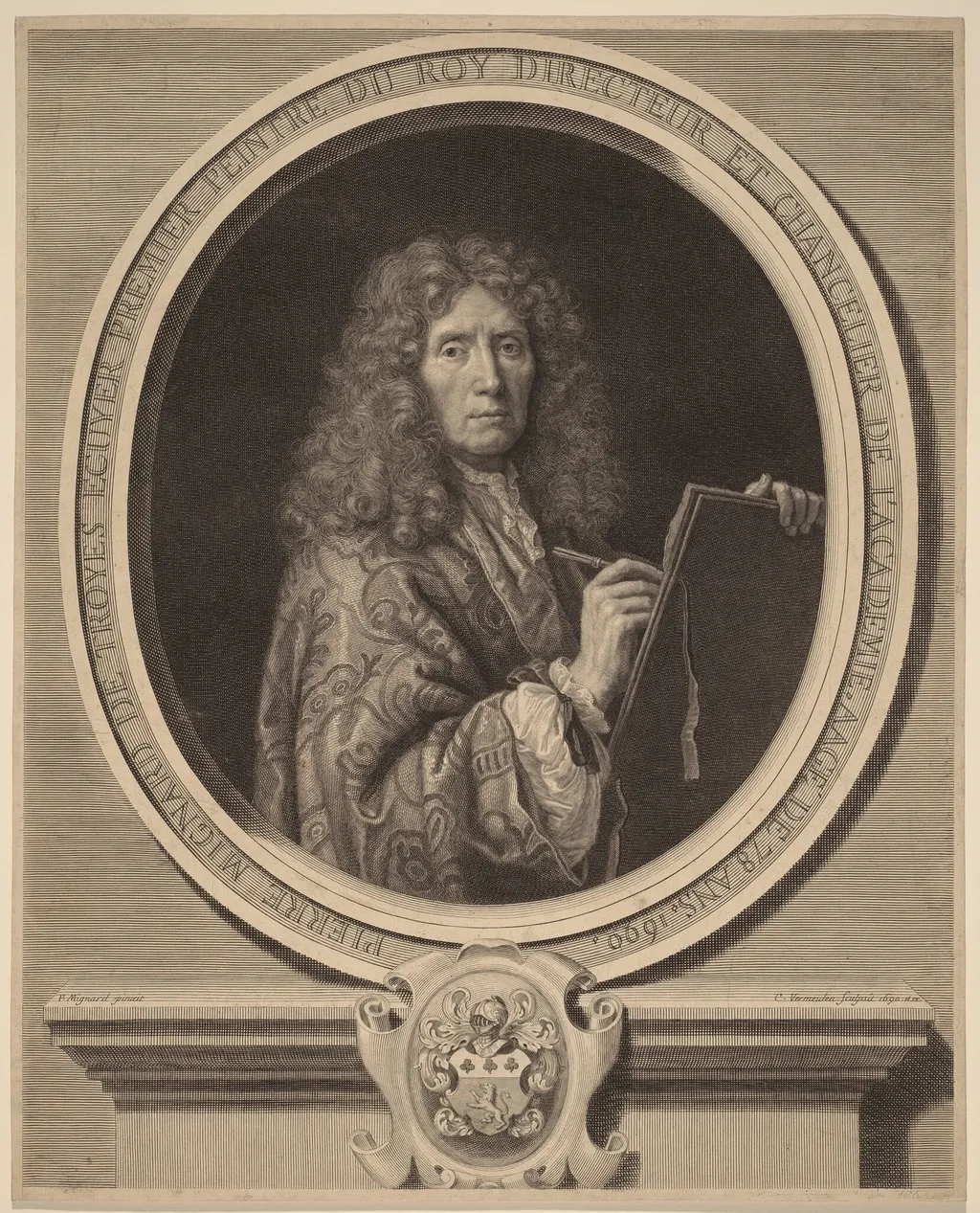
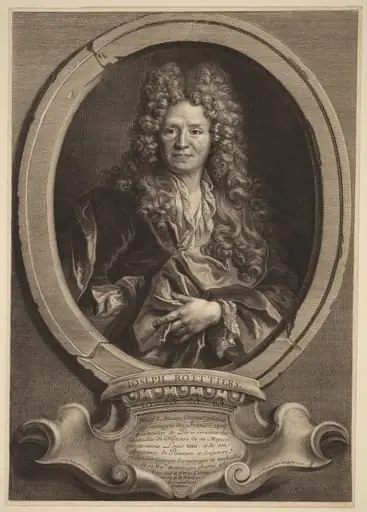
Pierre Mignard is an ink print by the Baroque artist Cornelis Vermeulen. It dates from 1690 and is held in the collection of the National Gallery of Art.
About this work
Overview
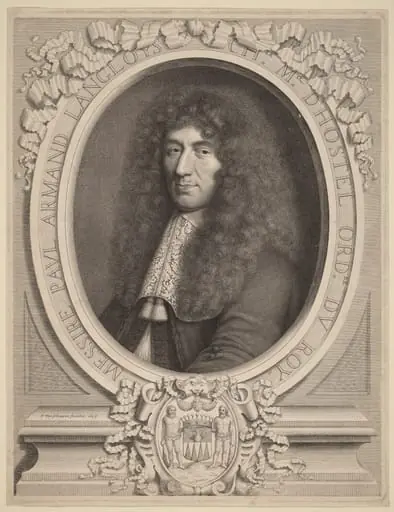
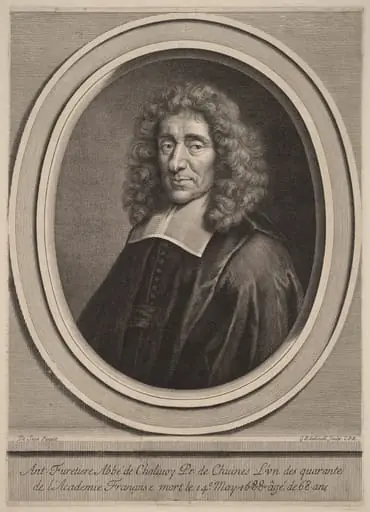
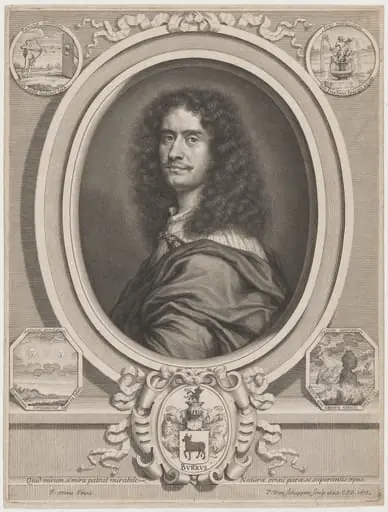
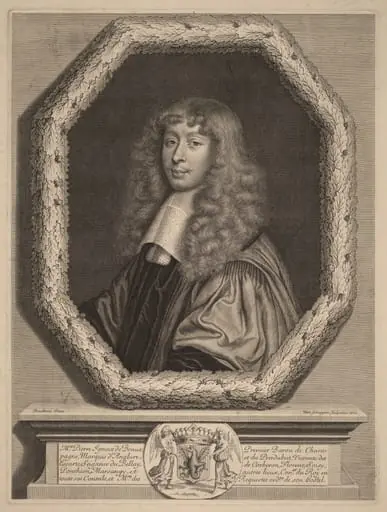
Cornelis Vermeulen’s print, titled Pierre Mignard, is a combined engraving and etching executed on laid paper in 1690. The work presents a portrait of a man with tightly curled hair, a ruffled collar, and a solemn expression, holding a small object that may be a book or tablet. A dark oval backdrop edged with musical symbols and a decorative border frame the figure.
Subject & Meaning
The sitter is rendered with a serious demeanor, his face marked by pronounced lines around the eyes and mouth, suggesting age or contemplation. The object in his right hand hints at scholarly or artistic activity, while the surrounding musical notes may allude to a connection with the arts or a patron’s interests.
Technique & Style
Vermeulen employs fine, closely spaced lines to model the texture of the fur collar and the subtle wrinkles of the skin, a hallmark of late‑17th‑century printmaking. The integration of engraving for precise line work with etching for softer tonal areas creates a nuanced surface that balances clarity with atmospheric depth.
History & Provenance
Created in 1690, the print reflects the period’s interest in portraiture of notable cultural figures. While specific ownership records are limited, the work has been catalogued among Vermeulen’s oeuvre, indicating its circulation among collectors of French and Dutch prints during the early modern era.
Context
The image aligns with contemporary French portrait prints that celebrated intellectual and artistic personalities. The inclusion of musical notation in the border mirrors a broader decorative trend in which visual and auditory motifs were combined to enhance the subject’s cultured identity.
Legacy
Although not as widely reproduced as some contemporaneous portraits, Vermeulen’s Pierre Mignard remains a valuable example of the technical synthesis of engraving and etching, illustrating the period’s skillful handling of line and texture in printed portraiture.
Artist & collection