Artwork
Catherine d'Arragon (Catherine of Aragon)
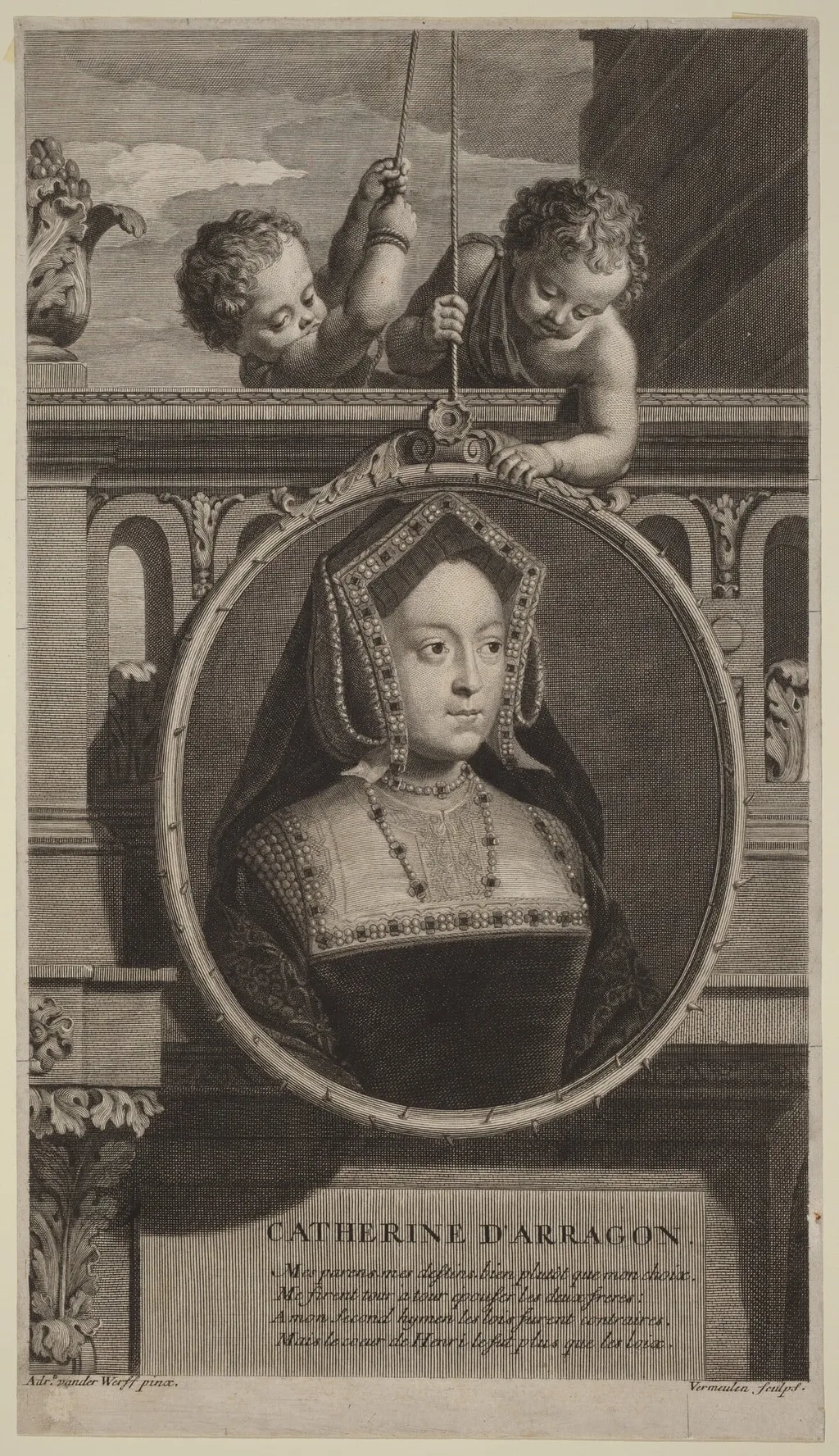
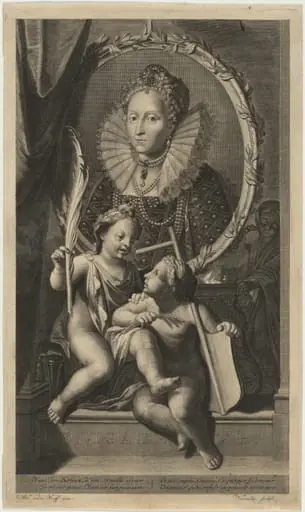
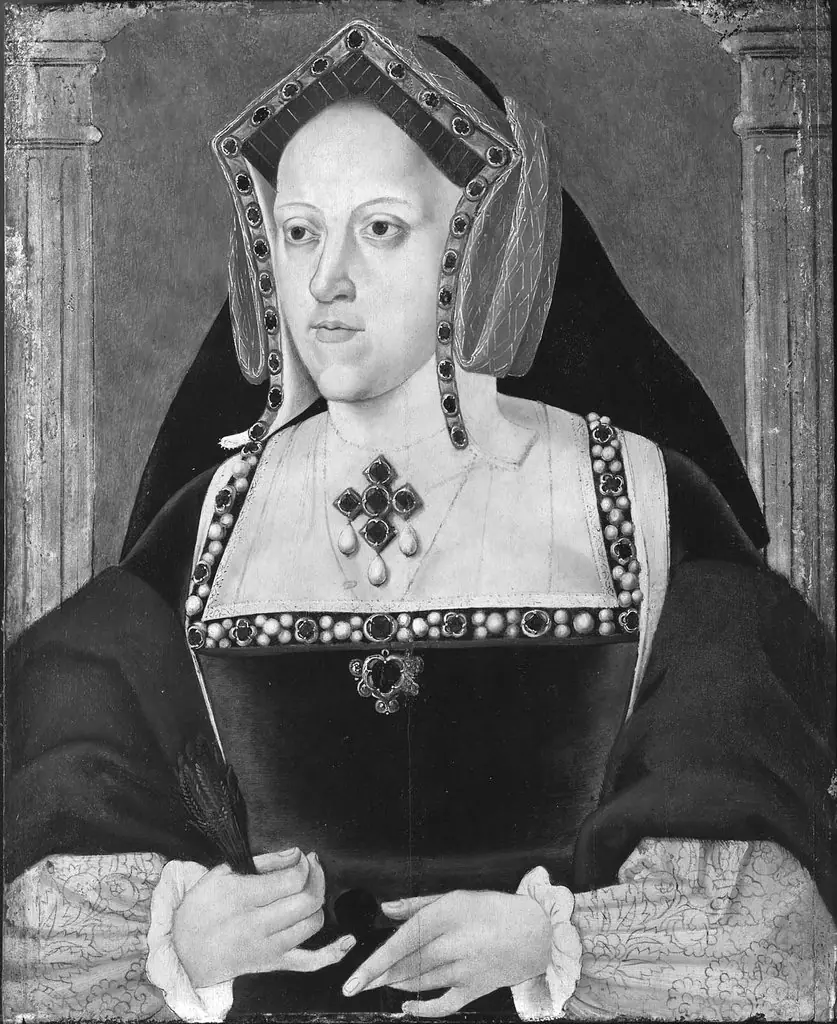
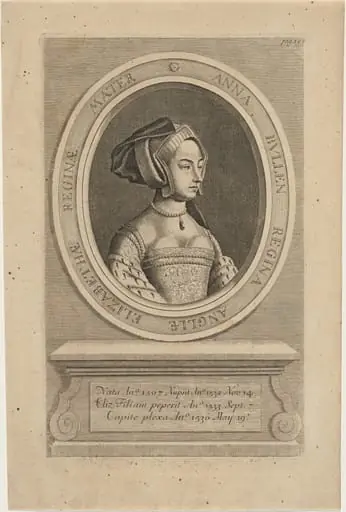
Catherine d'Arragon (Catherine of Aragon) is an ink print by the Baroque artist Cornelis Vermeulen. It dates from 1705 and is held in the collection of the National Gallery of Art.
About this work
Overview
Cornelis Vermeulen’s 1705 engraving presents a portrait bust of a woman framed within an oval. She is dressed in a dark, high‑necked gown, complemented by a beaded headdress and a modest veil. Above her, two cherubic figures grasp a rope, while the backdrop consists of a stone wall punctuated by arches, lending the composition a formal, almost devotional atmosphere.
Subject & Meaning
The sitter, identified as Catherine of Aragon, is rendered with symbols that hint at piety and status. The cherubs, traditionally associated with innocence and heavenly protection, support a rope that may allude to marital or dynastic bonds. The austere attire and architectural setting reinforce the image of a noblewoman presented within a reverent, quasi‑religious context.
Technique & Style
The composition reflects Baroque sensibilities through its dramatic chiaroscuro and the dynamic interaction of figures within the confined oval frame.
Executed as an engraving on laid paper, Vermeulen employs fine line work to model the textures of fabric, metal, and stone. Cross‑hatching creates subtle gradations of light and shadow, especially evident in the folds of the dress and the roughness of the wall. The composition reflects Baroque sensibilities through its dramatic chiaroscuro and the dynamic interaction of figures within the confined oval frame.
History & Provenance
Created in the early eighteenth century, the print was likely intended for circulation among collectors of royal portraiture. Cornelis Vermeulen, a Dutch engraver active in the late 1600s and early 1700s, produced the work as part of a broader European interest in documenting prominent figures of the Tudor and early Stuart periods. Surviving copies are held in several museum print collections, documenting its continued scholarly relevance.
Artist & collection