Artwork
Sir Francis Bacon
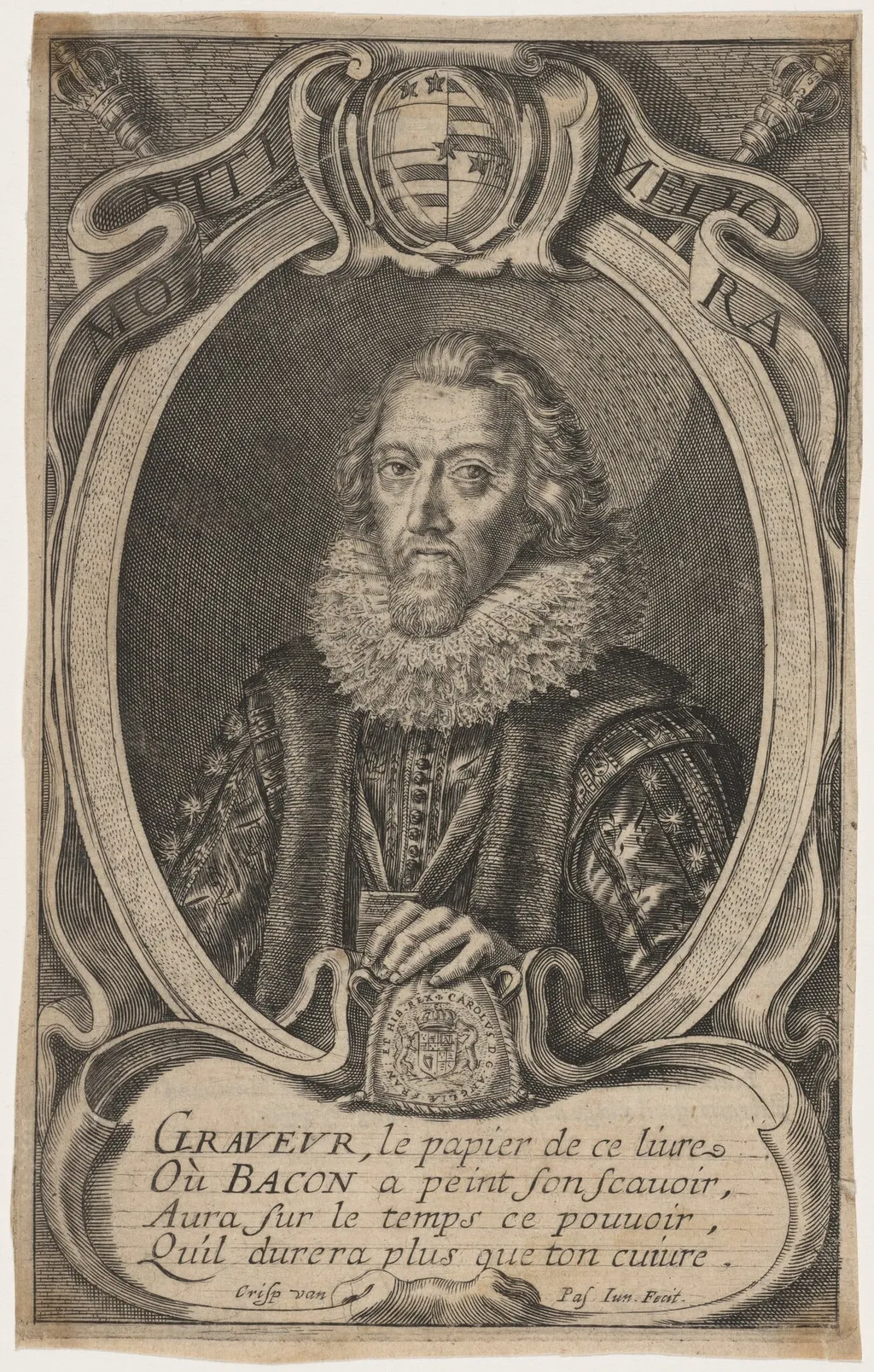
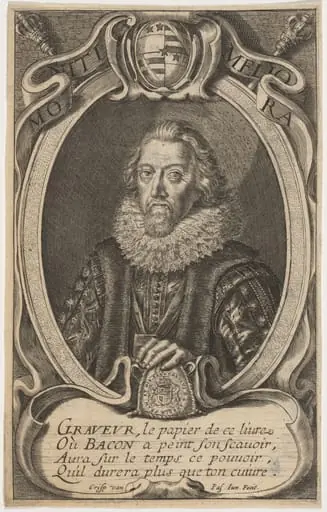
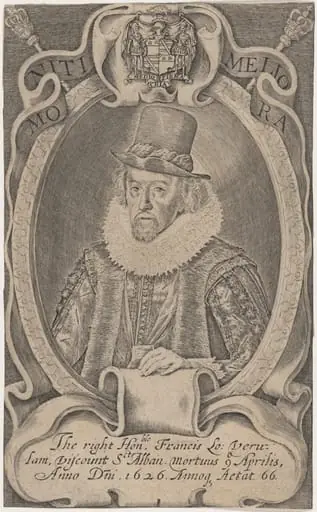
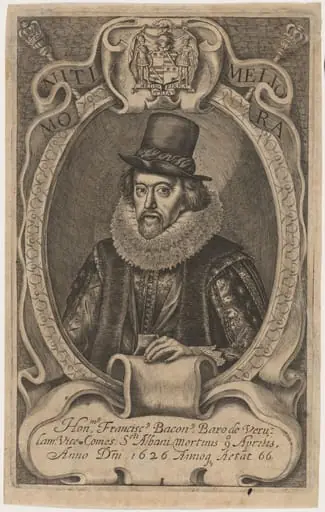
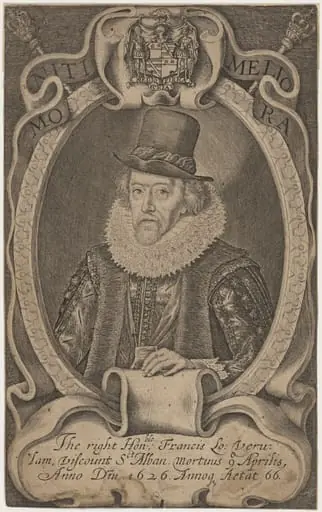
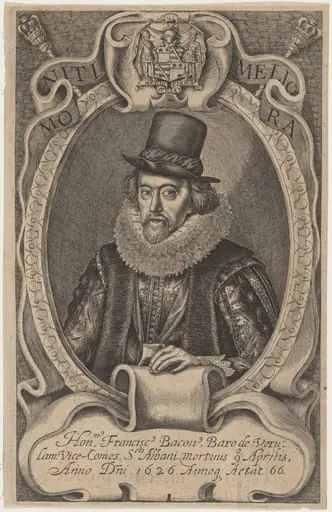
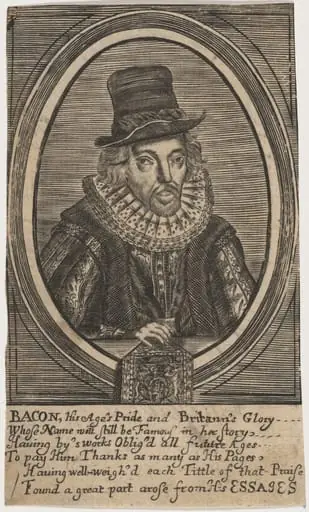
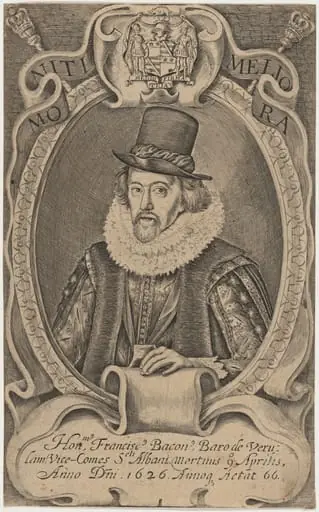
Sir Francis Bacon is an ink print by the Renaissance artist Crispijn van de Passe II. It dates from 1634 and is held in the collection of the National Gallery of Art.
About this work
Overview
Crispijn van de Passe II's 1634 engraving, *Sir Francis Bacon*, is a black-and-white portrait print depicting the renowned figure in formal attire, accompanied by symbolic elements and French accolades.
Subject & Meaning
The subject, Sir Francis Bacon, is portrayed with a serious demeanor, emphasizing his intellectual stature. A small, possibly literary, object in his right hand and his left hand on a coat of arms-bearing shield underscore his scholarly and familial heritage. Swirling lines above his head may symbolize intellectual or philosophical achievement.
Technique & Style
Executed in engraving, the print features crisp, detailed linework, characteristic of the medium. The composition balances intricate elements—the ruffled shirt, coat of arms, and decorative flourishes—with a plain background, drawing focus to the subject.
History & Provenance
Created in 1634 by Crispijn van de Passe II, the engraving is signed by the artist. The inclusion of French text praising Bacon suggests cross-cultural admiration for the subject during this period.
Context
This engraving reflects the early 17th-century practice of creating portrait prints of esteemed figures to commemorate their contributions. Bacon's influence in philosophy and science made him a prime subject for such tributes.
Legacy
While specific lasting impact of this individual engraving on art history is not widely documented, it contributes to the broader legacy of portrait prints honoring prominent historical figures, preserving their image and reputation across time.
Artist & collection