Artwork
Concepción Miramón
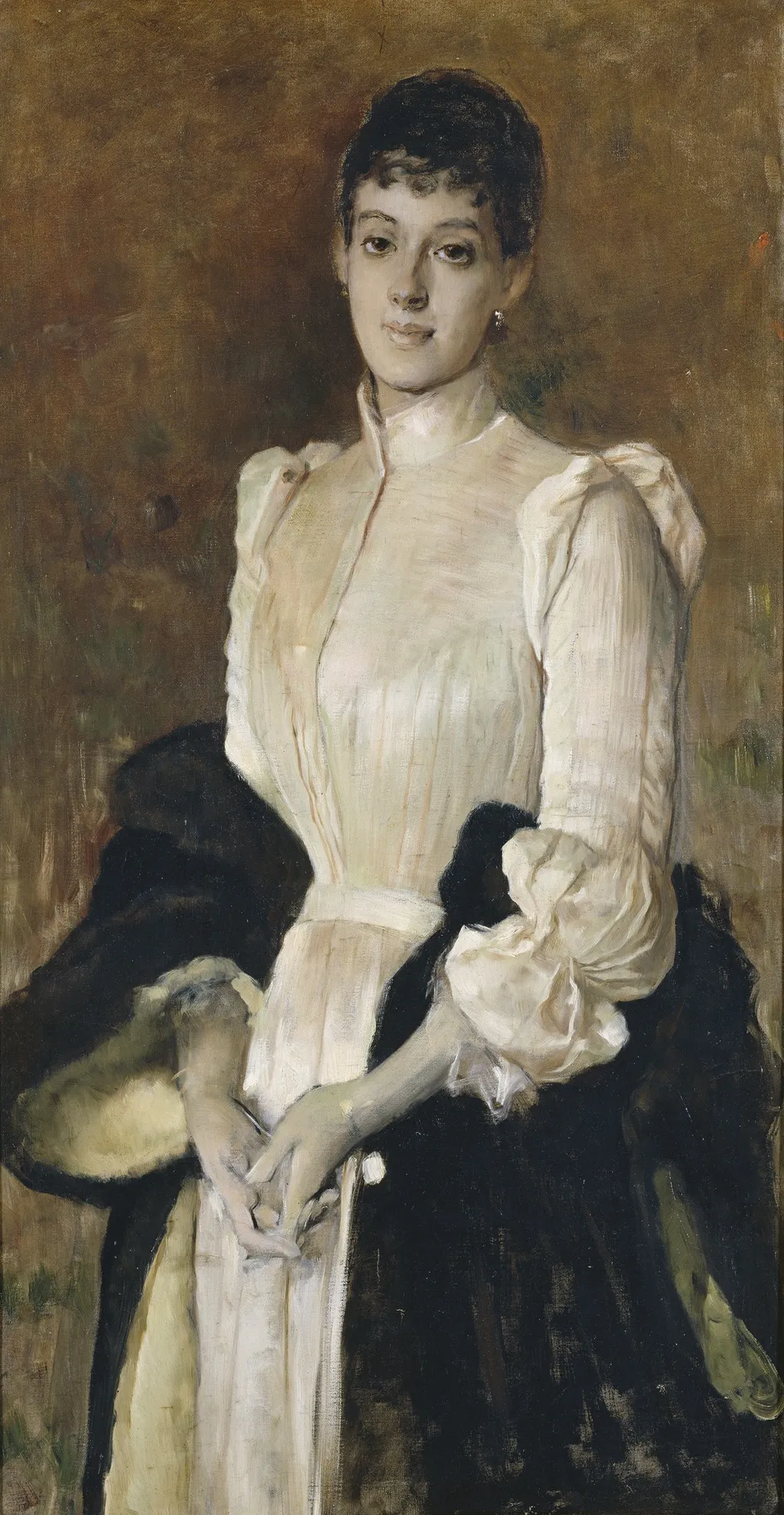
Concepción Miramón is an oil painting by the Post-Impressionist artist Vicente Palmaroli. It dates from 1895 and is held in the collection of the Museo del Prado.
About this work
Overview
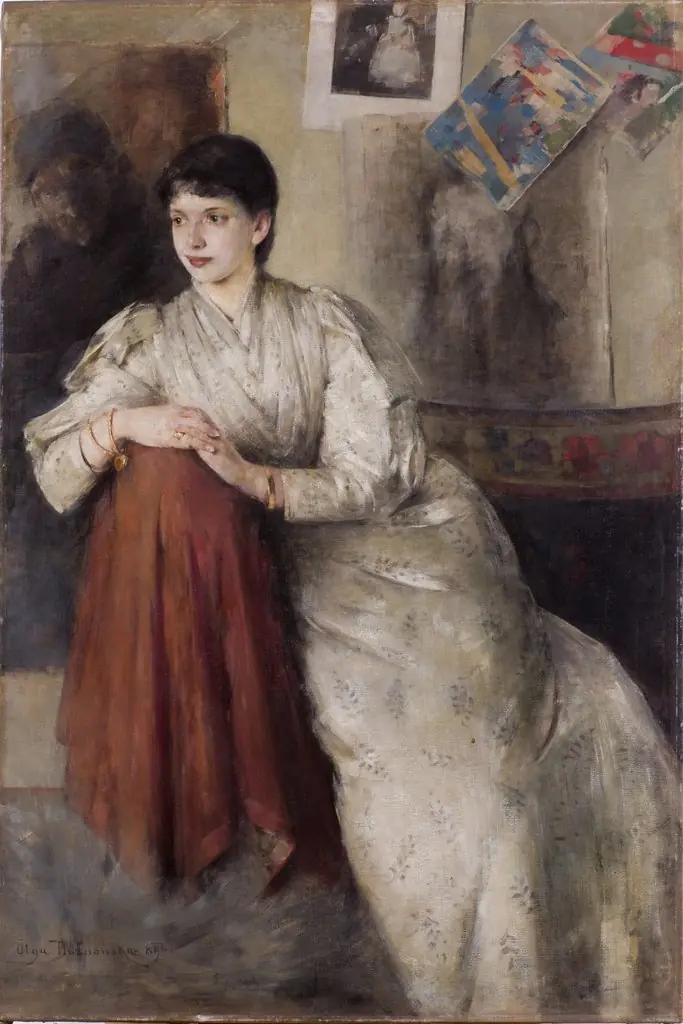
Painted in 1895 by Vicente Palmaroli, this oil portrait depicts Concepción Miramón, a woman of aristocratic bearing. The work resides in the Museo del Prado in Madrid, where it is cataloged as part of the museum’s 19th-century Spanish portraiture collection. Its restrained composition and muted palette reflect the period’s preference for dignified, intimate representation over theatricality.
Subject & Meaning
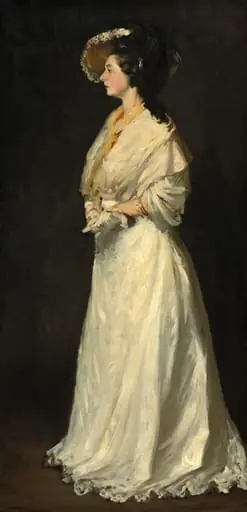
Dressed in a white gown with full sleeves and a high collar, she wears a dark shawl draped over one arm, suggesting both modesty and social refinement.
Concepción Miramón is portrayed with composure, her direct gaze establishing a quiet connection with the viewer. Dressed in a white gown with full sleeves and a high collar, she wears a dark shawl draped over one arm, suggesting both modesty and social refinement. The absence of symbolic objects or elaborate setting shifts focus to her presence, emphasizing personal dignity rather than status markers.
Technique & Style
Palmaroli employed soft, blended brushwork to render fabric and skin with subtle texture, avoiding sharp definition. The warm, earth-toned background enhances the cool tones of the dress and shawl, creating a harmonious tonal balance. Light falls gently across the figure, modeling form without dramatic contrast, consistent with academic traditions of the time that valued restraint and clarity.
History & Provenance
The painting entered the Museo del Prado’s collection shortly after its completion, likely through acquisition or donation. Its early inclusion in the museum’s holdings suggests it was recognized within contemporary artistic circles. No significant alterations or documented restorations are recorded, preserving its original condition and intent.
Context
In late 19th-century Spain, portraiture remained a respected genre among the elite, often commissioned to affirm social identity. Palmaroli, trained in Rome and active in Madrid, was known for his refined technique and sensitivity to psychological nuance. This work aligns with broader European trends favoring understated elegance over Romantic excess.
Legacy
Though not widely exhibited outside Spain, the portrait endures as a quiet example of academic portraiture from the period. It contributes to the understanding of how Spanish artists captured individual presence without overt narrative, reflecting a cultural preference for reserve and subtlety in representation.
Artist & collection

 Portrait of a Woman in a White Dress
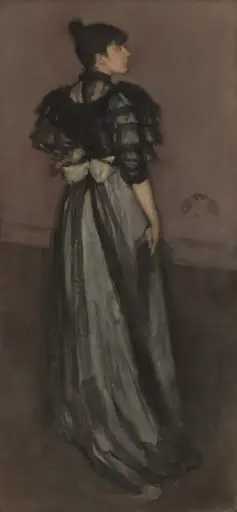 Mother of Pearl and Silver: The Andalusian
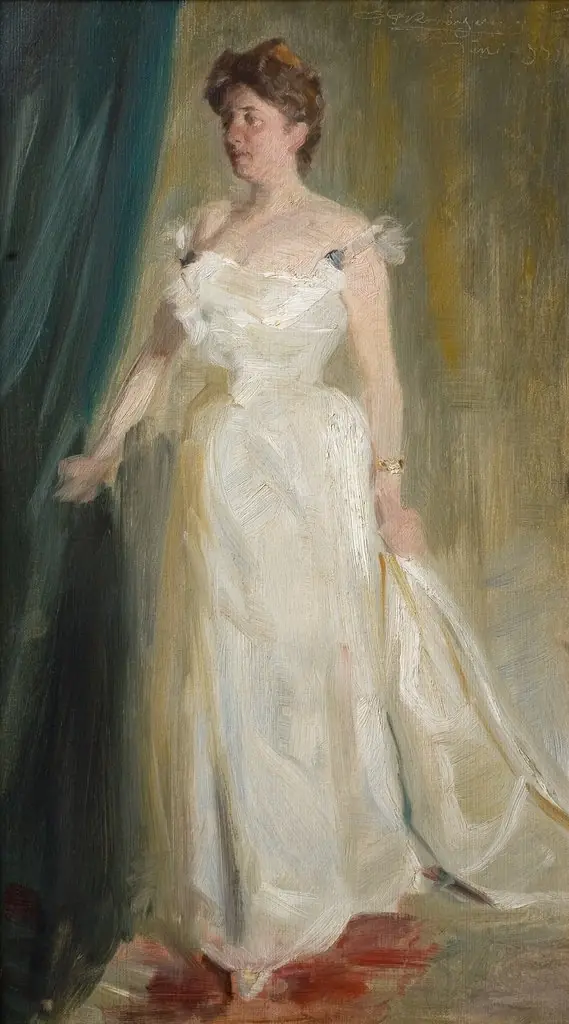 Portræt af lensgrevinde Lillie Suzanne Raben-Levetzau
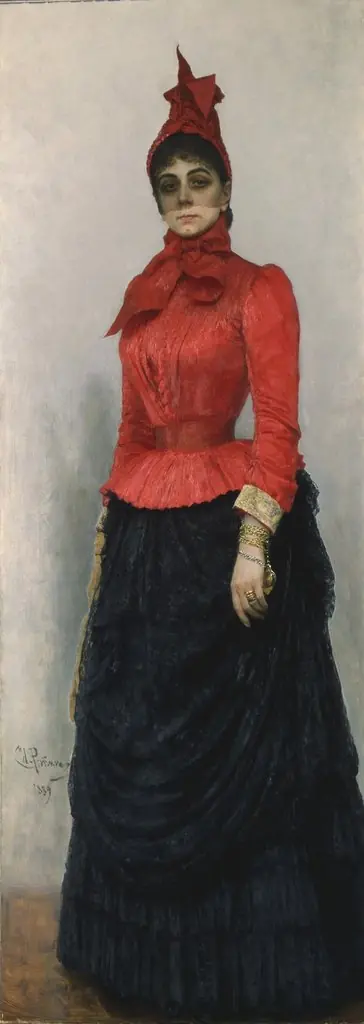 Portrait of Baroness V.I. Ikskul von Hildenbandt
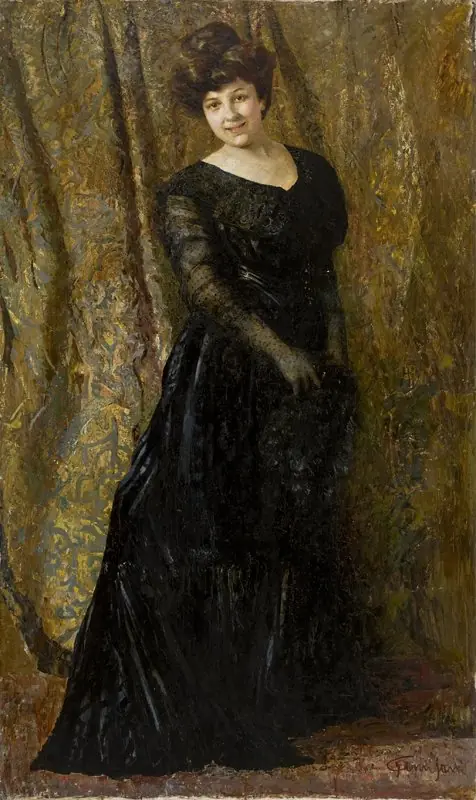 Standing lady
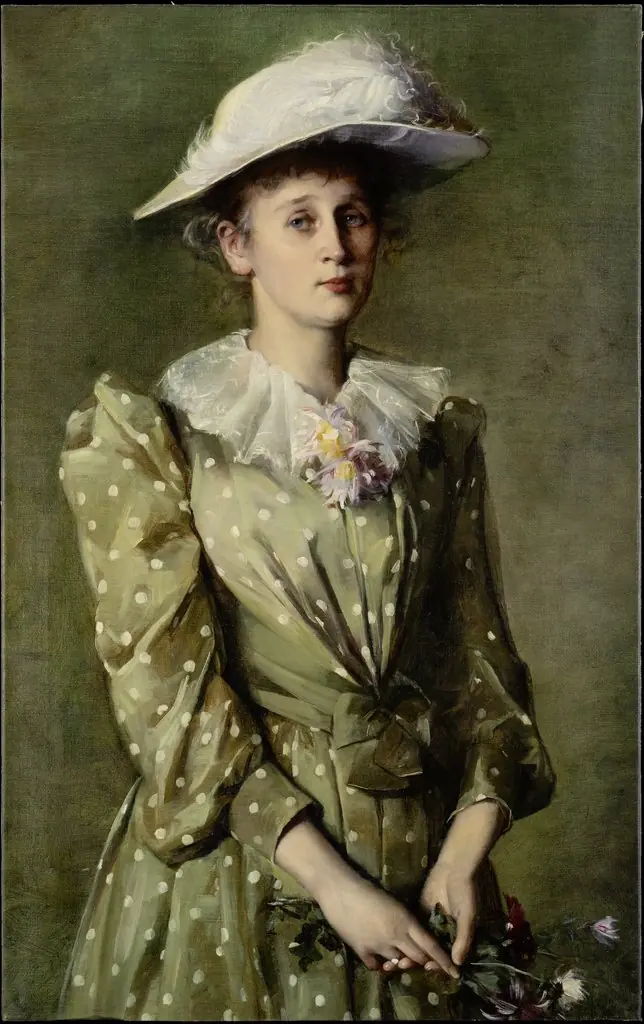 Portrait of Helene Roederstein
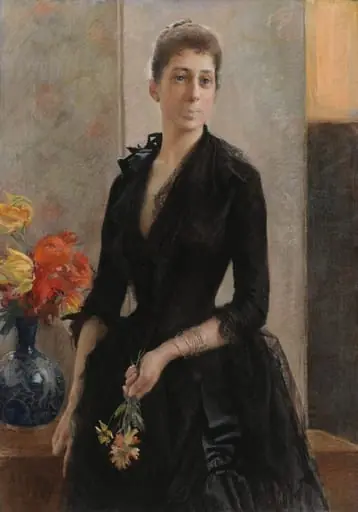 Mme Weissgerber de Stragewiczin (sittemmin Mme R.Berenger) muotokuva
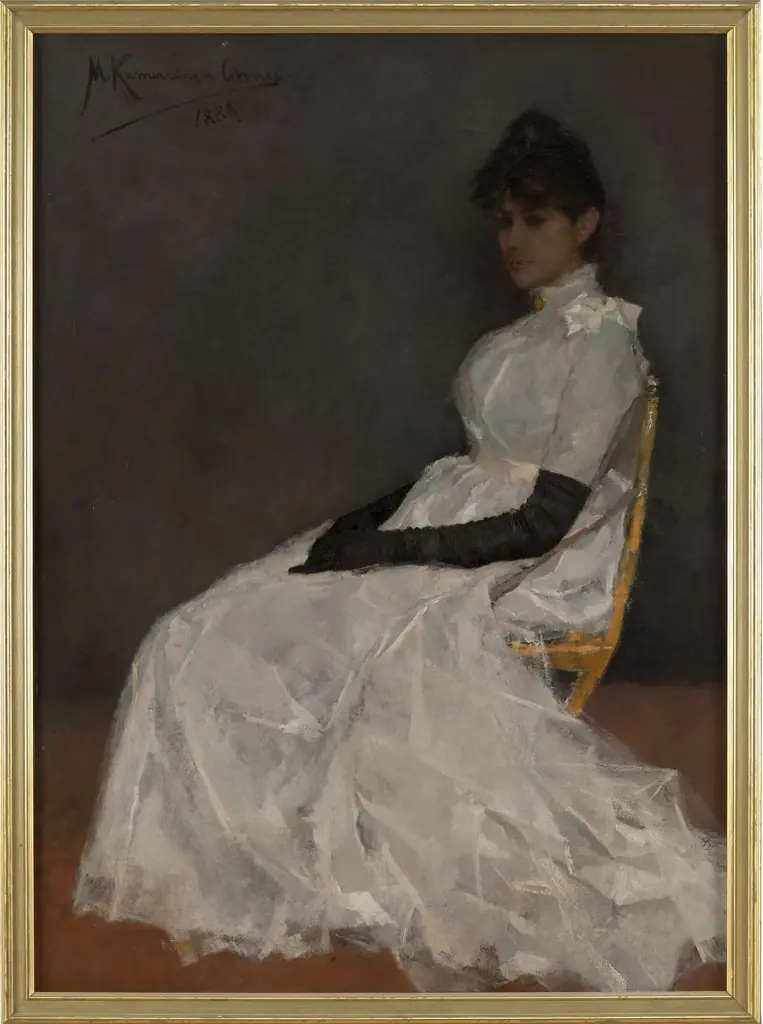 Portrait of Jenny Kamerlingh Onnes
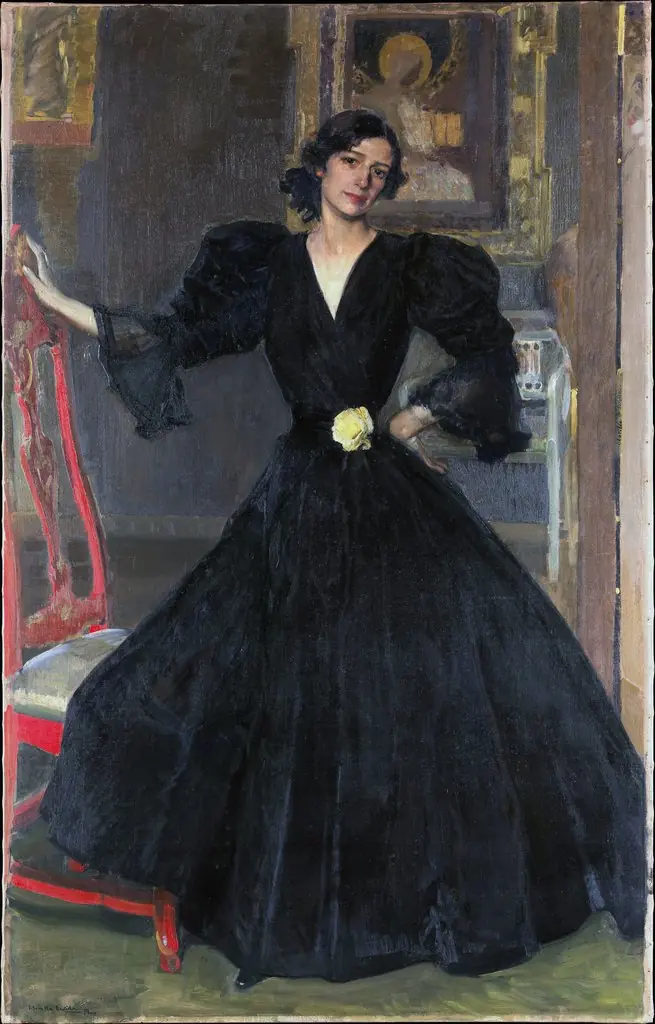 Señora de Sorolla (Clotilde García del Castillo, 1865–1929) in Black
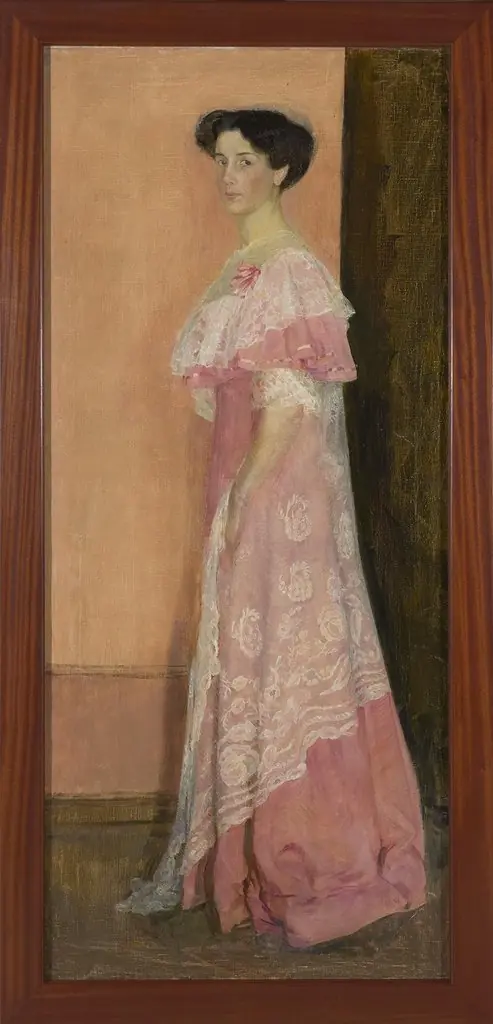 Society in the Restaurant. Revers: Study of a Lady in Pink
 Young Woman in White
 Portrait of Helena Piltz née Rymowicz