Artwork
Saturn
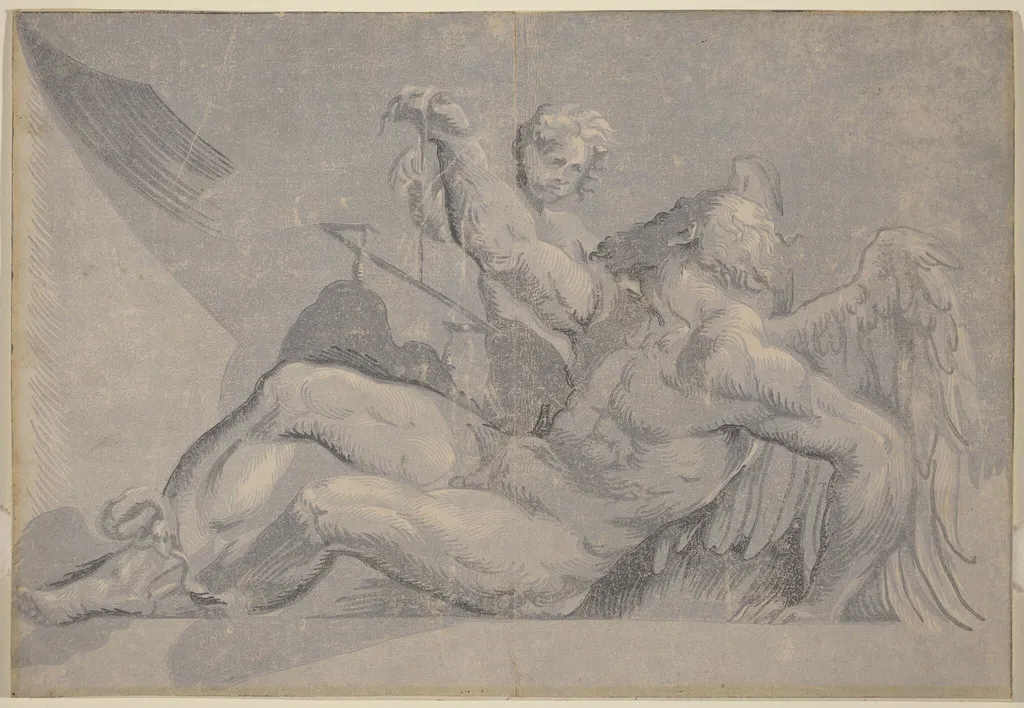
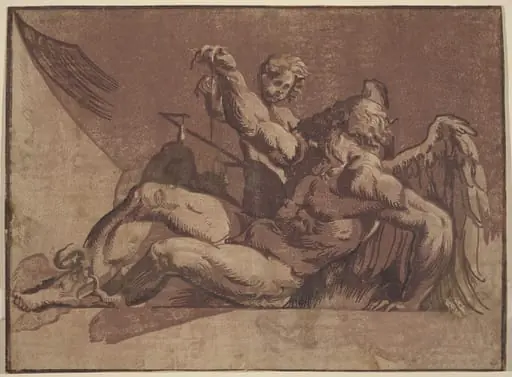
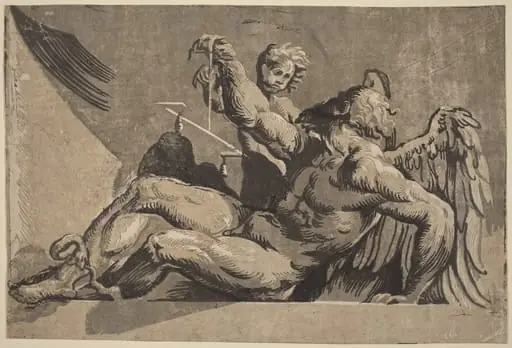
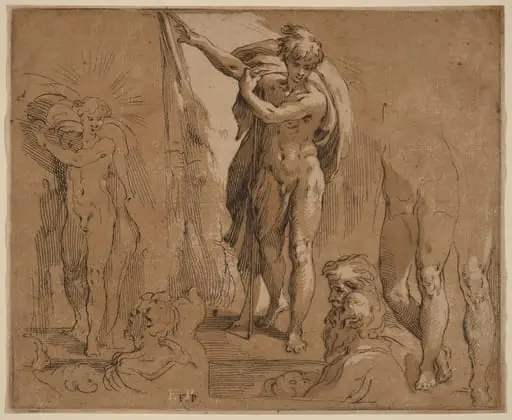
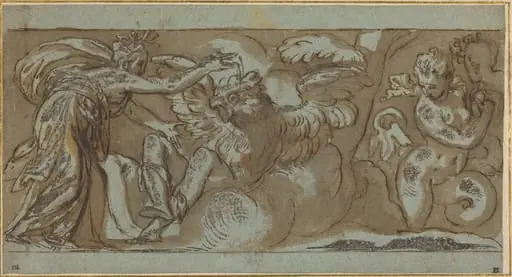
Saturn is an ink print by the Renaissance artist Giuseppe Nicolo Vicentino. It dates from 1528 and is held in the collection of the National Gallery of Art.
About this work
Overview
Giuseppe Nicolo Vicentino’s woodcut titled Saturn dates to 1528 and exemplifies the chiaroscuro technique, employing four separate blue blocks to render a scene of dramatic contrast. The print, executed in a limited palette, presents a turbulent tableau that combines mythic and natural elements, suggesting a preparatory study rather than a completed composition.
Subject & Meaning
The image depicts a tempestuous sky over a chaotic landscape: a winged figure with disheveled hair stretches its arms on the right, while a man on the ground clutches a scythe. Beneath them a horse rears in alarm, emphasizing the sense of upheaval and the mythic connotations associated with the god Saturn.
Technique & Style
Vicentino applied the chiaroscuro woodcut method, carving separate blocks for each tonal layer and printing them in successive shades of blue. This approach creates depth through the interplay of light and shadow within a single hue, allowing the artist to suggest volume and movement without resorting to multiple colors.
History & Provenance
Created in the early sixteenth century, the work is believed to be a preparatory study for a larger, possibly painted, composition. Its survival in a modest format indicates it may have served as a model for subsequent prints or as a teaching piece within Vicentino’s workshop.
Context
The print emerges from a period when Italian artists were experimenting with woodcut as a medium for complex tonal effects. The use of chiaroscuro in blue aligns with contemporary interests in atmospheric perspective and the exploration of mythological subjects within the Renaissance visual vocabulary.
Artist & collection