Artwork
Saturn
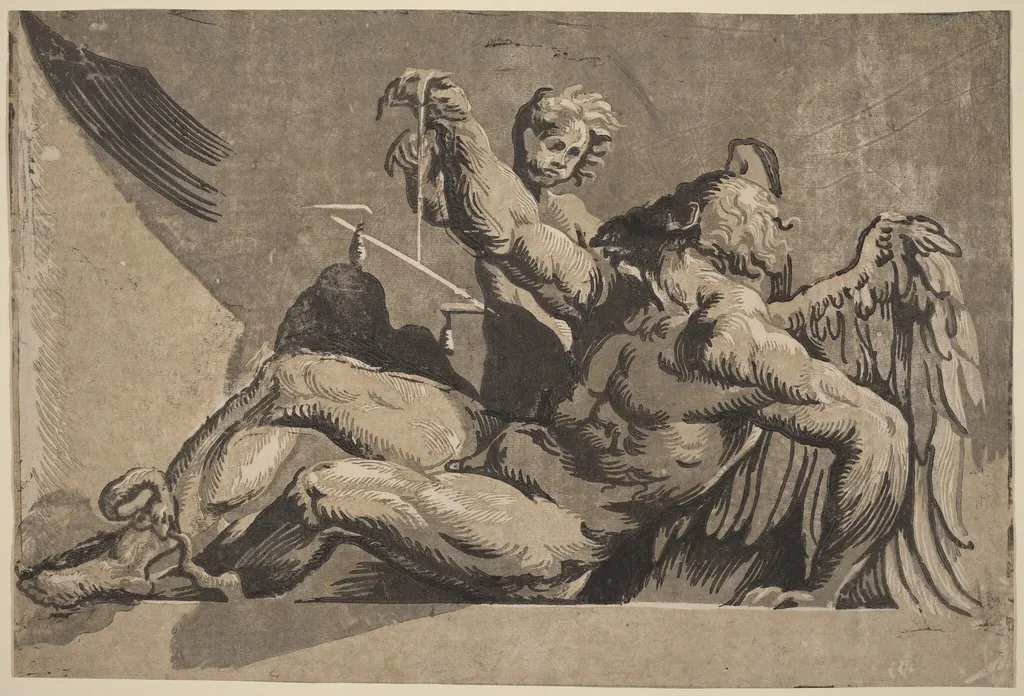
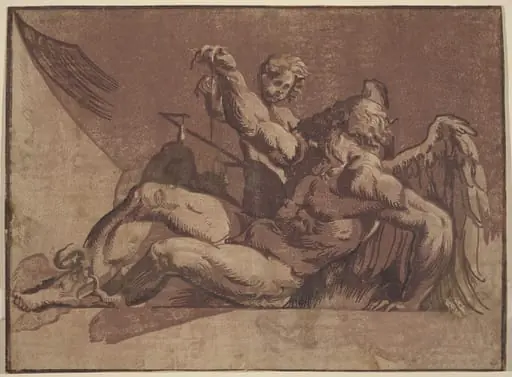
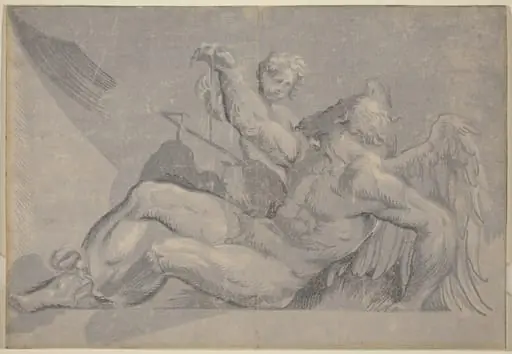
Saturn is an ink print by the Renaissance artist Giuseppe Nicolo Vicentino. It dates from 1528 and is held in the collection of the National Gallery of Art.
About this work
Overview
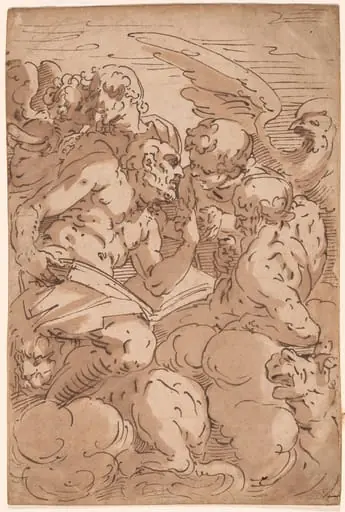
Created in 1528 by Giuseppe Nicolo Vicentino, this chiaroscuro woodcut depicts Saturn, the Roman god of time and agriculture, in a menacing form. Executed in four tones of gray, the print uses layered woodblocks to achieve dramatic tonal contrasts. The composition is dense and unsettling, emphasizing shadow and texture over detail, characteristic of early Italian chiaroscuro printing techniques.
Subject & Meaning
Saturn is portrayed as a gaunt, bearded figure wielding a scythe, standing atop a mound of slumbering figures, possibly representing victims of time or forgotten generations. A winged entity looms behind him, suggesting a supernatural presence. The imagery draws on mythological associations of Saturn devouring his children, symbolizing the inevitable and destructive passage of time.
Technique & Style
The print was made using a multi-block woodcut technique, with each block inked in a different shade of gray to build depth. Jagged lines and heavy shadows define the forms, creating a rough, tactile surface. The limited palette heightens the emotional intensity, relying on contrast rather than color to guide the viewer’s eye and evoke unease.
History & Provenance
Produced in the early 16th century, this work reflects the flourishing of chiaroscuro prints in northern Italy, particularly around Venice and Bologna. Vicentino was active during a period when artists experimented with reproducing painterly effects in print. While specific early ownership records are sparse, the print aligns with known outputs from this regional printmaking tradition.
Context
The subject matter also echoes contemporary humanist interest in classical mythology, reinterpreted through a darker, more psychological lens.
In the early 1500s, Italian printmakers sought to emulate the tonal richness of Renaissance painting using woodcut. Vicentino’s work responds to this trend, adapting the chiaroscuro style pioneered by artists like Leonardo and later refined by Ugo da Carpi. The subject matter also echoes contemporary humanist interest in classical mythology, reinterpreted through a darker, more psychological lens.
Legacy
This print contributes to the development of narrative woodcut as a medium for complex, emotionally charged imagery. Though Vicentino’s oeuvre is limited, his use of tonal layering influenced later printmakers exploring mood and symbolism. The work remains a rare example of early chiaroscuro printmaking that prioritizes psychological weight over decorative clarity.
Artist & collection