Artwork
Ceiling Studies of a Prophet and a Putto Seen from Below
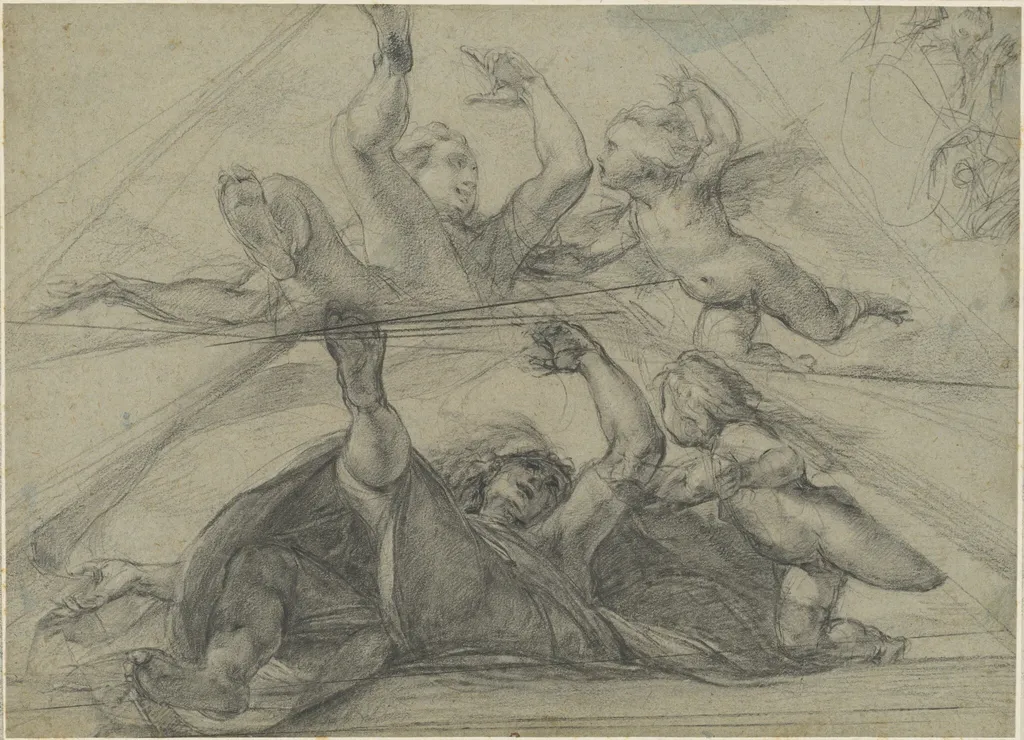
Ceiling Studies of a Prophet and a Putto Seen from Below is an oil drawing by the Renaissance artist Giulio Cesare Procaccini. It dates from 1604 and is held in the collection of the National Gallery of Art.
About this work
The artist used oiled black chalk and white chalk on blue-green paper to create this allegory, which is a type of art that uses symbols to convey meaning.
This painting is called Ceiling Studies of a Prophet and a Putto Seen from Below.
It was made by Giulio Cesare Procaccini around 1602-1607.
The artist used oiled black chalk and white chalk on blue-green paper to create this allegory, which is a type of art that uses symbols to convey meaning.
This technique and medium were commonly used during the Renaissance period.
To learn more about this style, look up the movement: Renaissance.
Overview
Created between 1602 and 1607, this drawing by Giulio Cesare Procaccini explores the visual challenge of depicting figures as seen from beneath, as if viewed from a floor looking up at a ceiling. Executed in oiled black chalk and heightened with white chalk on blue-green laid paper, it functions as a preparatory study for a frescoed ceiling, likely intended for a Milanese church or chapel under the patronage of Cardinal Federico Borromeo.
Subject & Meaning
The drawing presents a prophet and a putto, rendered in foreshortened perspective to suggest their placement in an architectural vault. The prophet, possibly representing divine inspiration, contrasts with the playful putto, a symbol of earthly or celestial spirits. Together, they form a symbolic pair common in Counter-Reformation religious art, where human and spiritual realms intersect in sacred space.
Technique & Style
Procaccini employed oiled black chalk for its rich, smudgeable tone, allowing subtle gradations of shadow, while white chalk lifted key highlights to simulate light falling from above. The blue-green paper provided a mid-tone ground, enhancing the illusion of depth and atmospheric perspective. This method, rooted in Renaissance draftsmanship, was adapted to meet the demands of illusionistic ceiling painting in the early Baroque era.
History & Provenance
The work emerged from Procaccini’s circle in Milan, where he collaborated with contemporaries like Crespi and Mazzucchelli under the guidance of Cardinal Borromeo, a key patron of religious art reform. Though its exact commission remains undocumented, the study aligns with projects for the Duomo or other ecclesiastical interiors in Lombardy during the first decade of the 17th century.
Context
During this period, Milanese artists were responding to the Council of Trent’s call for clear, emotionally resonant religious imagery. Ceiling compositions, often illusionistic, aimed to elevate the viewer’s gaze toward the divine. Procaccini’s studies reflect a broader trend in Northern Italy of using preparatory drawings to solve complex spatial problems before executing large-scale frescoes.
Legacy
This drawing exemplifies the transition from Renaissance draftsmanship to Baroque illusionism. While not widely exhibited, it remains a significant record of how artists tackled perspective and symbolism in sacred architecture. Its survival offers insight into the technical process behind ceiling decorations that shaped devotional spaces across Lombardy in the early 1600s.
Artist & collection
Artist
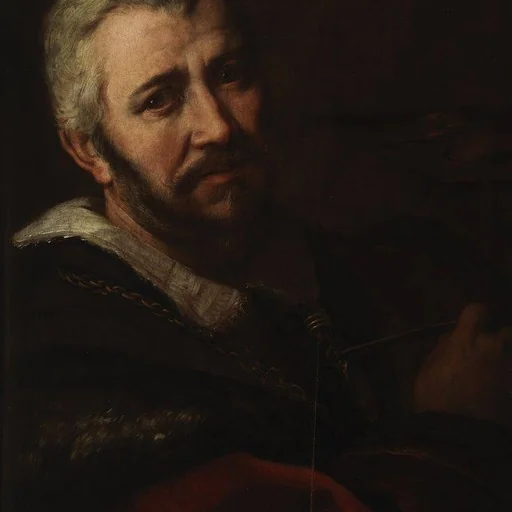
Giulio Cesare Procaccini (30 May 1574 – 14 November 1625) was an Italian painter and sculptor of the early Baroque era in Milan.

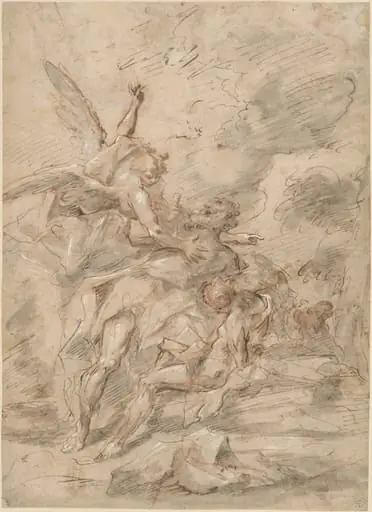 The Sacrifice of Isaac
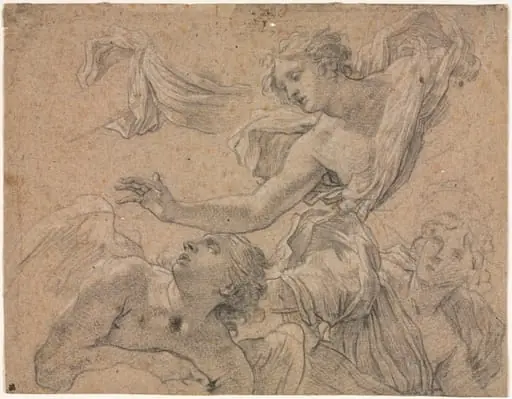 Studies of Angels (recto)
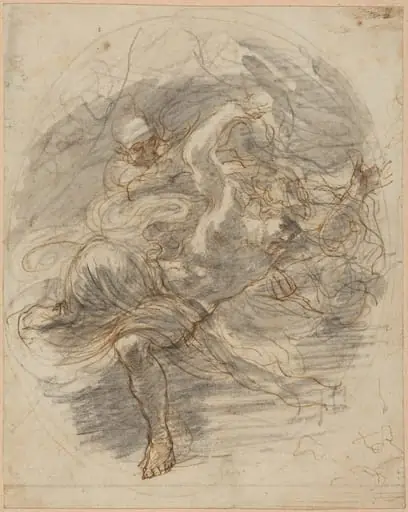 A Young Man Pursued by Death
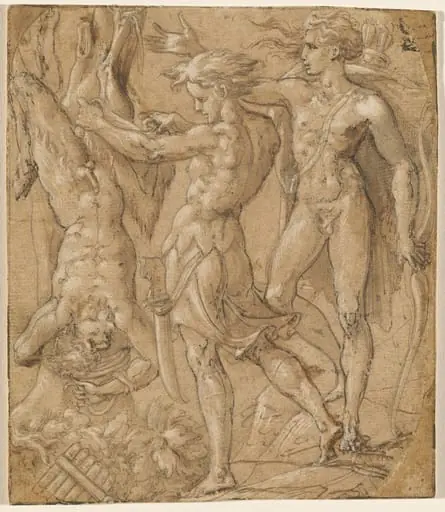 The Flaying of Marsyas
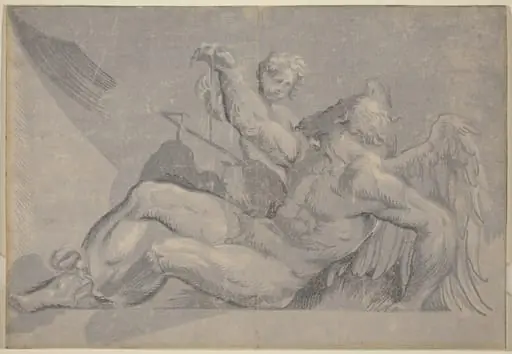 Saturn
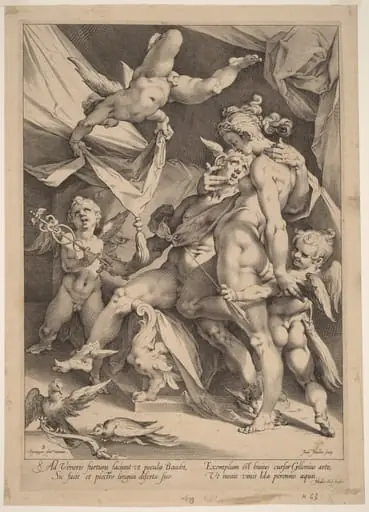 Venus and Mercury
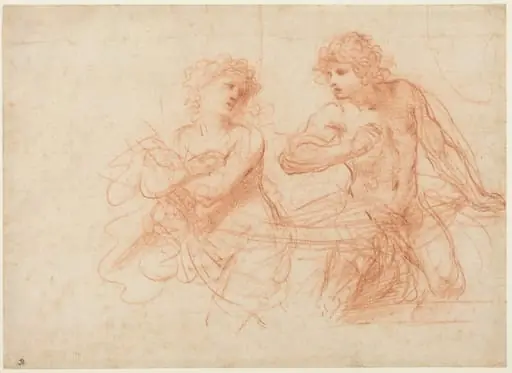 Amnon and Tamar
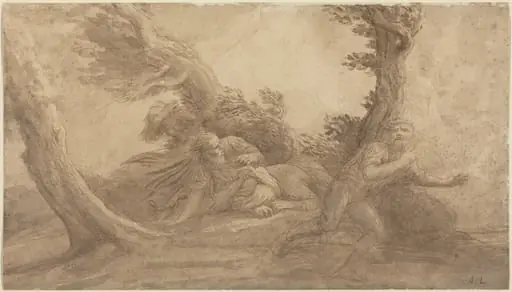 Clap of Thunder
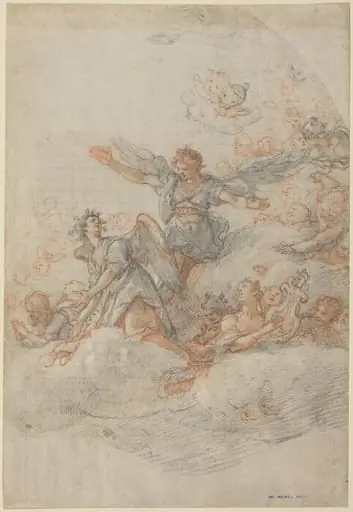 Angels and Putti in the Clouds
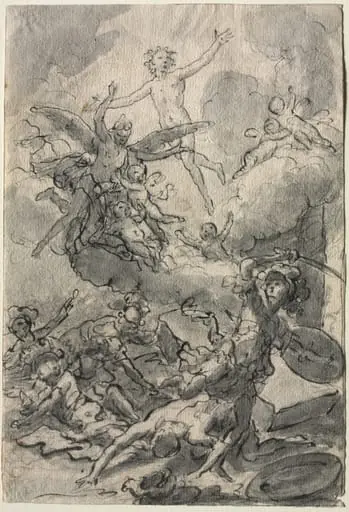 The Resurrection
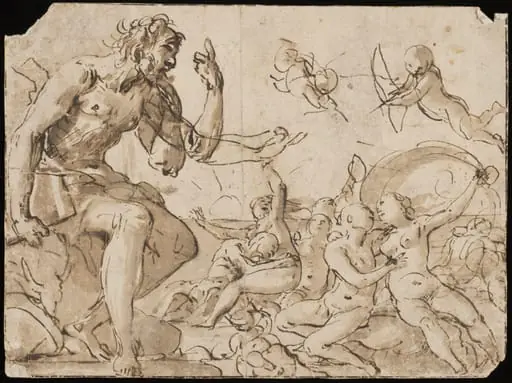 Sea-nymphs playing with tritons and a man; on the left a semi-draped giant, holding a book or stone, seated on a rock; possibly Polyphemus with Acis and Galatea
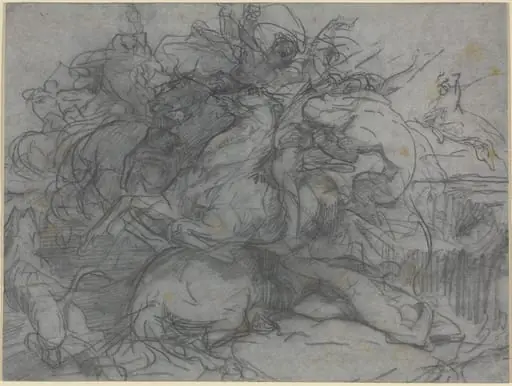 Study for "Surprise" (Battle of the Tigers)