Artwork
Roman Buildings with an Open Shed
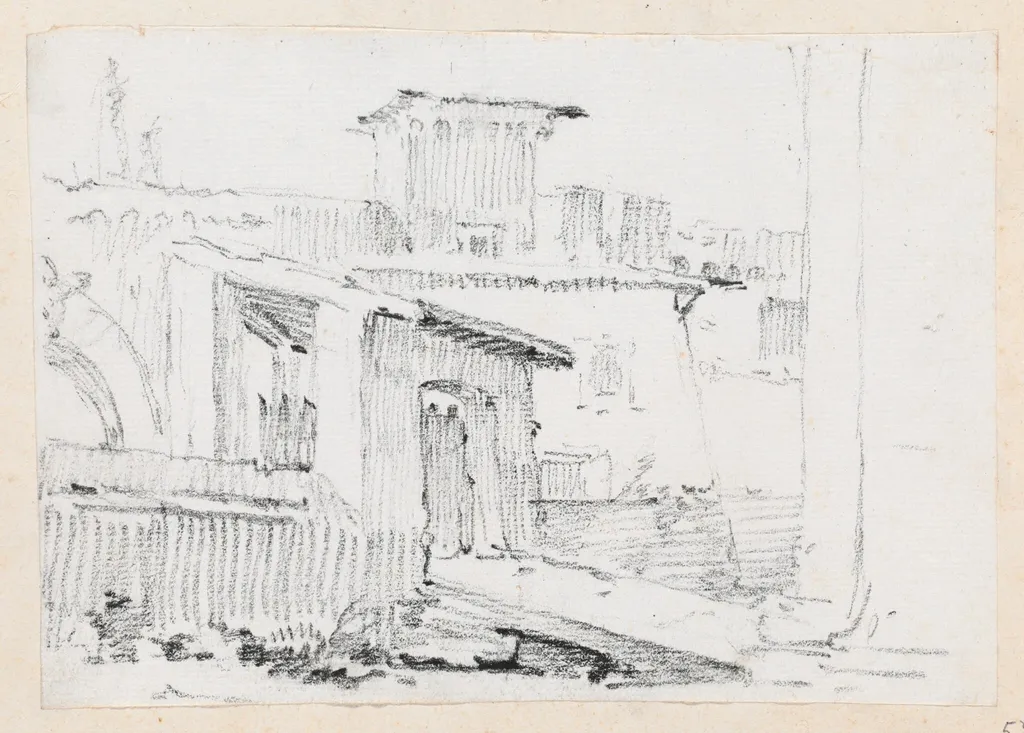
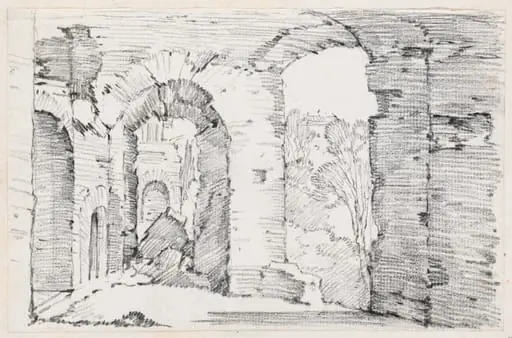
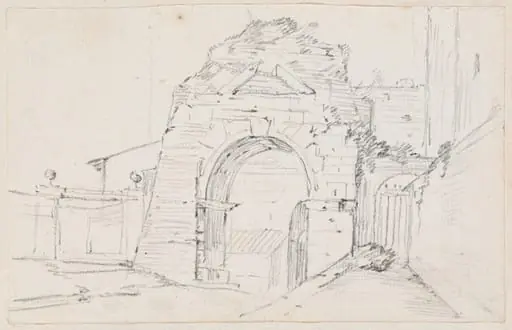
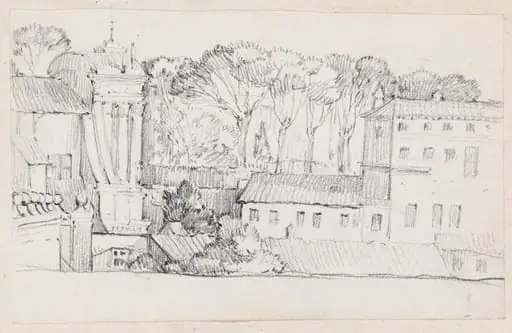
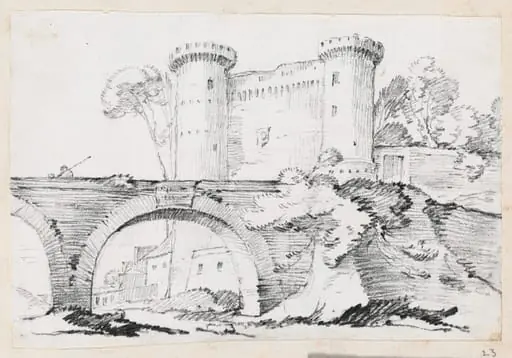
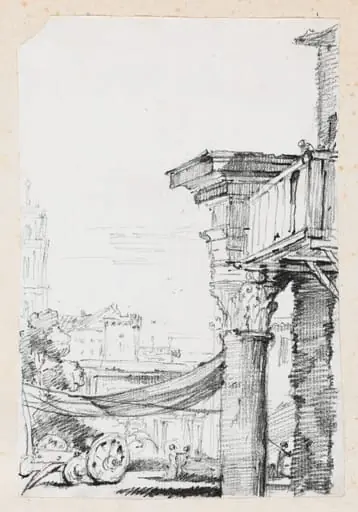
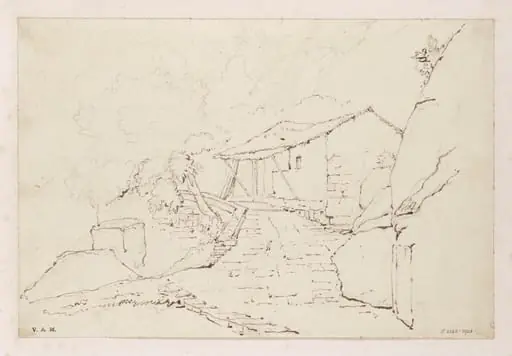
Roman Buildings with an Open Shed is a graphite drawing by the Baroque artist Joseph-Marie Vien. It dates from 1747 and is held in the collection of the National Gallery of Art.
About this work
Overview
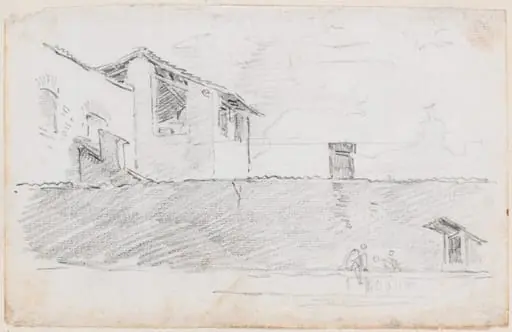
Created in 1747, this graphite drawing by Joseph-Marie Vien captures a fragment of Roman architecture alongside a weathered wooden shed. Executed on laid paper, the work belongs to an early stage of the artist’s career, before his later appointment as Premier peintre du Roi. Its informal quality suggests it was made as a study, not a polished composition, emphasizing observation over finish.
Subject & Meaning
The drawing juxtaposes enduring stone ruins—arches, crumbling walls, and broken steps—with a humble, half-collapsed shed. This contrast may reflect an interest in the passage of time and the coexistence of grandeur and decay. The shed, neither classical nor monumental, introduces a quiet, everyday presence amid ancient remains, suggesting a lived-in landscape rather than an idealized past.
Technique & Style
The sketch’s unfinished appearance underscores its function as a direct response to the site, prioritizing immediacy over refinement.
Vien employed loose, rapid graphite strokes to convey texture and light. The rough surfaces of stone, uneven ground, and patches of grass are suggested with minimal lines rather than detailed rendering. Shadows stretch diagonally across the scene, indicating a strong directional light. The sketch’s unfinished appearance underscores its function as a direct response to the site, prioritizing immediacy over refinement.
History & Provenance
The drawing dates from Vien’s formative years, likely made during or shortly after his time in Rome, where he studied antiquities. While its early provenance is undocumented, it aligns with the practice of French artists of the period who traveled to Italy to sketch ruins as part of their artistic training. It remained in private hands until entering a public collection in the 20th century.
Context
In mid-18th-century France, interest in classical antiquity was growing, fueled by archaeological discoveries and scholarly publications. Artists like Vien sketched Roman remains not merely as records but as sources for compositional ideas. This drawing reflects a shift away from Baroque theatricality toward a more restrained, observational approach rooted in direct experience of ancient sites.
Legacy
Though not widely exhibited, this work exemplifies the role of sketching in the development of neoclassical aesthetics. Vien’s attention to architectural decay and everyday detail influenced later artists who sought authenticity over idealization. The drawing stands as a quiet testament to the practice of drawing as a tool for understanding historical form.
Artist & collection
Artist
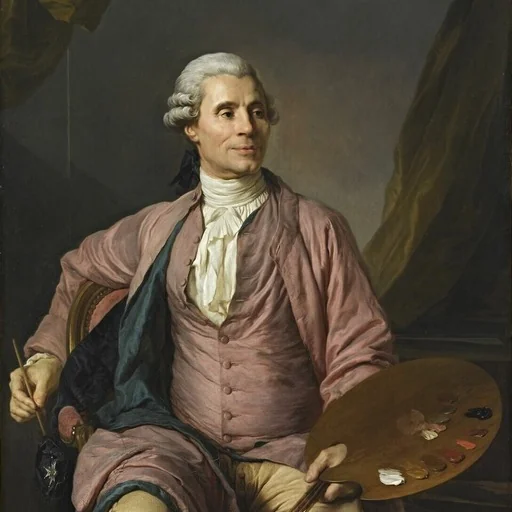
Joseph-Marie Vien (18 June 1716 – 27 March 1809) was a French painter. He was the last holder of the post of Premier peintre du Roi, serving from 1789 to 1791, before it was abolished during the French Revolution.