Artwork
Ameer Khan Lohani Cheiftain [sic]
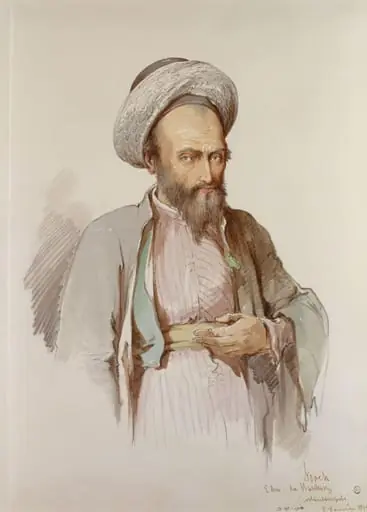
![Ameer Khan Lohani Cheiftain [sic], by Godfrey Thomas Vigne, watercolor, 1836](https://artifactworldgallery.com/img/godfrey-thomas-vigne--ameer-khan-lohani-cheiftain-sic--7c6575efa84f0a9c-w1024.webp)
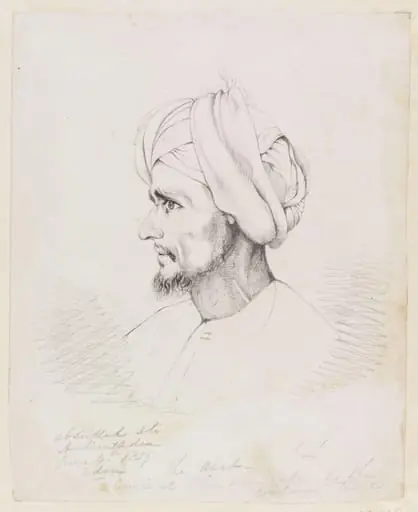
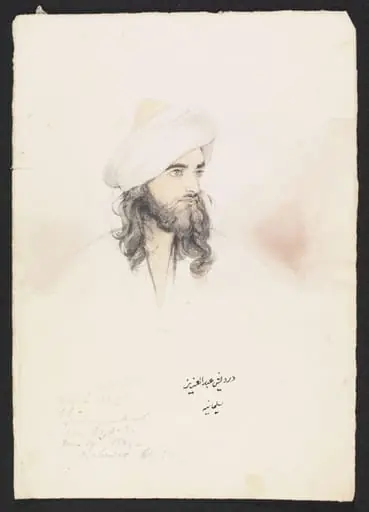
Ameer Khan Lohani Cheiftain [sic] is a watercolor work on paper by the Romanticist artist Godfrey Thomas Vigne. It dates from 1836 and is held in the collection of the Victoria and Albert Museum.
About this work
This sketch shows a bearded man in a white robe and turban, holding a curved object like a sword.
This sketch shows a bearded man in a white robe and turban, holding a curved object like a sword. His face is serious, with dark eyes and a thick mustache. The background is just a few quick strokes—no extra details.
The artist signed it in the corner with the name "Ameer Khan Lohani Cheiftain" and the date 1836. The loose, sketchy style suggests it was drawn fast, maybe from memory.
Check out the Victoria and Albert Museum to see more works like this.
Overview
This watercolor, executed in 1836 by the British traveler Godfrey Thomas Vigne, depicts Ameer Khan Lohani, a regional chieftain Vigne met while journeying between Multan and Ghazni. The portrait is a quick, sketch‑like rendering, signed by the artist and dated on the work itself.
Subject & Meaning
The figure is presented as a bearded man in a white robe and turban, holding a curved weapon reminiscent of a sword. His expression is solemn, with dark eyes and a prominent mustache, conveying the authority and demeanor of a local leader encountered during Vigne’s travels.
Technique & Style
Rendered in watercolor, the drawing employs loose, rapid strokes that suggest a fleeting observation, perhaps made from memory on the road. The background consists of minimal, gestural lines, focusing attention on the sitter rather than on elaborate setting.
History & Provenance
The portrait appears in Vigne’s 1840 travel narrative, *A Personal Narrative of a Visit to Ghuzni, Kabul, and Afghanistan*. A related sketch is held by the India Office Library. In 1971 the work entered the museum’s collection after being purchased from Henry D’Olier Vigne, the artist’s great‑nephew, for £200.
Context
Vigne’s journeys through the northwestern Indian subcontinent and Afghanistan produced a series of visual records of local figures and landscapes. This watercolor forms part of a broader documentary effort to capture the people and places encountered during early‑19th‑century British exploration.
Artist & collection