Artwork
Abdullah Ali Hakim of Aden
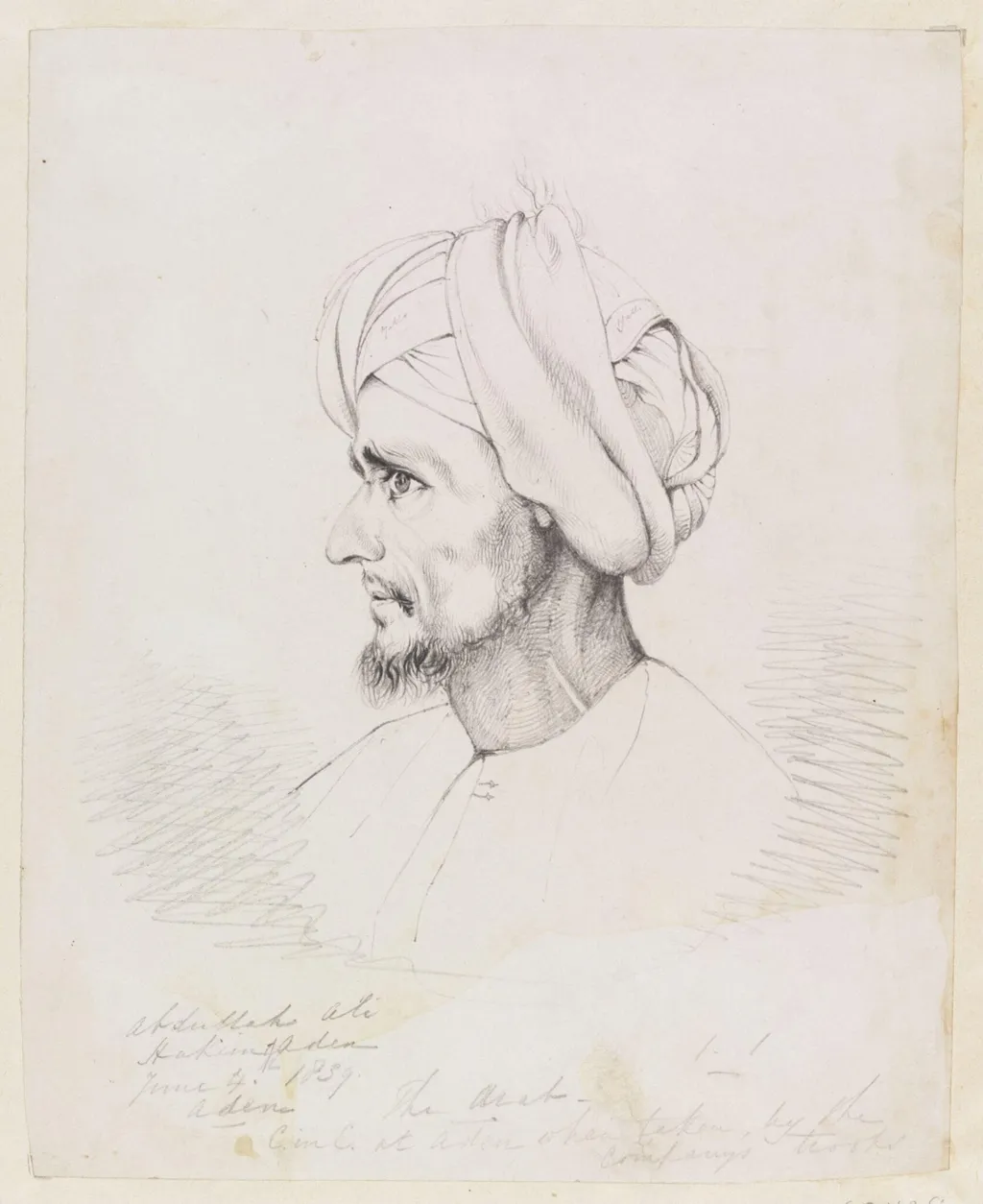
Abdullah Ali Hakim of Aden is a watercolor work on paper by the Romanticist artist Godfrey Thomas Vigne. It dates from 1839 and is held in the collection of the Victoria and Albert Museum.
About this work
If you like this sketchy style, look up sfumato next—it’s a technique that blends colors smoothly, like soft shadows.
This sketch shows a man in profile, wearing a loose turban wrapped around his head. His beard is thick, and his gaze is turned slightly downward. The drawing is light and sketchy, with faint pencil lines marking the background.
The artist wrote notes in the corner, including the name "Abdullah Ali Hakim of Aden" and the year 1839. This suggests the drawing was made during a specific time and place, but the style feels quick and personal.
If you like this sketchy style, look up sfumato next—it’s a technique that blends colors smoothly, like soft shadows.
Overview
This watercolour sketch, created in 1839, portrays Abdullah Ali Hakim of Aden during Godfrey Thomas Vigne’s voyage from India to England. Executed with light, spontaneous strokes, the drawing captures a moment of direct observation rather than a formal portrait. Vigne inscribed the subject’s name and date in the corner, anchoring the work to a specific time and place. Its informal quality suggests it was made as a personal record rather than a commissioned piece.
Subject & Meaning
Abdullah Ali Hakim, a figure from Aden, is depicted in profile with a thick beard and a loosely wrapped turban. His downward gaze conveys quiet introspection, avoiding direct engagement with the viewer. The sketch does not idealize or dramatize; instead, it presents a restrained, human presence. The inclusion of his name and origin implies Vigne’s interest in documenting individuals encountered during his travels, reflecting a broader ethnographic curiosity of the period.
Technique & Style
Vigne employed watercolour with minimal layering, relying on faint pencil underdrawing to suggest form and background. The lines are loose and unrefined, emphasizing immediacy over polish. The washes are translucent, allowing the paper’s texture to contribute to the tone. This approach aligns with travel sketching traditions, where speed and observation took precedence over finished detail, resulting in a candid, intimate aesthetic.
History & Provenance
The drawing remained within Vigne’s family after his death, passed down through generations. In 1971, it was acquired from Henry D'Olier Vigne, the artist’s great-nephew, as part of a collection of personal papers and sketches. Its journey from a private memento to a documented historical artifact reflects the gradual institutional recognition of travel sketches as cultural records rather than mere personal curiosities.
Context
Created during Britain’s expanding imperial presence in the Indian Ocean, the sketch reflects the movement of British travelers through key ports like Aden. Vigne’s focus on a local figure, rather than a landscape or monument, aligns with a growing 19th-century interest in individual portraiture across cultures. Such works contributed to Western visual archives of non-European subjects, often shaped by the observer’s transient perspective.
Legacy
Though not widely exhibited, the sketch endures as an example of 19th-century travel drawing—unpolished, personal, and historically grounded. It offers insight into how British travelers engaged with local populations during imperial voyages. Its modest scale and informal technique contrast with grander colonial imagery, preserving a quieter, more human dimension of cross-cultural encounter.
Artist & collection


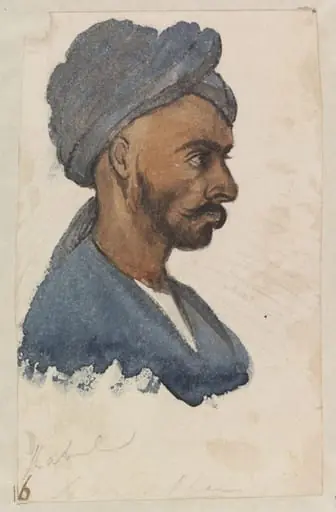 Suliman Khan Kabul
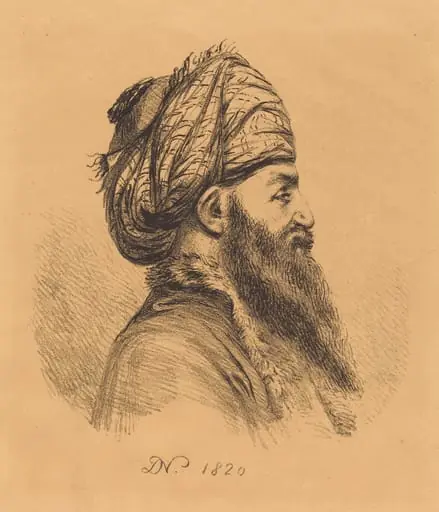 Profile Head of a Man in a Turban
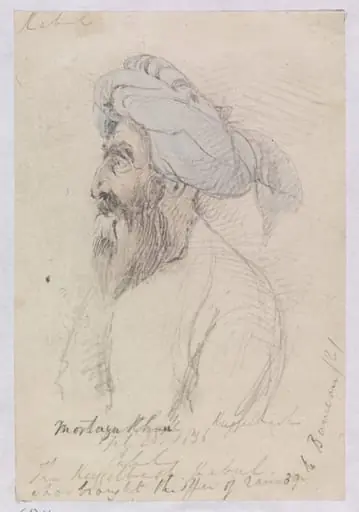 Mortaza Khan Kuzzelbash
![Ameer Khan Lohani Cheiftain [sic], by Godfrey Thomas Vigne](https://artifactworldgallery.com/img/godfrey-thomas-vigne--ameer-khan-lohani-cheiftain-sic--7c6575efa84f0a9c-w320.webp) Ameer Khan Lohani Cheiftain [sic]
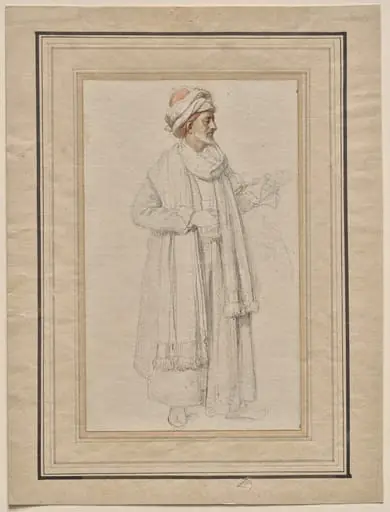
Ameer Khan Lohani Cheiftain [sic]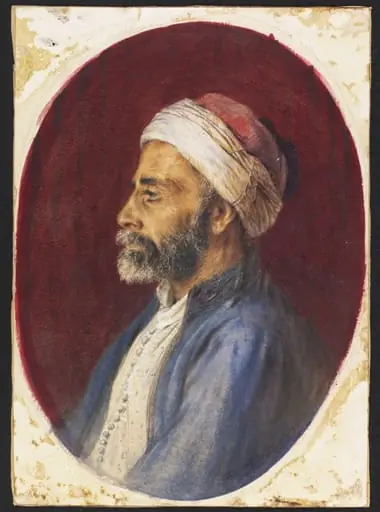 Dragoman Mahomet
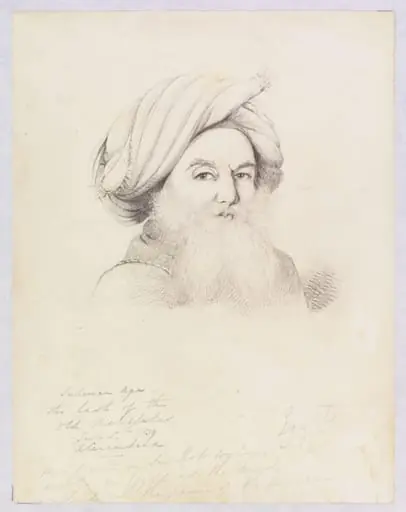
 Sidi Hadji Abdurrahman Adja (1720–1792)
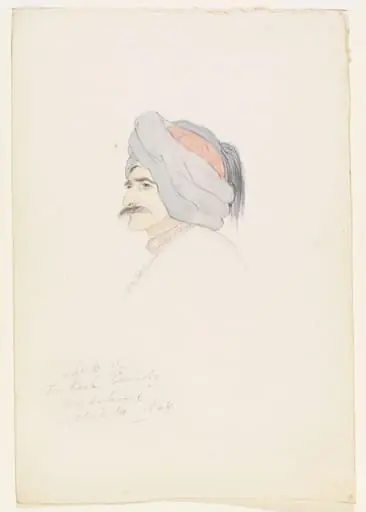
 Suliman Aga, the last of the old Mamelukes
 Sheik of Turkish Cavalry
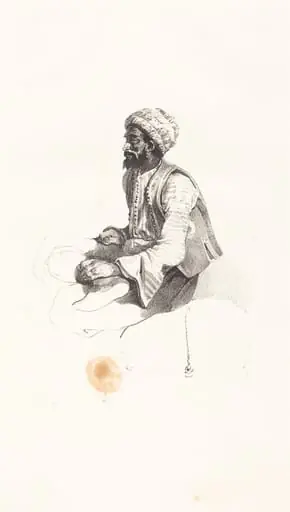 Seated Turk
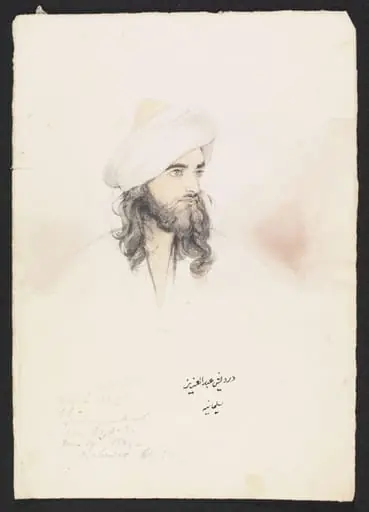 Dervish Abdul Aziz - Suleiman Momd from Bagdad
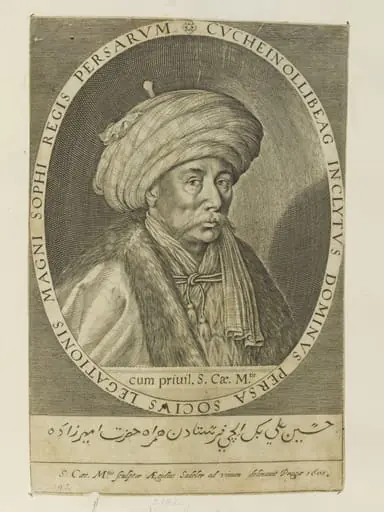 Husayn `Ali Beg