Artwork
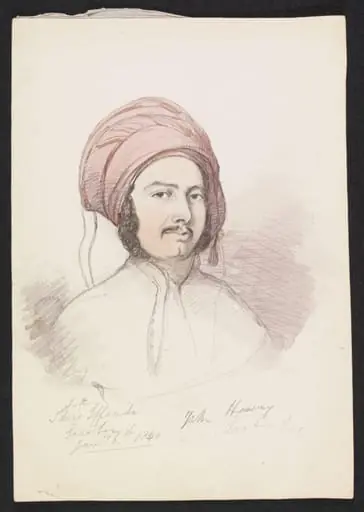
An Afghan. Mirza ali Oscary
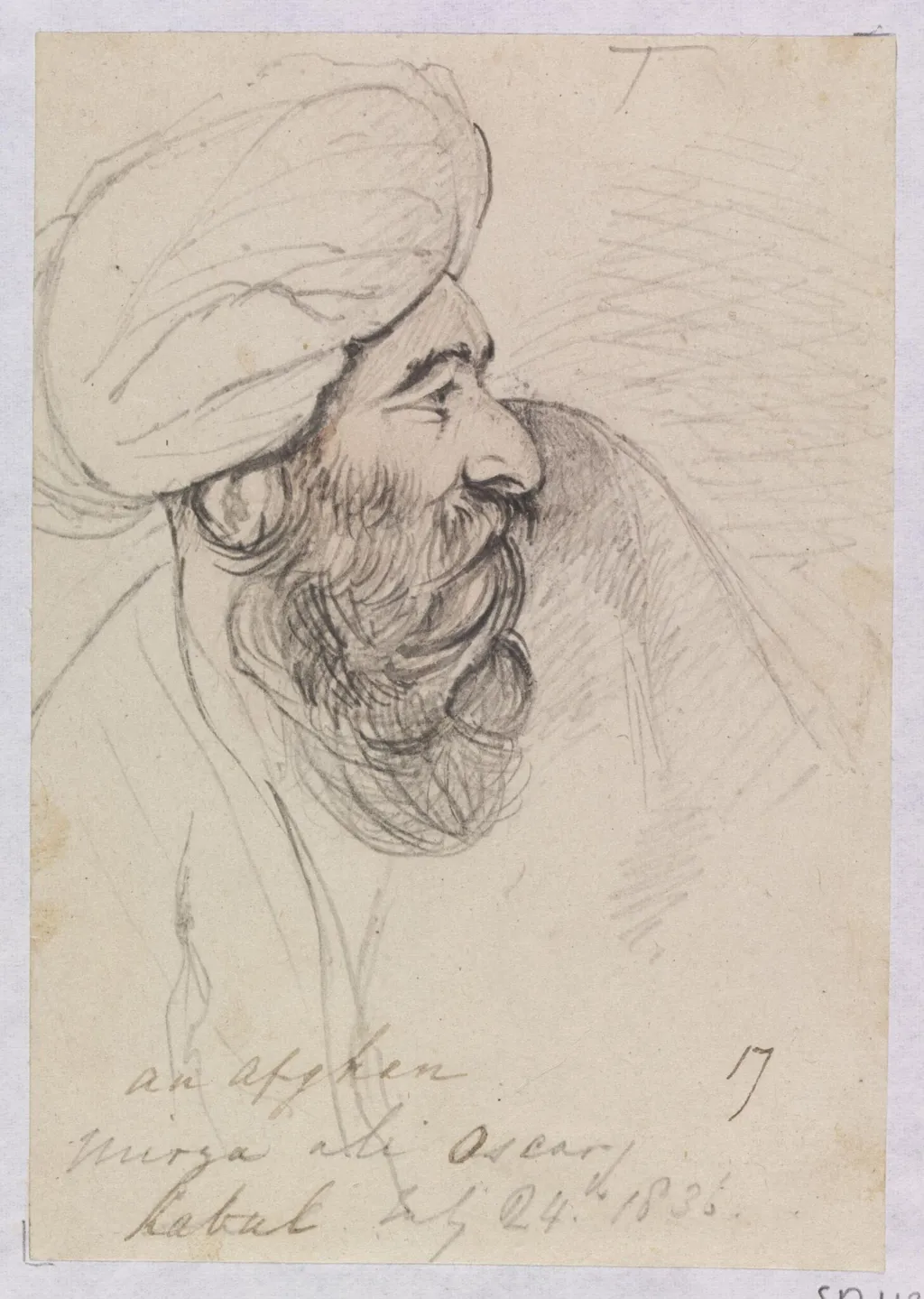
An Afghan. Mirza ali Oscary is a watercolor work on paper by the Romanticist artist Godfrey Thomas Vigne. It dates from 1836 and is held in the collection of the Victoria and Albert Museum.
About this work
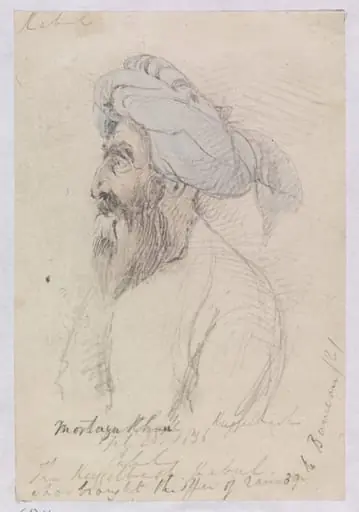
The artist wrote the name *Mirza ali Oscary* and the date 1836 in the corner—this was likely the sitter’s name.
This sketch shows a man in profile, wearing a turban and a long coat. His face is turned slightly away, and the lines are loose and quick, like a rough draft. The paper looks old, with some smudges and faint writing in the corners.
The artist wrote the name *Mirza ali Oscary* and the date 1836 in the corner—this was likely the sitter’s name. The style feels hurried, like a quick study rather than a finished portrait.
Check out the Victoria and Albert Museum to see more sketches like this.
Overview
A watercolour sketch from 1836 depicts Mirza Ali Oscary, an Afghan man encountered by the British traveler and artist Godfrey Thomas Vigne. Executed in loose, rapid strokes, the work captures a profile view of the sitter wearing a turban and long coat. The paper shows signs of age, with faint annotations in the margins and smudges consistent with field use. Vigne inscribed the subject’s name and date, suggesting the drawing served as a personal record rather than a formal commission.
Subject & Meaning
Mirza Ali Oscary was likely a local figure Vigne met during his journey through Afghanistan. The sketch’s intimacy and minimal detail imply a momentary encounter, not a commissioned portrait. The inclusion of his name and the date signals Vigne’s intent to document individuals encountered on his travels, preserving identities often excluded from official records. The work reflects a humanistic, if colonial, impulse to record faces and names from regions rarely depicted in European art at the time.
Technique & Style
Rendered in watercolour with swift, unrefined brushwork, the drawing resembles a field study rather than a polished composition. Lines are tentative, forms simplified, and shading minimal—qualities typical of sketches made under travel constraints. The paper’s texture and slight discoloration suggest outdoor use. Vigne’s inscriptions in the corners, written in pencil or light ink, reinforce the sketch’s function as a personal aide-mémoire, prioritizing immediacy over finish.
History & Provenance
The drawing entered the collection in 1971 from Henry D'Olier Vigne, the artist’s great-nephew, as part of a group of family-held materials. These items originated from Godfrey Thomas Vigne’s travels in Central Asia during the 1830s. Comparable sketches by him are held in the India Office Library and Records, indicating a broader archive of ethnographic observations. The work’s survival through generations reflects its value as a family historical artifact, not merely an artistic piece.
Context
Vigne created this sketch during a period of British interest in Afghanistan, preceding the First Anglo-Afghan War. His travelogue, published in 1840, contextualizes such drawings as part of a larger effort to document geography, culture, and people of the region. While not overtly political, these sketches contributed to European visual knowledge of Central Asia, shaped by the dual lenses of curiosity and imperial expansion.
Legacy
The sketch remains one of many informal records from Vigne’s journey, offering a quiet counterpoint to grander colonial narratives. Its modest scale and unembellished style preserve a fleeting human presence amid broader historical forces. Today, it contributes to scholarly understanding of 19th-century travel documentation, illustrating how individual identities were noted, however briefly, within the margins of imperial exploration.
Artist & collection


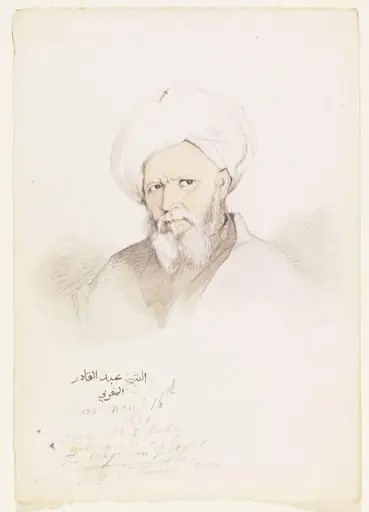
![The Nawab Jubar Khan [br]other of Dost Md. Khan Kabul, by Godfrey Thomas Vigne](https://artifactworldgallery.com/img/godfrey-thomas-vigne--the-nawab-jubar-khan-br-other-of-dost-md-khan-kabul--fde226cb29337c2b-w320.webp)