Artwork
The Kuzzelbash of Kabul
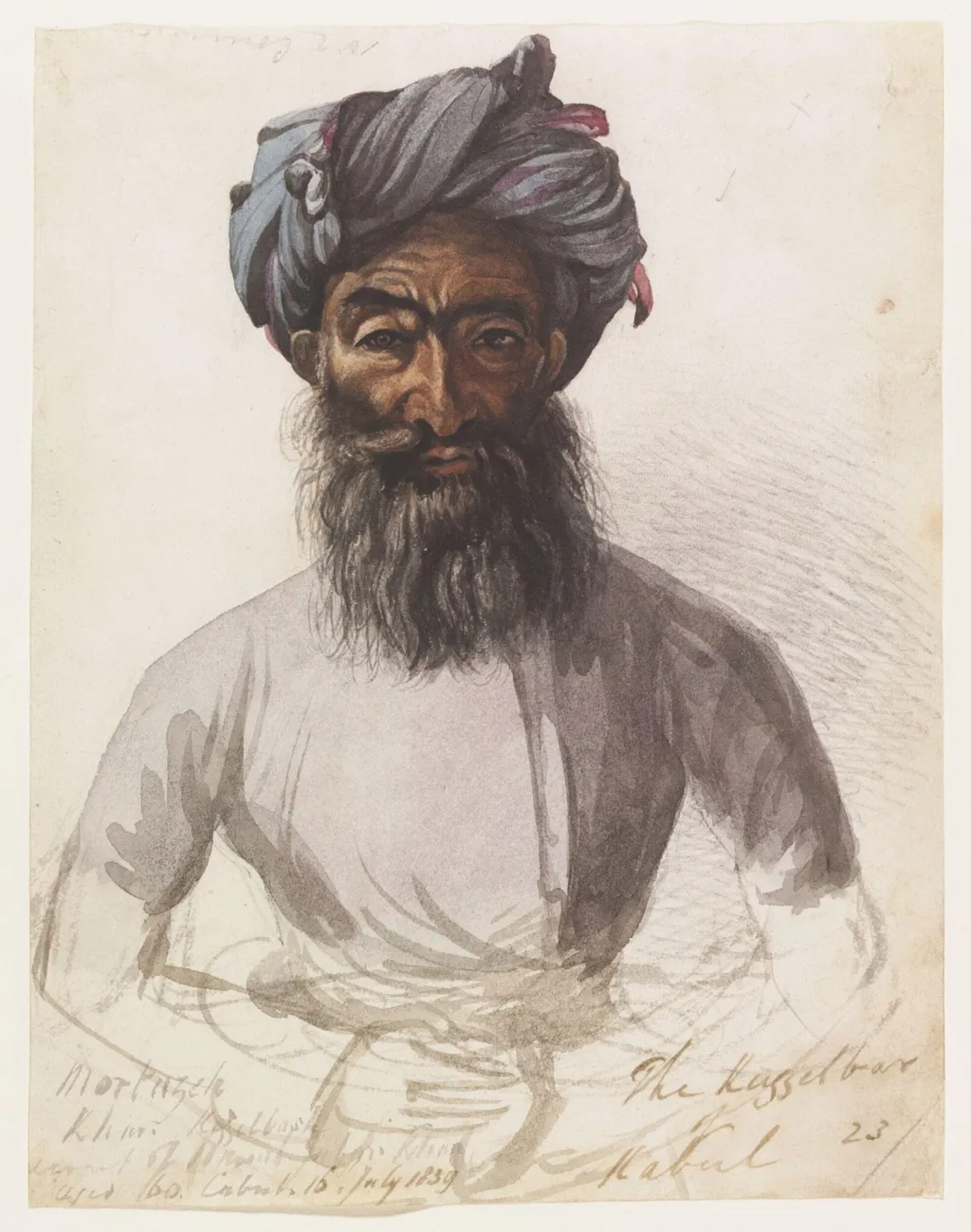
The Kuzzelbash of Kabul is a watercolor work on paper by the Romanticist artist Godfrey Thomas Vigne. It dates from 1836 and is held in the collection of the Victoria and Albert Museum. Created in 1836, this watercolour portrait depicts Murtaza Khan, a leader of the Qizizbash tribe, alongside his young bride.
About this work
The Kuzzelbash of Kabul is a watercolour portrait. It was created by Godfrey Thomas Vigne in 1836.
This portrait is part of a larger group of drawings done by Vigne during his journey through Turkey, Persia, and India. He met the subject, Murtaza Khan, near Ghazni and accompanied him to Kabul.
You can learn more about this style of art by looking into the movement: Romanticism.
Overview
Created in 1836, this watercolour portrait depicts Murtaza Khan, a leader of the Qizizbash tribe, alongside his young bride. The work forms part of a series of portraits and landscapes produced by the English traveller Godfrey Thomas Vance during his extensive travels across Turkey, Persia, India and Afghanistan in the 1830s.
Subject & Meaning
Murtaza Khan is shown with dark, rugged features that contrast sharply with the delicate, pale complexion of his newly‑wed wife, emphasizing the visual tension between his tribal authority and her youthful innocence. The pairing offers a glimpse into the domestic sphere of a prominent Afghan family encountered by Vance on his route from Ghazni to Kabul.
Technique & Style
Executed in watercolour, the portrait employs fine washes and delicate line work characteristic of early Romantic travel illustration. Vance’s handling of light and shadow accentuates the subjects’ facial expressions, while the muted palette reflects the arid landscape of the region.
History & Provenance
The drawing belongs to a larger body of work Vance compiled during his 1832‑1839 expedition, later dispersed among institutions such as the Searight Collection, the India Office Library and the Royal Geographical Society. Vance recorded his Afghan journey in the 1840 publication A Personal Narrative of a Visit to Ghuzni, Kabul, and Afghanistan.
Context
The portrait was produced at a time when European travelers were documenting the peoples and places of Central and South Asia, often through a Romantic lens that emphasized exoticism and individual character. Vance’s encounters with local elites like Murtaza Khan provided material for both artistic and ethnographic study.
Artist & collection


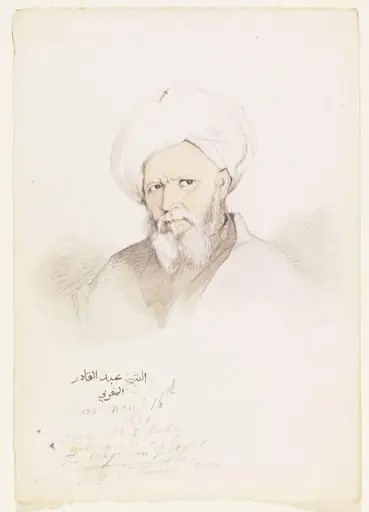
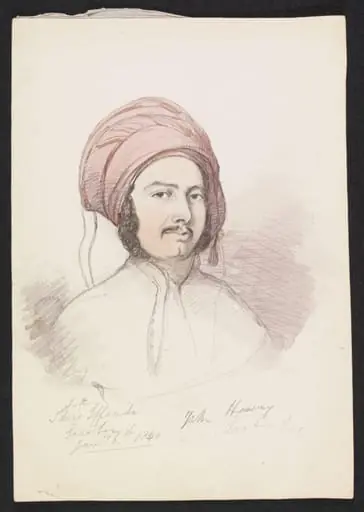
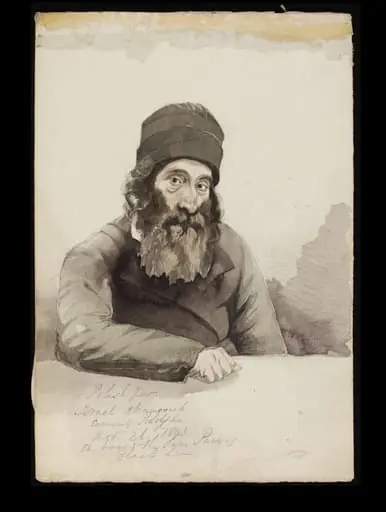
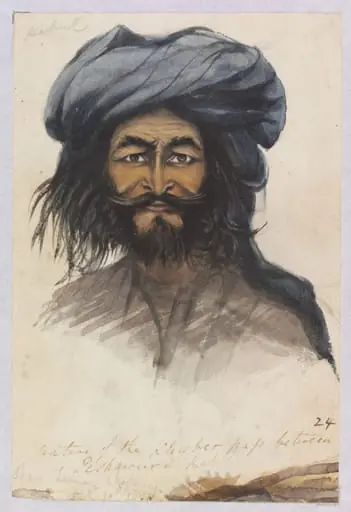 Native of the Khyber pass between Peshawour & Kabul
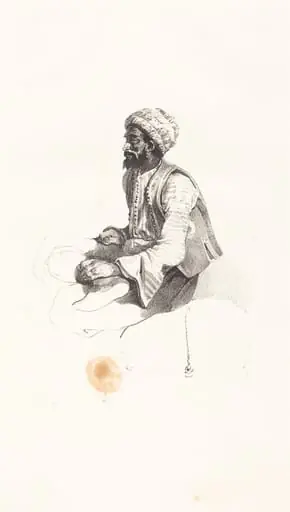 Seated Turk
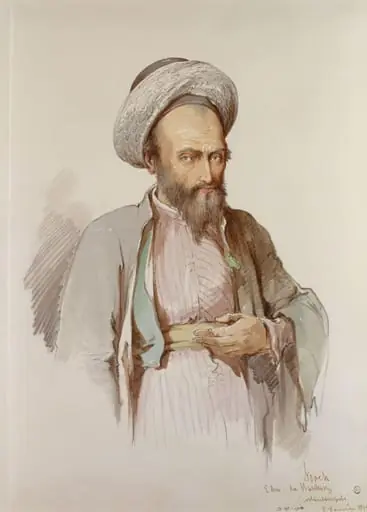 Portrait of Isaac, a Karaite Jew from Hasköy near Constantinople
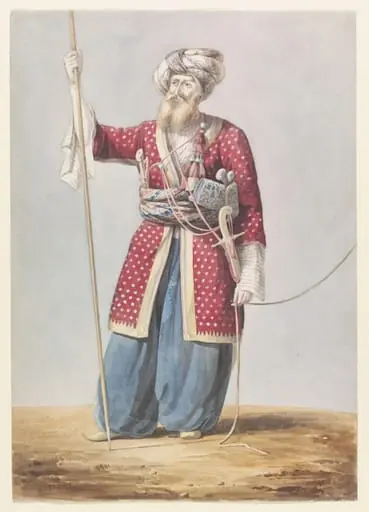 A Mamluk from Aleppo
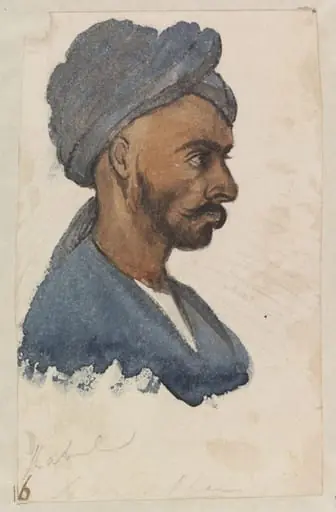 Suliman Khan Kabul
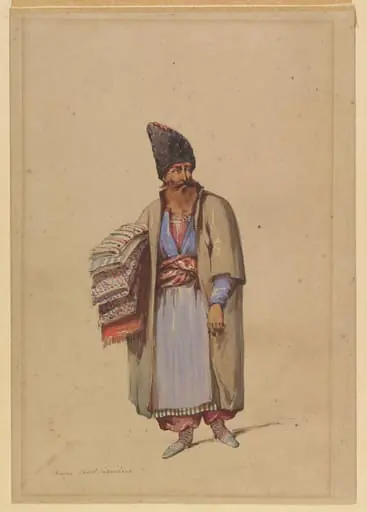 Persian Shawl-Merchant
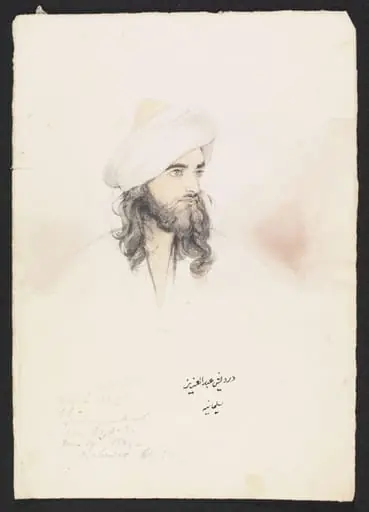 Dervish Abdul Aziz - Suleiman Momd from Bagdad
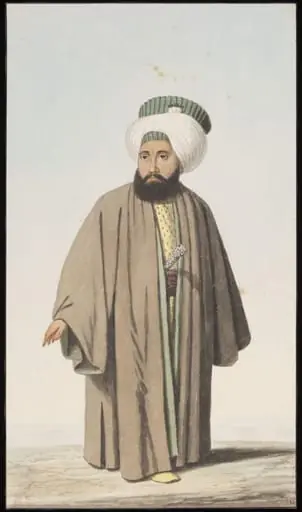 Defterdar, or Minister of Finance
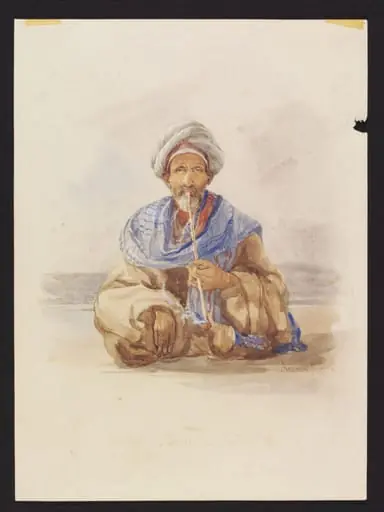 Achmet Girgeh
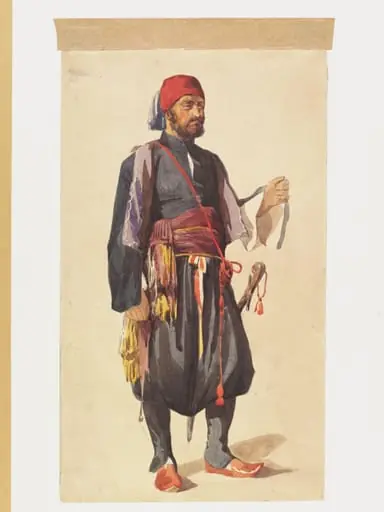 Officer, possibly a Spahi