Artwork
A Mamluk from Aleppo
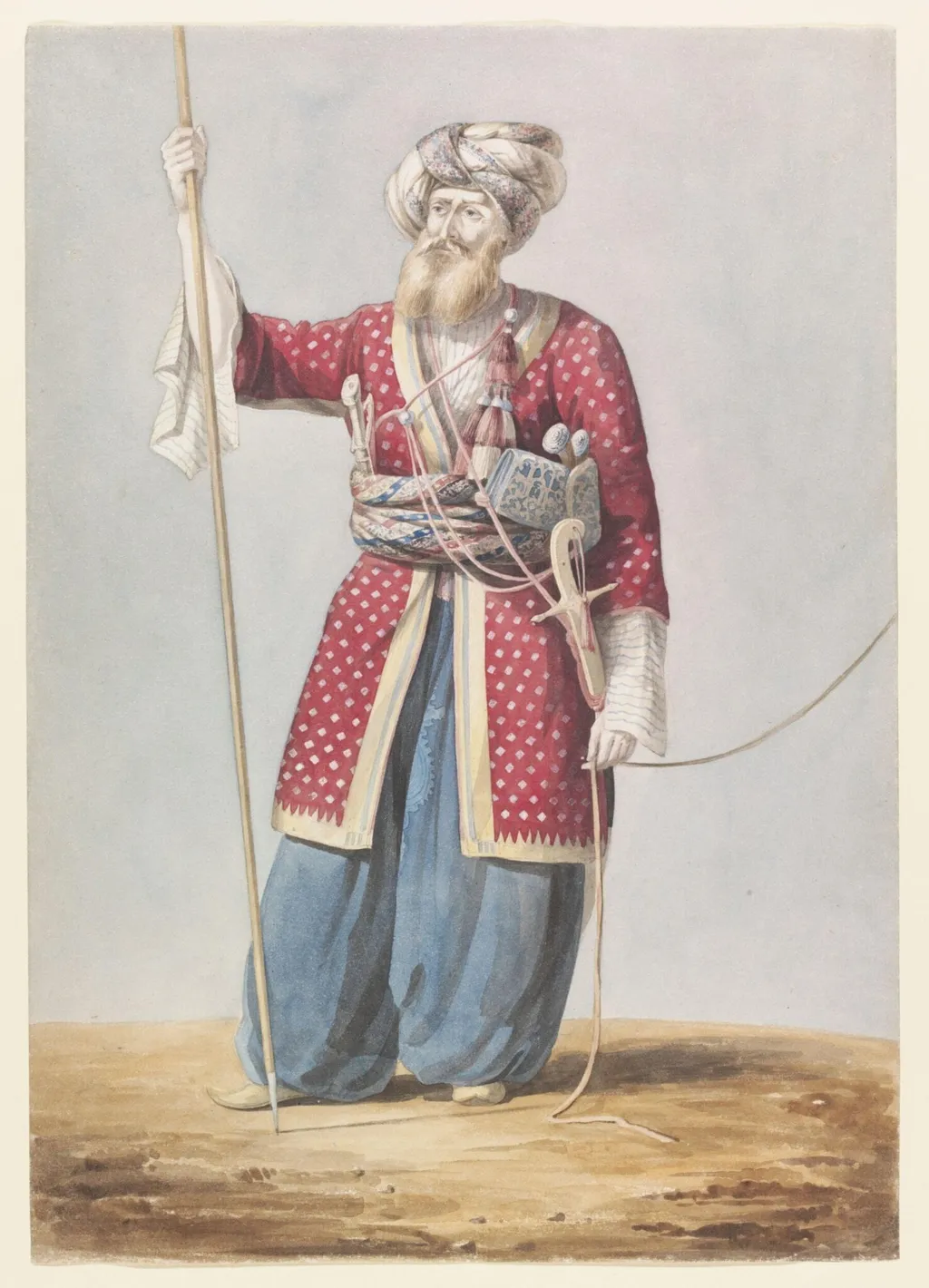
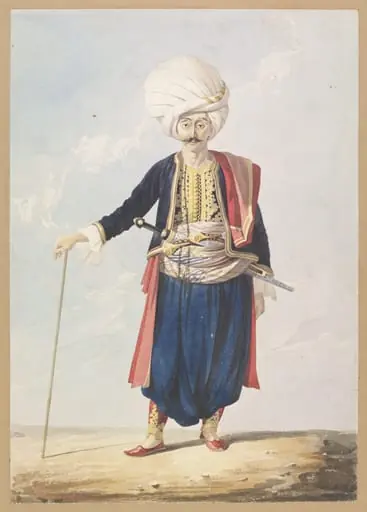
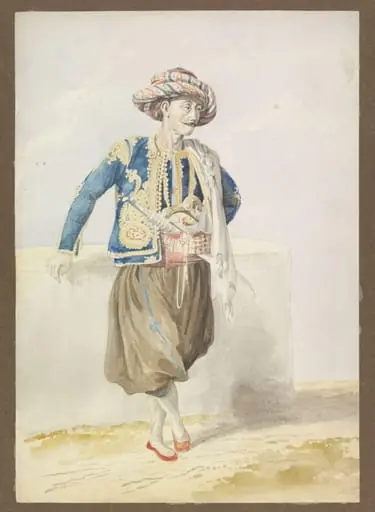
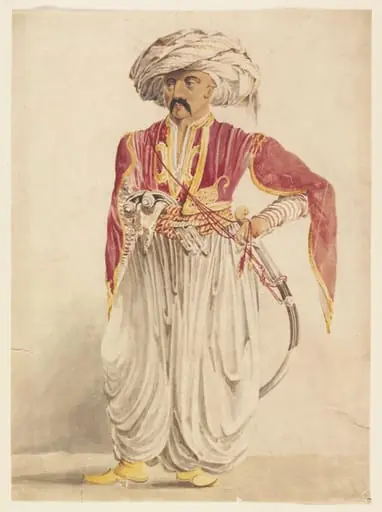
A Mamluk from Aleppo is a watercolor work on paper by the American Folk Art artist William Page. It dates from 1820 and is held in the collection of the Victoria and Albert Museum.
About this work
Overview
A Mamluk from Aleppo is a watercolour depicting a member of the Mamluk class, former slaves who rose to govern Egypt from 1250 to 1517 and continued influence under Ottoman rule.
Subject & Meaning
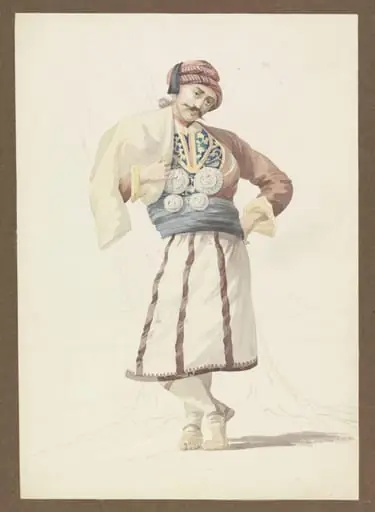
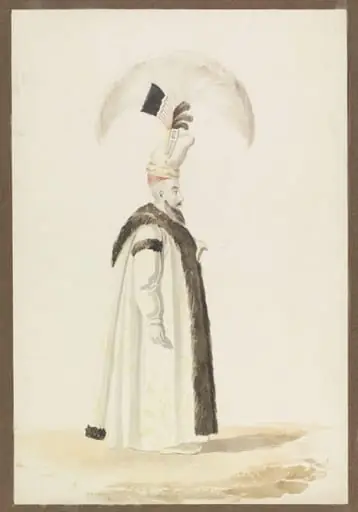
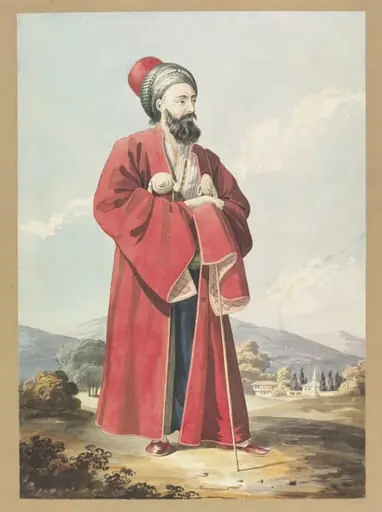
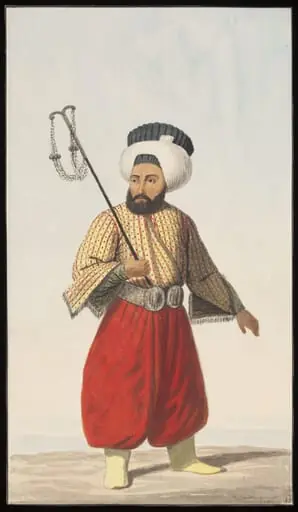
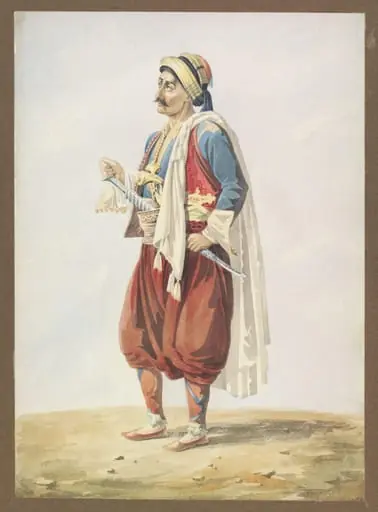
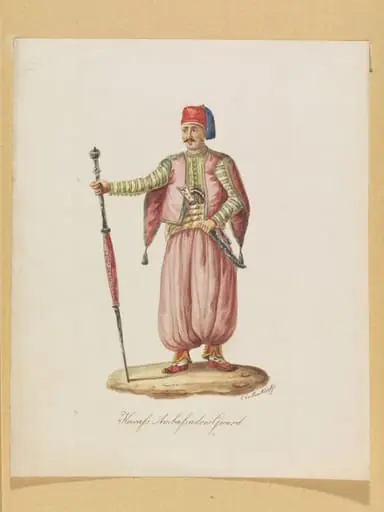
The subject represents a Mamluk, highlighting their paradoxical history as both slaves and rulers. The artwork offers a glimpse into a lesser-known historical group, showcasing their traditional attire, including robes, turban, and sword.
Technique & Style
The watercolour employs subtle, nuanced rendering, suggestive of sfumato techniques, which create depth and volume through gentle gradations of tone and texture.
History & Provenance
One of twenty-one costume studies by the artist Page, housed in the Museum's collection, likely intended for illustrative purposes.
Context
Created amidst the decline of Mamluk power, the work reflects European artistic influences while documenting Ottoman-era attire, contrasting with the Mamluks' waning political dominance.
Legacy
The piece contributes to the visual record of Mamluk culture, preserving aspects of their identity and attire for historical insight, despite the group's eventual demise in 1811.
Artist & collection