Artwork
Dr. Gachet
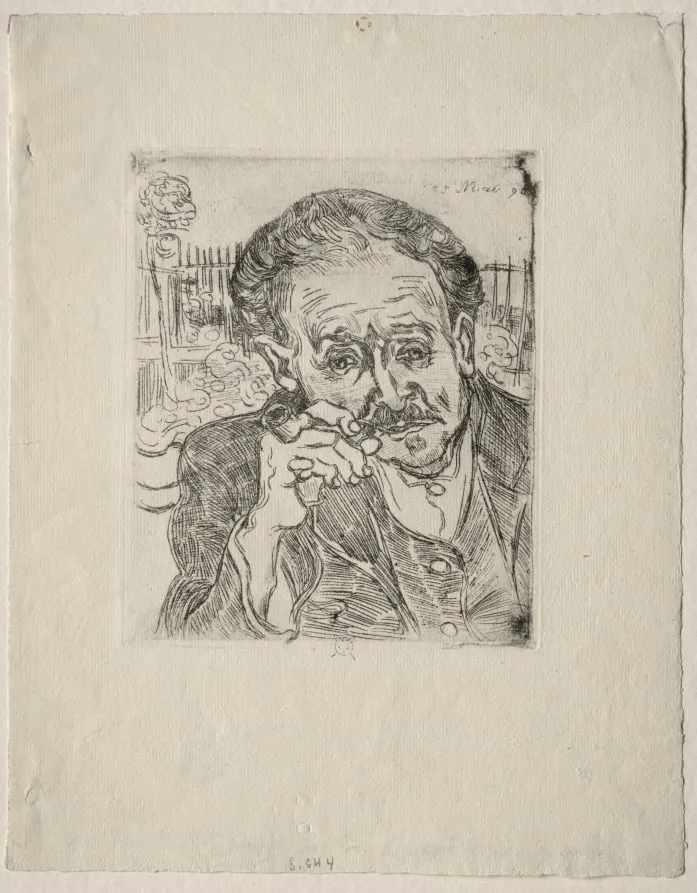
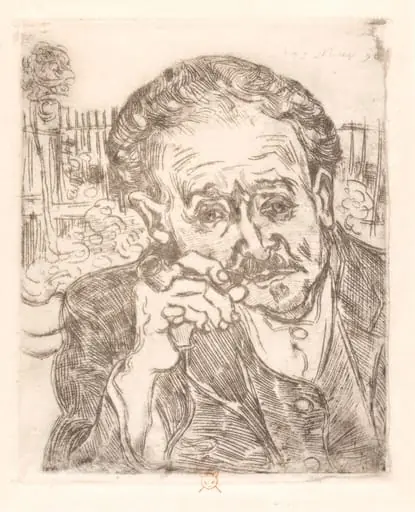
Dr. Gachet is a print by the Impressionist artist Vincent van Gogh. It dates from 1890 and is held in the collection of the Cleveland Museum of Art.
About this work
Overview
Van Gogh drew directly into the metal surface, bypassing traditional engraving tools, and printed the image himself with the doctor’s assistance.
Vincent van Gogh created only one etching during his lifetime: a portrait of Dr. Paul Gachet, completed in June 1890, two months before his death. Made in Auvers-sur-Oise, the print was produced using a copper plate provided by Gachet, who owned a small printing press. Van Gogh drew directly into the metal surface, bypassing traditional engraving tools, and printed the image himself with the doctor’s assistance.
Subject & Meaning
Dr. Gachet, a physician and amateur printmaker, cared for Van Gogh during his final weeks. The portrait captures him seated in his garden, pipe in hand, with a weary, introspective expression. His fingers press against his cheek, and the deep lines around his eyes suggest emotional weight. The image reflects not only Gachet’s role as a healer but also the quiet companionship shared between two sensitive, isolated men in their final months.
Technique & Style
Van Gogh applied his characteristic linear energy to etching, drawing freely into the copper plate with a needle rather than using precise engraving methods. The lines are dense and expressive, conveying texture and mood rather than anatomical precision. Unlike his oil paintings, this work lacks impasto, but the inked lines retain the urgency and rhythm of his brushwork, translating his emotional intensity into a monochrome medium.
History & Provenance
The etching was produced in Auvers-sur-Oise in mid-1890, shortly after Van Gogh moved there under Pissarro’s recommendation. Gachet, who had a personal interest in printmaking, supplied the materials and press. Van Gogh made only one known impression of this plate, and it remained in Gachet’s possession until his death. Later, it entered private collections before being acquired by public institutions.
Context
In his final months, Van Gogh sought stability and artistic renewal in Auvers, where Gachet offered both medical care and intellectual companionship. The doctor’s own engagement with printmaking created a rare opportunity for Van Gogh to explore a new medium. This etching stands as a quiet counterpoint to his prolific oil paintings, reflecting a moment of collaboration and mutual respect amid personal turmoil.
Legacy
As Van Gogh’s sole etching, this work holds unique significance in his oeuvre. It demonstrates his adaptability across media and his willingness to learn from others, even in isolation. Though less known than his paintings, the portrait of Gachet reveals the depth of his emotional connection to those who supported him and offers a rare glimpse into his engagement with printmaking as a personal, intimate practice.
Artist & collection
Artist
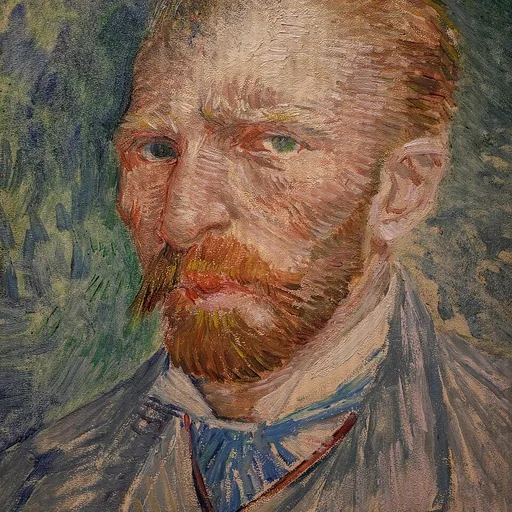
Vincent Willem van Gogh was a Dutch Post-Impressionist painter who is among the most famous and influential figures in the history of Western art.