Artwork
Landscape with three trees and houses
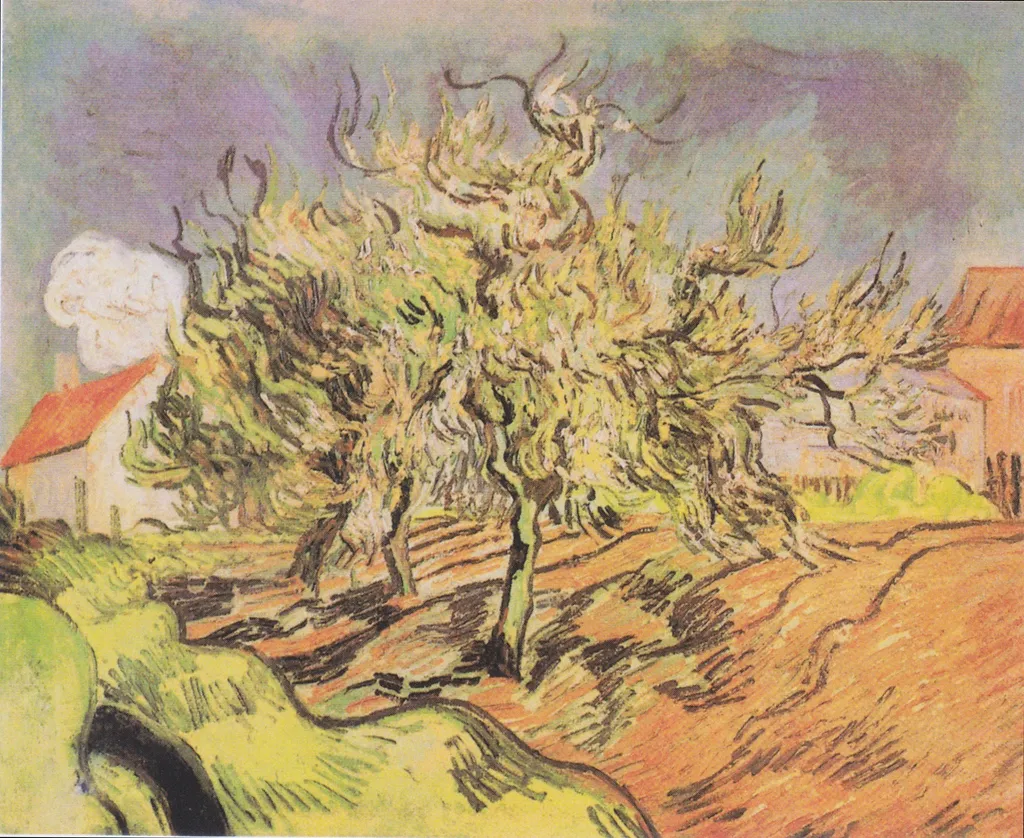
Landscape with three trees and houses is an oil painting by the Post-Impressionist artist Vincent van Gogh. It dates from 1890 and is held in the collection of the Kröller-Müller Museum.
About this work
Overview
Vincent van Gogh’s 1890 oil painting presents a modest rural scene dominated by three sturdy trees whose trunks and branches rise toward a cloud‑filled sky. Red‑tiled houses sit beneath the foliage, while the earth below is rendered in earthy brown tones punctuated by patches of green grass. The composition balances the solidity of the trees with the softer, muted atmosphere above.
Subject & Meaning
The work captures a quiet moment in the countryside, emphasizing the relationship between human habitation and the surrounding landscape. The three trees, rendered with a sense of vigor, may symbolize resilience, while the modest dwellings suggest everyday life set against the broader forces of nature, hinted at by the overcast sky.
Technique & Style
Van Gogh employs his characteristic impasto, applying thick, textured brushstrokes to the trees, which gives them a tactile, almost three‑dimensional presence. In contrast, the houses are painted with finer, smoother strokes, and the sky and ground are treated with delicate, blended layers, creating a visual hierarchy that guides the eye from the foreground to the distant horizon.
History & Provenance
Created in the final year of Van Gogh’s life, the painting entered the collection of the Kröller‑Müller Museum in the Netherlands, where it remains on display. The museum’s holdings include a substantial number of Van Gogh’s works, providing context for this piece within his late period oeuvre.
Artist & collection
Artist
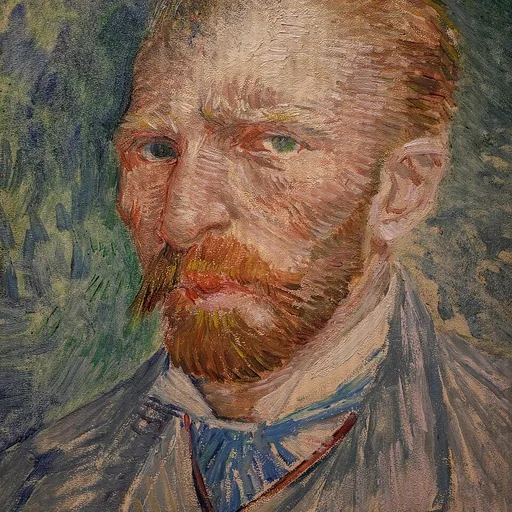
Vincent Willem van Gogh was a Dutch Post-Impressionist painter who is among the most famous and influential figures in the history of Western art.