Artwork
The Starry Night
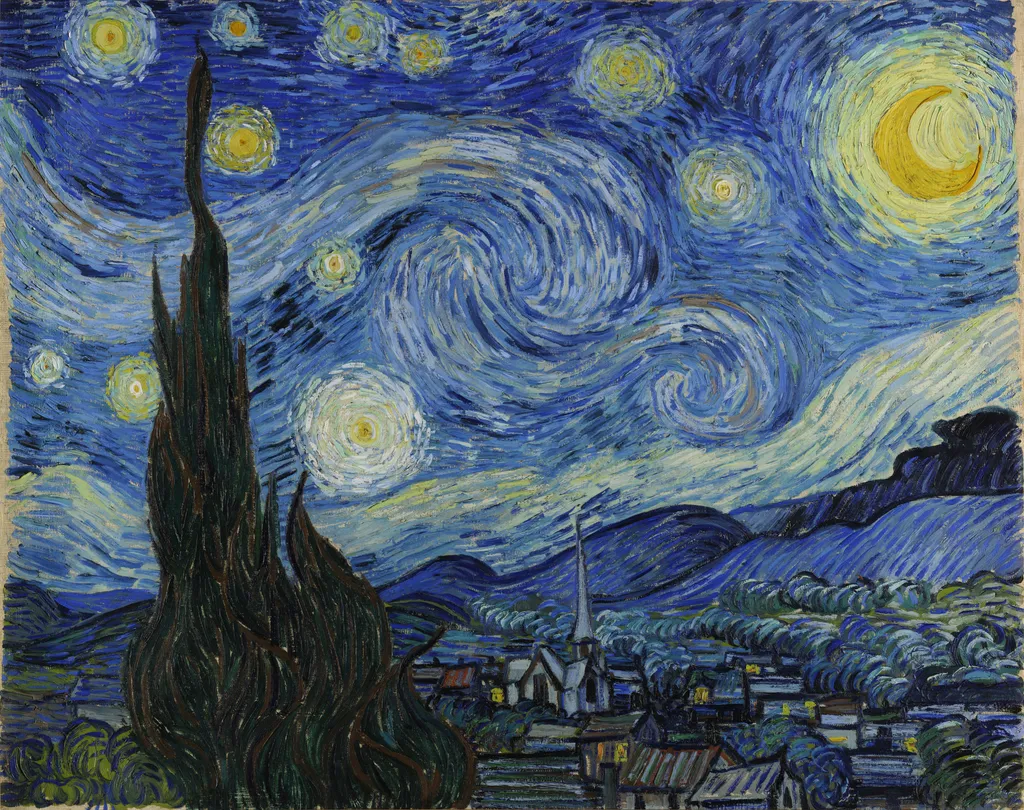
The Starry Night is an oil painting by the Post-Impressionist artist Vincent van Gogh. It is held in the collection of the Museum of Modern Art.
About this work
Overview
The Starry Night is an oil painting completed by Vincent van Gogh in June 1889 during his stay at the Saint-Paul-de-Mausole asylum in Saint-Rémy-de-Provence.
The Starry Night is an oil painting completed by Vincent van Gogh in June 1889 during his stay at the Saint-Paul-de-Mausole asylum in Saint-Rémy-de-Provence. It captures a nocturnal landscape seen from his bedroom window, blending observed elements with imaginative interpretation. The work is now held in the permanent collection of the Museum of Modern Art in New York, having been acquired in 1941 through the Lillie P. Bliss Bequest.
Subject & Meaning
The painting presents a quiet village beneath a turbulent sky, with a tall cypress tree anchoring the foreground. The village is not a literal depiction but an invented composition, possibly drawn from memory or idealization. Celestial bodies, including Venus and the Moon, appear in the sky, though their forms are stylized. The scene conveys a sense of inner turmoil and awe, reflecting van Gogh’s emotional state rather than a topographical record.
Technique & Style
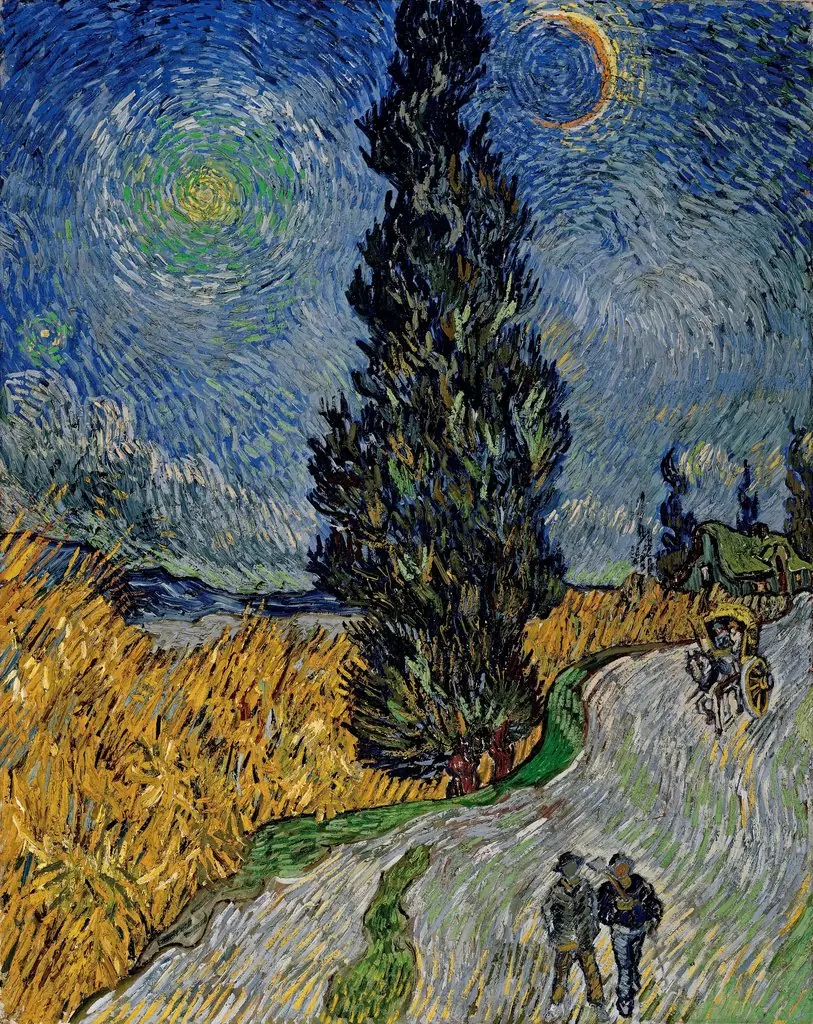
Van Gogh applied thick, rhythmic brushstrokes in heavy impasto, creating a textured surface that gives the sky a sense of motion. Swirling patterns dominate the heavens, contrasting with the more static forms of the village and cypress. His palette relies on deep blues and greens, punctuated by luminous yellows. The technique emphasizes emotional expression over naturalism, aligning with Post-Impressionist priorities of subjective vision and symbolic color.
History & Provenance
Van Gogh entered the asylum in May 1889 after a mental health crisis and remained there for a year. During this period, he painted over 150 works, including The Starry Night. The painting remained in the possession of his brother Theo until Theo’s death in 1891, after which it passed through family hands. It was acquired by the Museum of Modern Art in 1941 from the estate of Lillie P. Bliss, a major early patron of modern art.
Context
At Saint-Rémy, van Gogh had access to a studio and a second-floor bedroom with an east-facing window, offering views of the surrounding landscape. Though the asylum catered to affluent patients, conditions were austere. His productivity during this time was sustained by routine, limited mobility, and a deep engagement with nature. The painting reflects both the physical environment and his psychological state during a period of intense isolation and creativity.
Legacy
The Starry Night became widely known in the decades after van Gogh’s death, as modernist movements reevaluated his expressive use of form and color. It is now frequently reproduced and referenced in popular culture, though its significance lies in its quiet intensity and the artist’s personal confrontation with perception, emotion, and the sublime. It remains a key example of how inner experience can reshape visual reality.
Own this work as a print
Artist & collection
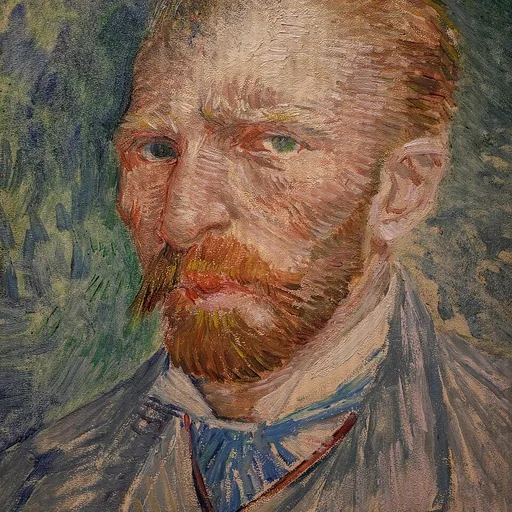
Artist
Vincent Willem van Gogh was a Dutch Post-Impressionist painter who is among the most famous and influential figures in the history of Western art.