Artwork
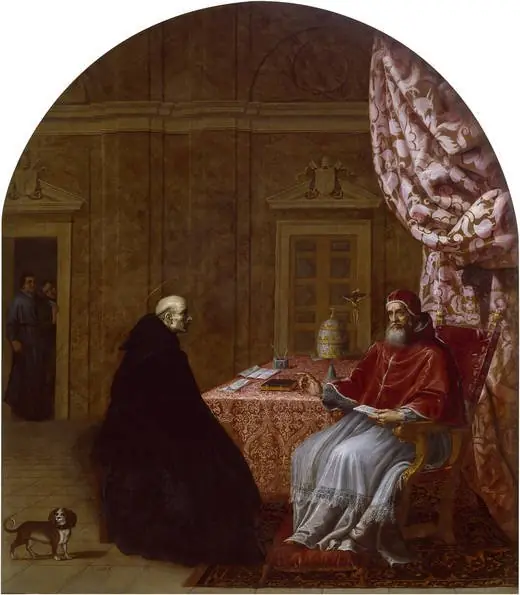
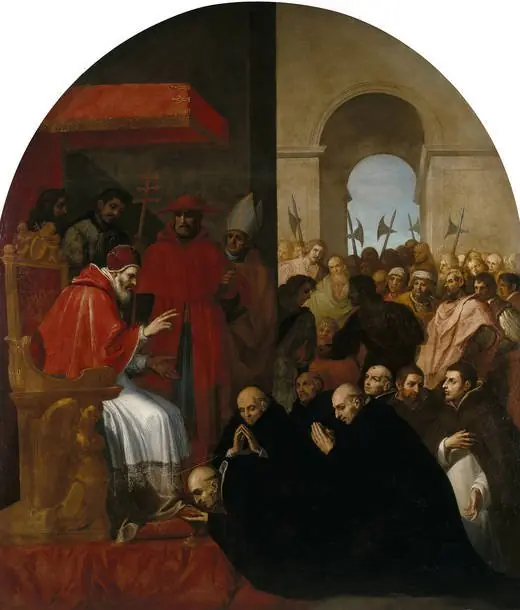
Pope Urban II Calls Saint Bruno to Rome
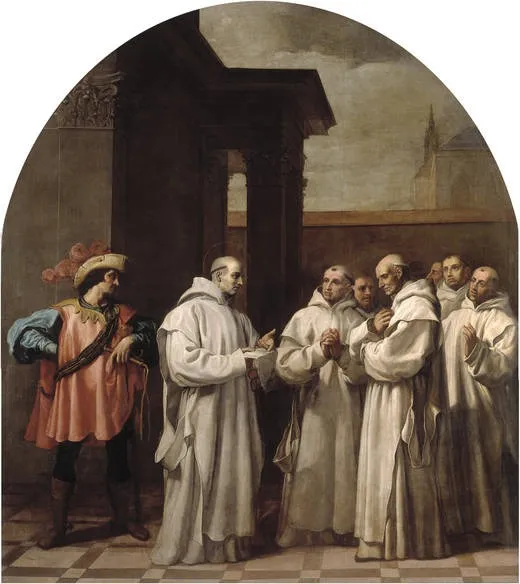
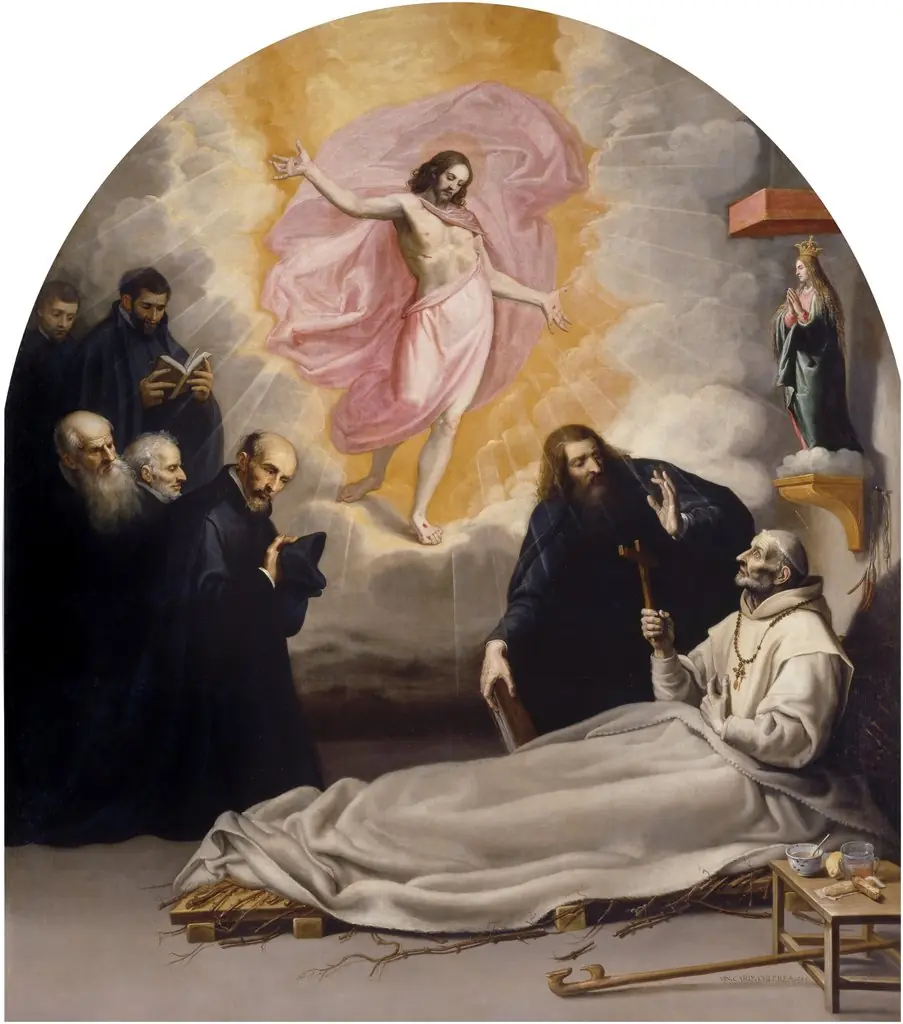
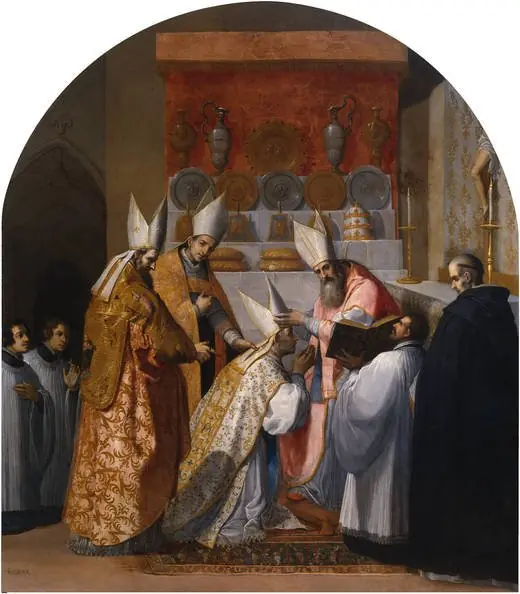
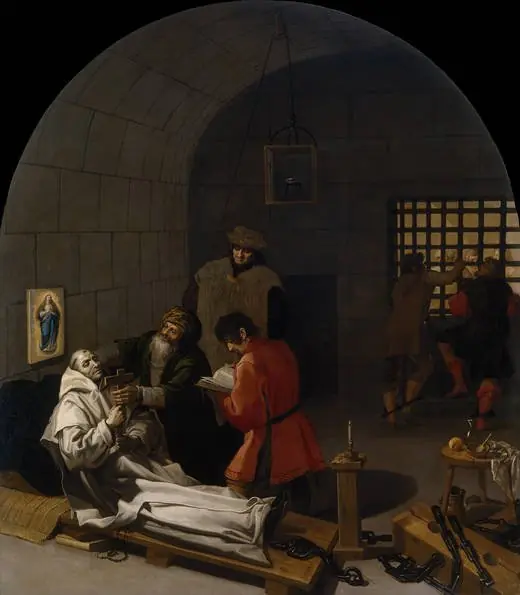
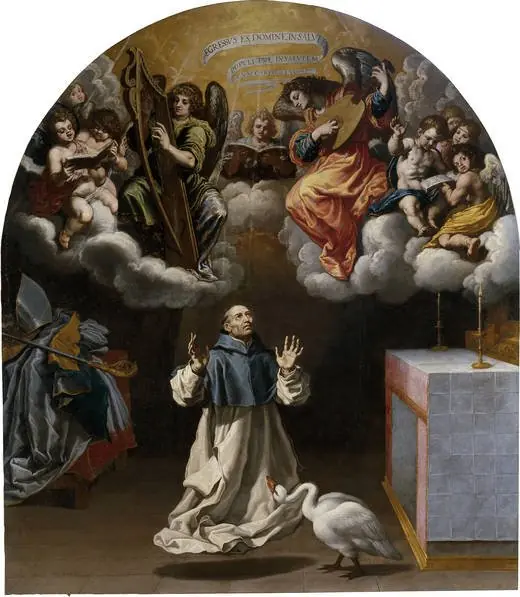
Pope Urban II Calls Saint Bruno to Rome is an oil painting by the Early Baroque Italian artist Vincenzo Carducci. It dates from 1626 and is held in the collection of the Museo del Prado.
About this work
Overview
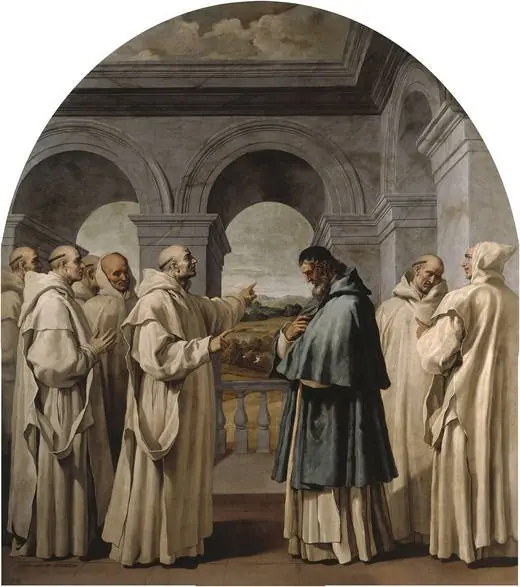
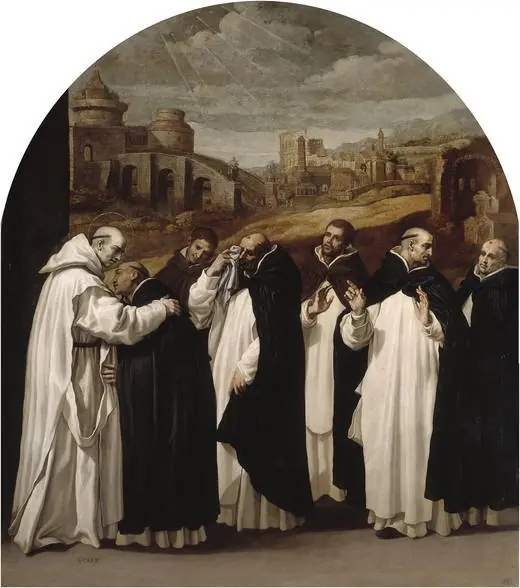
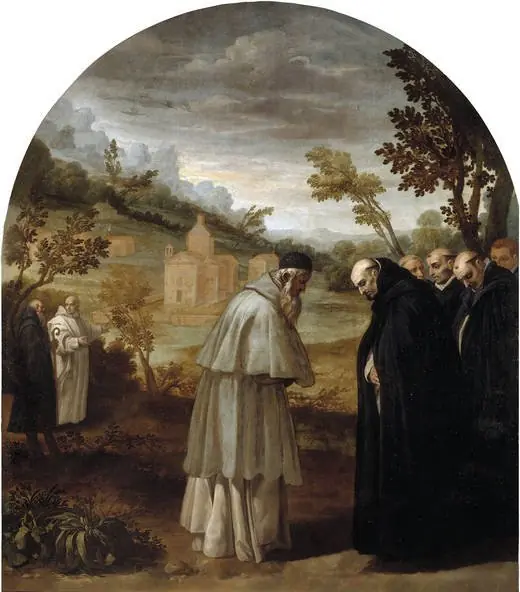
Vincenzo Carducci’s 1626 oil painting, *Pope Urban II Calls Saint Bruno to Rome*, belongs to the early Baroque period and is part of the Museo del Prado’s collection. The work presents a narrative moment drawn from ecclesiastical history, rendered with the dramatic lighting typical of its era.
Subject & Meaning
The composition depicts a gathering in a shadowed doorway where Pope Urban II summons Saint Bruno. Central to the scene is a figure in a vivid red robe and hat, clutching a bag, suggesting a messenger or traveler. Around him stand men in austere white habits, one holding a scroll, emphasizing the solemnity of the ecclesiastical summons.
Technique & Style
Carducci employs strong chiaroscuro, allowing the white robes to glow against the surrounding darkness. The contrast of light and shadow creates depth and focuses attention on the red-clad figure, while the tiled floor and faintly visible archway provide a modest architectural setting that grounds the narrative.
History & Provenance
Although Italian by birth, Carducci spent most of his career in Spain, where he produced this work. Since its creation, the painting has remained in Spanish collections and is now housed in the Prado Museum, reflecting the artist’s cross‑cultural influence between Italy and Spain during the 17th century.
Context
The early Baroque period saw a shift toward dynamic compositions and heightened emotional expression in religious art. Carducci’s depiction aligns with this trend, using dramatic lighting and a focused group of figures to convey the gravity of a papal directive within a historically charged moment.
Artist & collection
Artist
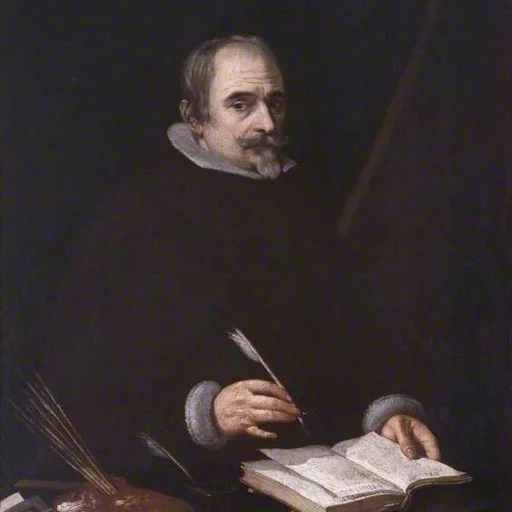
Vincenzio Carduccio (in Spanish, sometimes Vicencio or Vicente Carducho; 1576 or 1578–1638) was an Italian painter who spent his career in Spain.