Artwork
Saint James the Less and Saint Simon
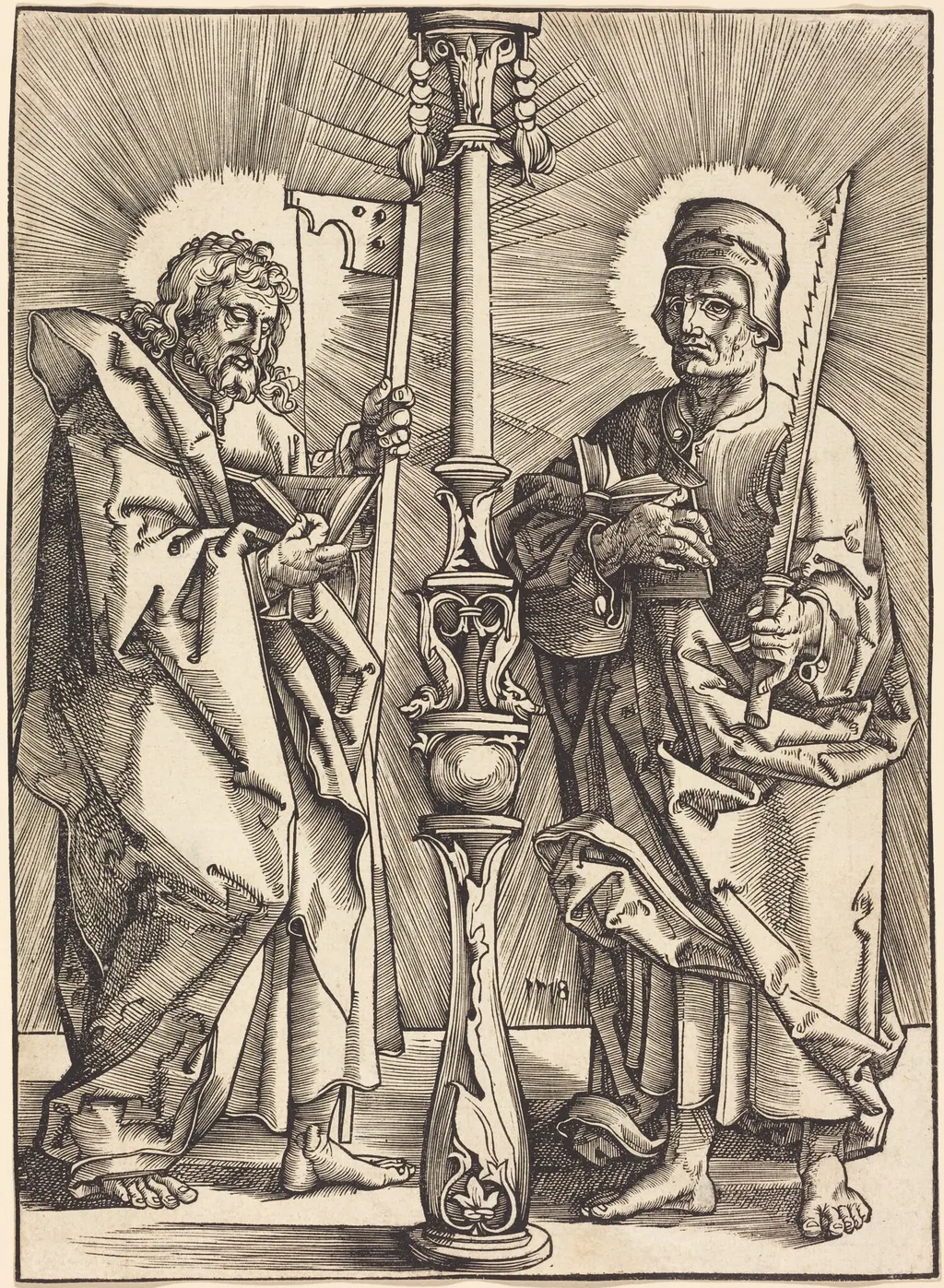
Saint James the Less and Saint Simon is an ink print by the Renaissance artist Hans Vischer. It dates from 1518 and is held in the collection of the National Gallery of Art.
About this work
Overview
Created in 1518 by Hans Vischer, this woodcut portrays two apostles, James the Less and Simon, as part of a devotional print series. Executed in black ink on paper, the image relies on sharp linear contrasts typical of Northern Renaissance printmaking. The composition centers the figures against a plain, dark ground, emphasizing their solemn presence without decorative distraction.
Subject & Meaning
The pairing reflects a common devotional practice of presenting apostles in complementary pairs for veneration.
The two saints are identified by traditional attributes: James holds a book and staff, symbols of his role as a teacher and leader, while Simon carries a saw, referencing the legend of his martyrdom by being sawn apart. Their halos denote sanctity, and their upright, composed postures convey spiritual authority. The pairing reflects a common devotional practice of presenting apostles in complementary pairs for veneration.
Technique & Style
The image is a woodcut, carved from a wooden block and printed using relief techniques. Fine, controlled lines define the folds of their robes and the texture of their halos, showcasing Vischer’s precision. The absence of shading and the stark contrast between ink and paper reflect the medium’s limitations and aesthetic priorities, aligning with Northern European print traditions of the early 16th century.
History & Provenance
Produced in Nuremberg during the height of the Reformation, the print likely served private or ecclesiastical devotion. Hans Vischer, part of a prominent family of metalworkers and printmakers, collaborated with artists like Albrecht Dürer. While the original print run is undocumented, surviving examples are held in major European collections, indicating its circulation among educated religious audiences.
Context
This work emerged amid religious upheaval in Germany, when printed images played a key role in shaping spiritual understanding. Though Catholic in subject, such prints were widely disseminated across denominational lines. The focus on apostolic figures, rather than Christ or the Virgin, reflects a growing interest in the early Church’s foundational figures during a time of doctrinal reevaluation.
Legacy
Vischer’s woodcut exemplifies the transition from medieval iconography to Renaissance clarity in religious imagery. Though not as widely known as Dürer’s prints, it contributed to the standardization of saintly attributes in print culture. Its restrained composition and symbolic clarity influenced later devotional prints, preserving a visual language of sanctity into the 17th century.
Artist & collection


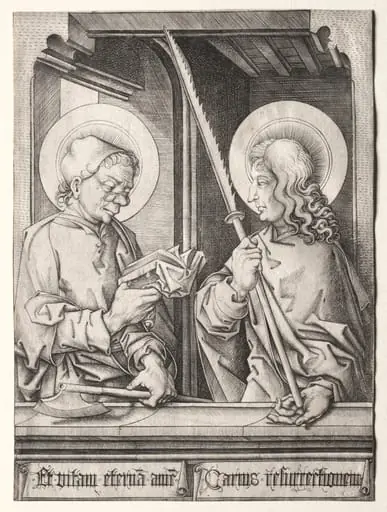 The Twelve Apostles at Gothic Windows: St. Matthias and St. Judas Thaddaeus
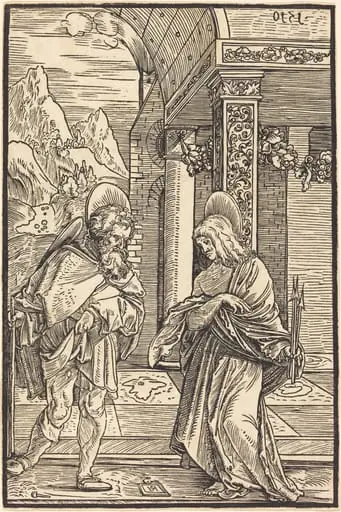 Saint Roch and Saint Sebastian
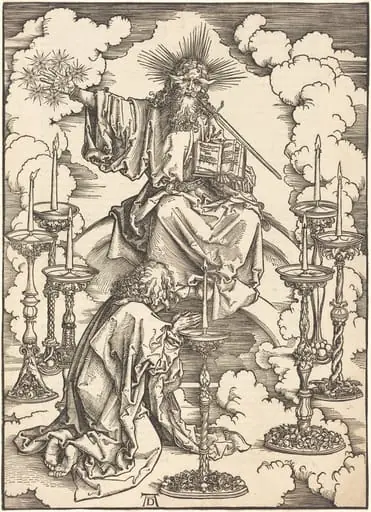 The Vision of the Seven Candlesticks
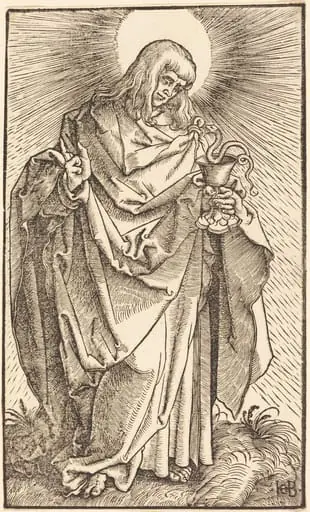 Saint John
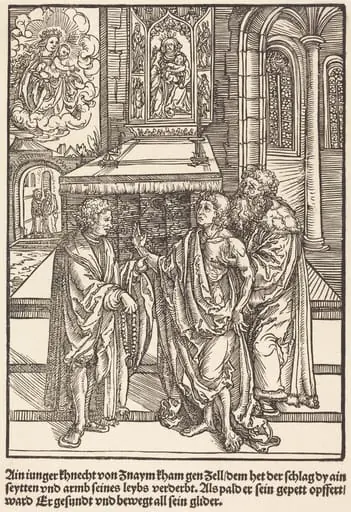 Ain iunger Khnacht von Znaym ...
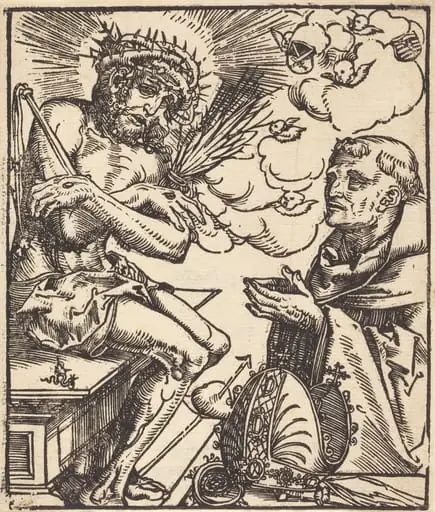 Saint Bernard Adoring the Man of Sorrows
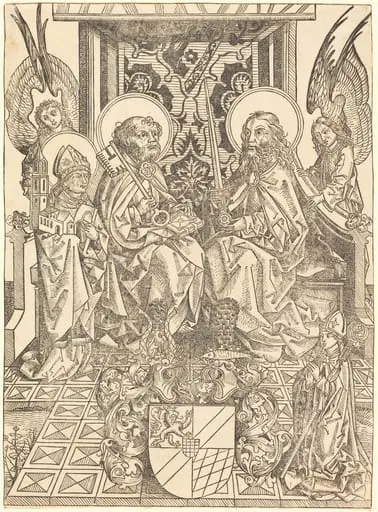 Saints Peter and Paul under a Canopy
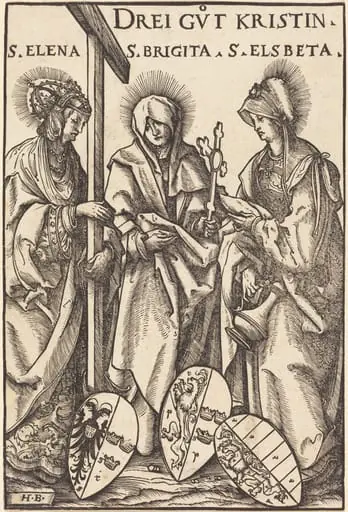 Saint Helena, Saint Brigitta and Saint Elizabeth
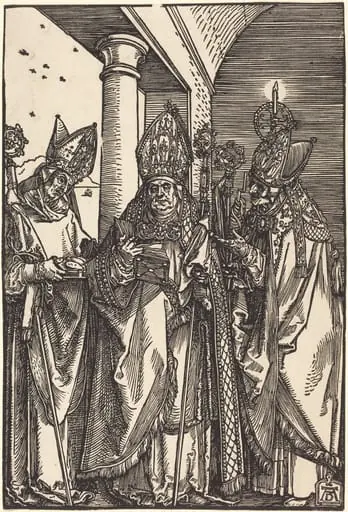 Saints Nicholas, Ulrich, and Erasmus