Artwork
Saints Thomas and James the Less
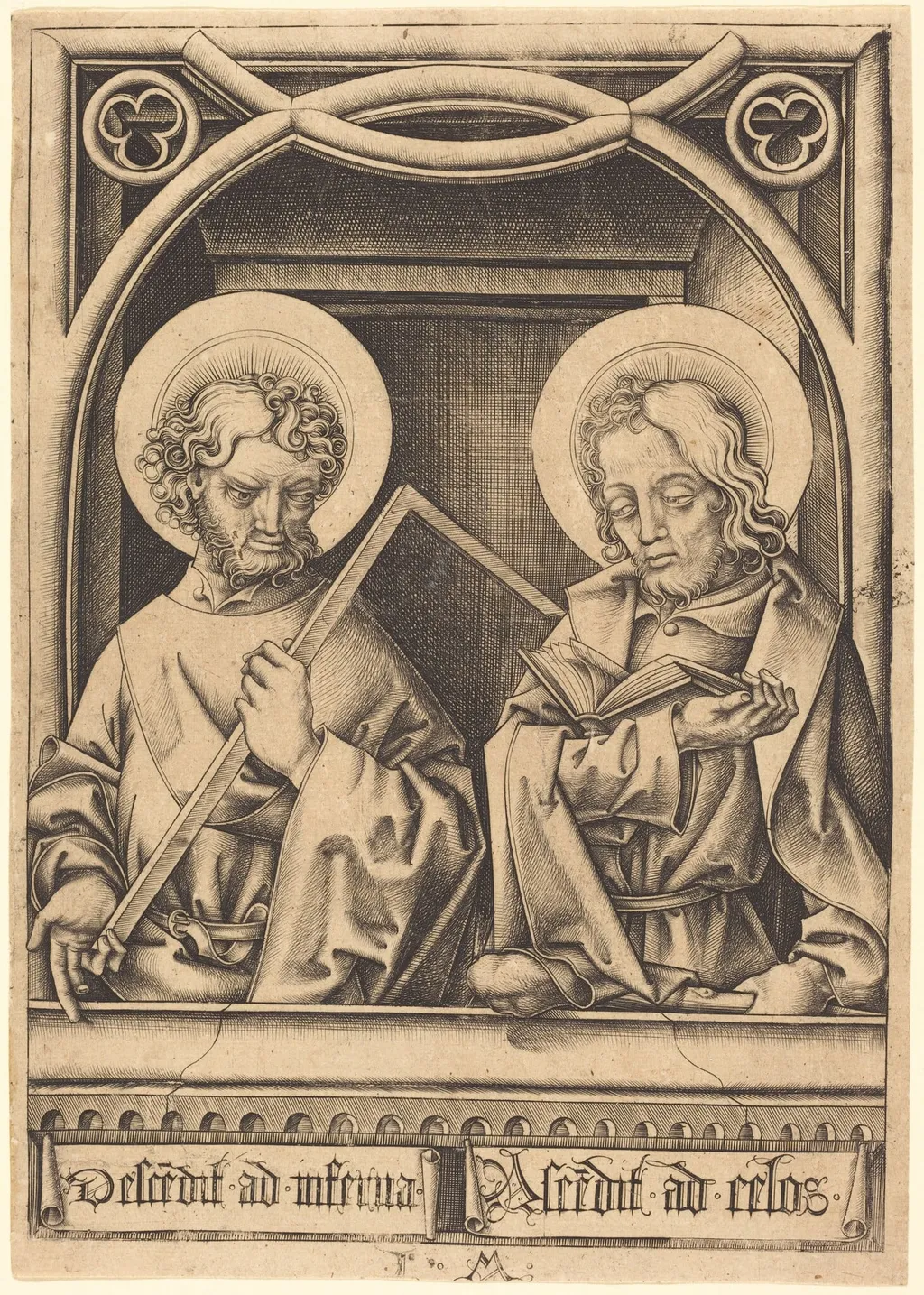
Saints Thomas and James the Less is an ink print by the Renaissance artist Israhel van Meckenem. It dates from 1482 and is held in the collection of the National Gallery of Art.
About this work
Overview
Though often based on existing compositions, his technical precision and consistent production shaped the dissemination of religious imagery across Europe.
Israhel van Meckenem, a German goldsmith and printmaker active between 1465 and 1503, produced more than six hundred engravings, the largest known output of any artist in the fifteenth century. His work, including the engraving of Saints Thomas and James the Less from circa 1482, helped establish printmaking as a distinct artistic practice. Though often based on existing compositions, his technical precision and consistent production shaped the dissemination of religious imagery across Europe.
Subject & Meaning
The engraving depicts Saints Thomas and James the Less, two apostles recognized in Christian tradition for their roles in spreading the faith. Thomas, on the left, holds a spear, referencing the instrument of his martyrdom, while James, on the right, is shown with an open book, symbolizing his authorship of the Epistle bearing his name. Their solemn expressions and halos emphasize their sanctity, and the Latin inscription at the base likely identifies them or offers a devotional phrase.
Technique & Style
Van Meckenem employed fine, controlled lines carved into a copper plate to create tonal depth and texture. The figures are rendered with meticulous hatching and cross-hatching, giving volume to their drapery and facial features. A decorative border of swirling motifs frames the scene, typical of his compositional approach. The technique relies on ink pressed into engraved grooves, transferred onto paper under pressure—characteristic of the engraving process that allowed multiple impressions from a single plate.
History & Provenance
Created around 1482, this engraving belongs to a period when van Meckenem was actively producing religious subjects for a growing market of private collectors and clergy. Many of his prints were adaptations of works by other artists, reflecting the commercial nature of early printmaking. The survival of multiple impressions suggests wide circulation, particularly in the Rhineland and northern Europe, where demand for devotional imagery was strong.
Context
In the late fifteenth century, the rise of printmaking transformed how religious images were produced and consumed. Van Meckenem operated in a network of artists and publishers who responded to the demand for affordable, portable devotional aids. His engravings, including this one, served both personal piety and institutional use, bridging the gap between manuscript illumination and mass-produced imagery in the decades before the Reformation.
Legacy
Van Meckenem’s prolific output and technical consistency helped standardize engraving practices in northern Europe. Though often derivative, his works preserved and propagated visual types of saints that remained influential for decades. His role as a producer rather than an innovator underscores the commercial infrastructure developing around printmaking, laying groundwork for later artists like Dürer who would elevate the medium’s artistic status.
Artist & collection
Artist
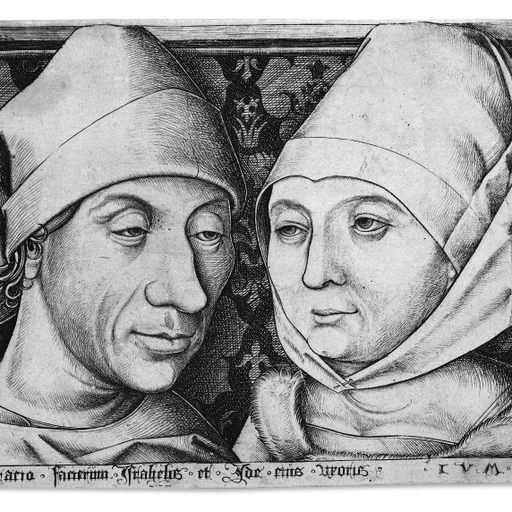
Israhel van Meckenem (c. 1445 – 10 November 1503), also known as Israhel van Meckenem the Younger, was a German printmaker and goldsmith, perhaps of a Dutch family origin. He was the most prolific engraver of the…

 Saint Matthias and Saint Jude with Articles from the Credo
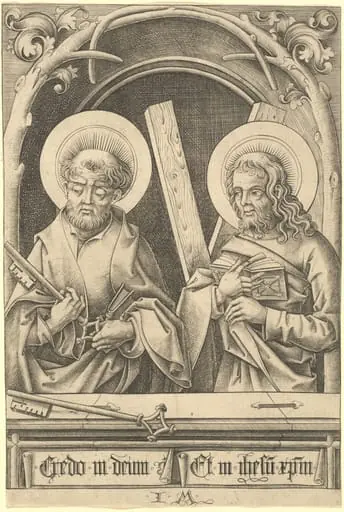 Saints Peter and Andrew
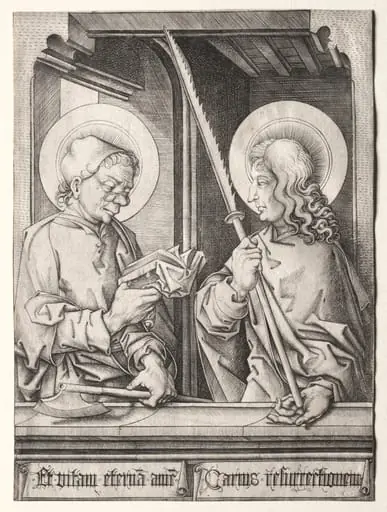 The Twelve Apostles at Gothic Windows: St. Matthias and St. Judas Thaddaeus
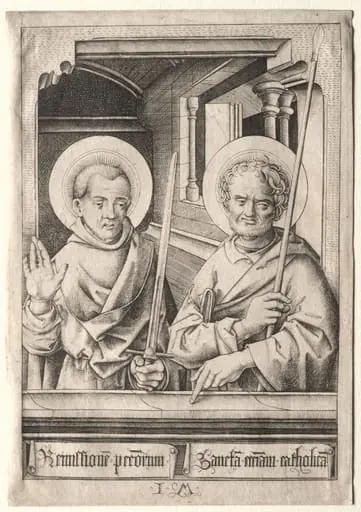 The Twelve Apostles: Saint Simon (?) and Saint Matthew
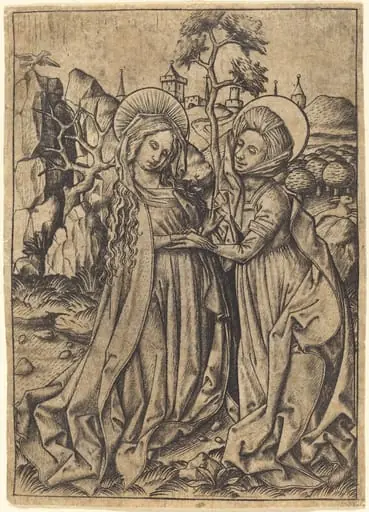 The Visitation
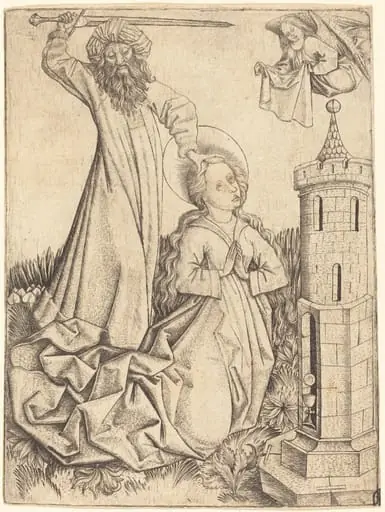 The Martyrdom of Saint Barbara
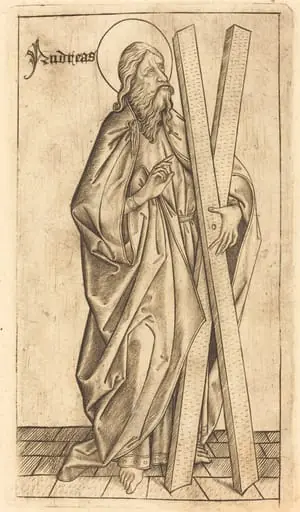 Saint Andrew
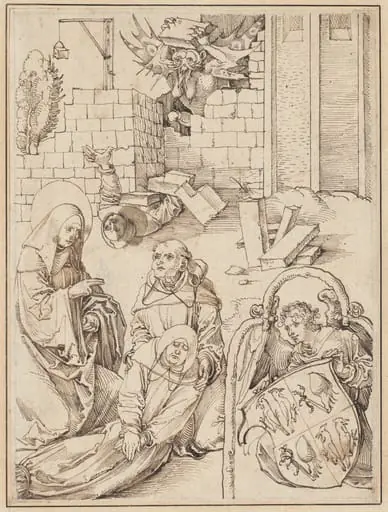 Saint Benedict Reviving a Monk Killed by the Devil
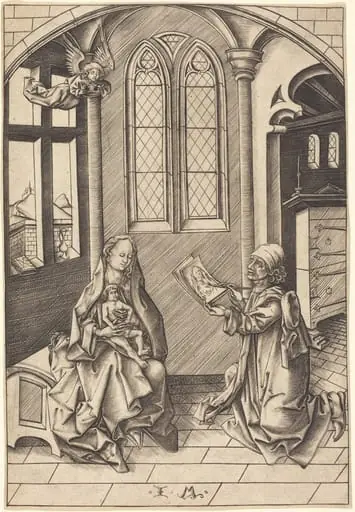 Saint Luke Drawing a Portrait of the Virgin
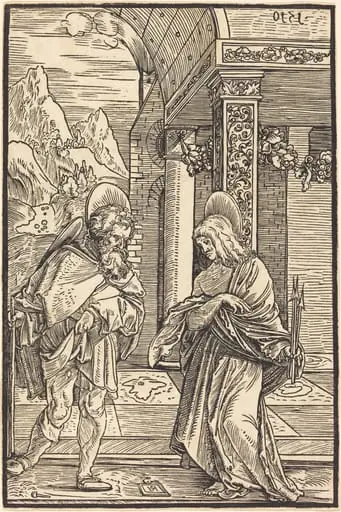 Saint Roch and Saint Sebastian