Artwork
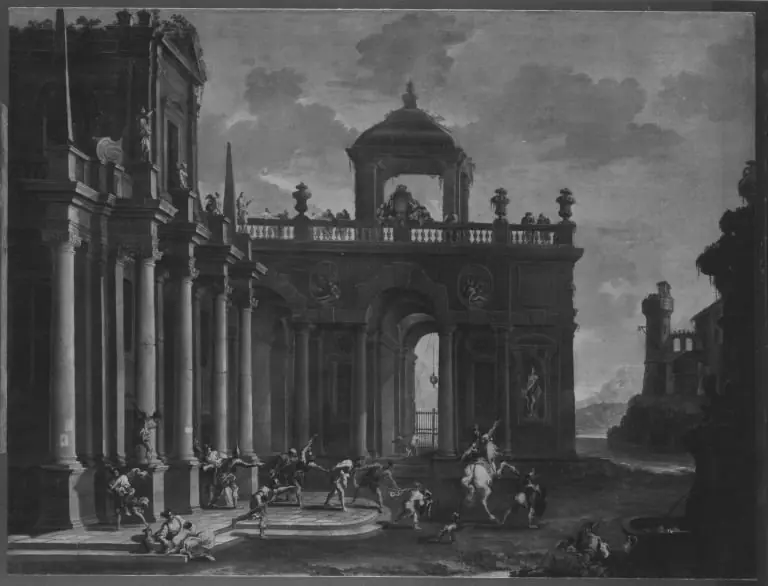
Architektur mit Bethlehemitischem Kindermord
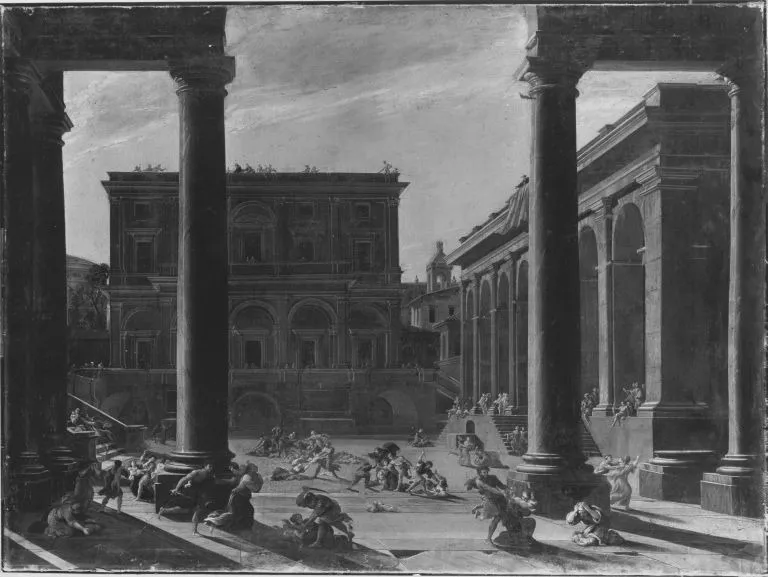
Architektur mit Bethlehemitischem Kindermord is an unspecified painting by the Early Baroque Italian artist Viviano Codazzi. It dates from 1637 and is held in the collection of the Bavarian State Painting Collections.
About this work
Overview
It belongs to a tradition of Italian Baroque capricci that juxtapose real or imagined structures with historical or religious events.
Painted in 1637 by Viviano Codazzi, this work merges architectural precision with a biblical narrative. It belongs to a tradition of Italian Baroque capricci that juxtapose real or imagined structures with historical or religious events. The painting is held in the Alte Pinakothek, Munich, and exemplifies Codazzi’s focus on urban spaces as stages for human drama, blending topographical detail with emotional intensity.
Subject & Meaning
The scene portrays the Massacre of the Innocents, as described in the Gospel of Matthew, set within a bustling Romanesque courtyard. Rather than isolating the violence, Codazzi embeds it within daily life—figures go about their routines while the tragedy unfolds nearby. This juxtaposition underscores the indifference of the world to divine suffering, a common theological theme in Counter-Reformation art.
Technique & Style
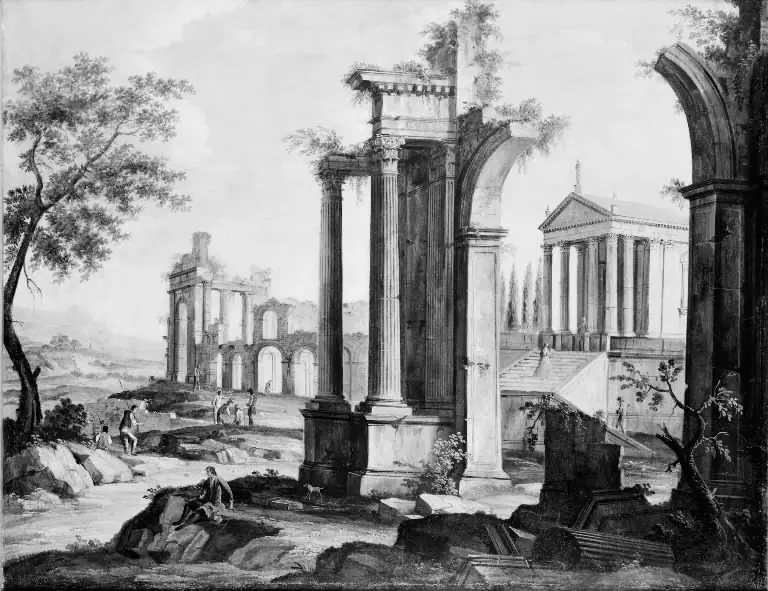
Codazzi employs chiaroscuro to model the stone arches and colonnades, lending depth and volume to the architecture. Figures are rendered with restrained detail, their gestures suggesting movement without theatricality. The composition uses receding planes to guide the eye from foreground activity to distant buildings, creating spatial harmony. His brushwork is precise yet unobtrusive, prioritizing structural clarity over emotional exaggeration.
History & Provenance
Created during Codazzi’s time in Rome, the painting reflects his engagement with the city’s ruins and classical forms. It entered the Alte Pinakothek’s collection in the 19th century, likely through royal Bavarian acquisitions. While little is documented about its early ownership, its survival in a major European collection attests to its sustained recognition among connoisseurs of architectural painting.
Context
Codazzi worked alongside artists like Pietro da Cortona, contributing to a Roman trend that elevated architectural settings as subjects in their own right. His paintings responded to a growing interest in antiquity and urban space during the Baroque era. By placing sacred events in contemporary-looking environments, he bridged biblical narrative with the lived experience of 17th-century viewers.
Legacy
Codazzi’s integration of architecture and narrative influenced later vedutisti and capriccio painters. Though less celebrated than his contemporaries, his method of embedding drama within structured environments became a model for depicting historical events as part of the urban fabric. His work remains a reference for studies on spatial storytelling in early Baroque painting.
Artist & collection
Artist
Viviano Codazzi (c. 1604 – 5 November 1670) was an Italian architectural painter who was active during the Baroque period. He is known for his architectural paintings, capricci, compositions with ruins, and some vedute.…

 Fantasy palace with a colonade
 Architekturbild mit der Gefangennahme Simsons
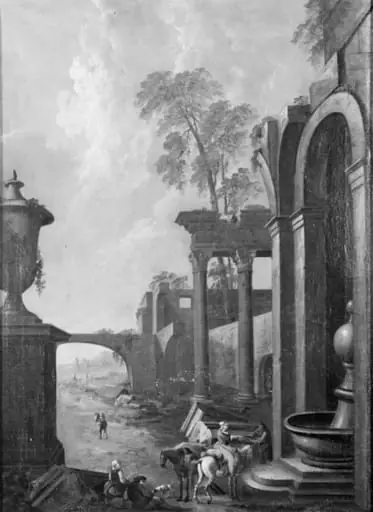 Ruins in a Landscape
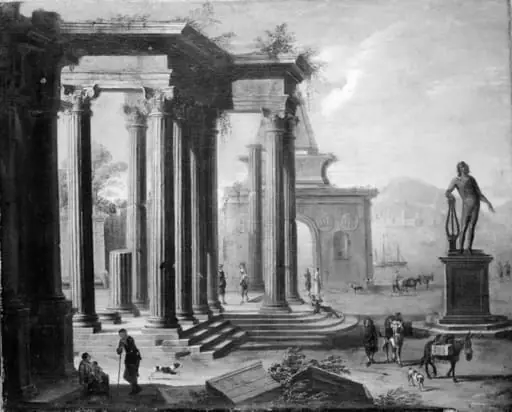 Colonade in Ruins
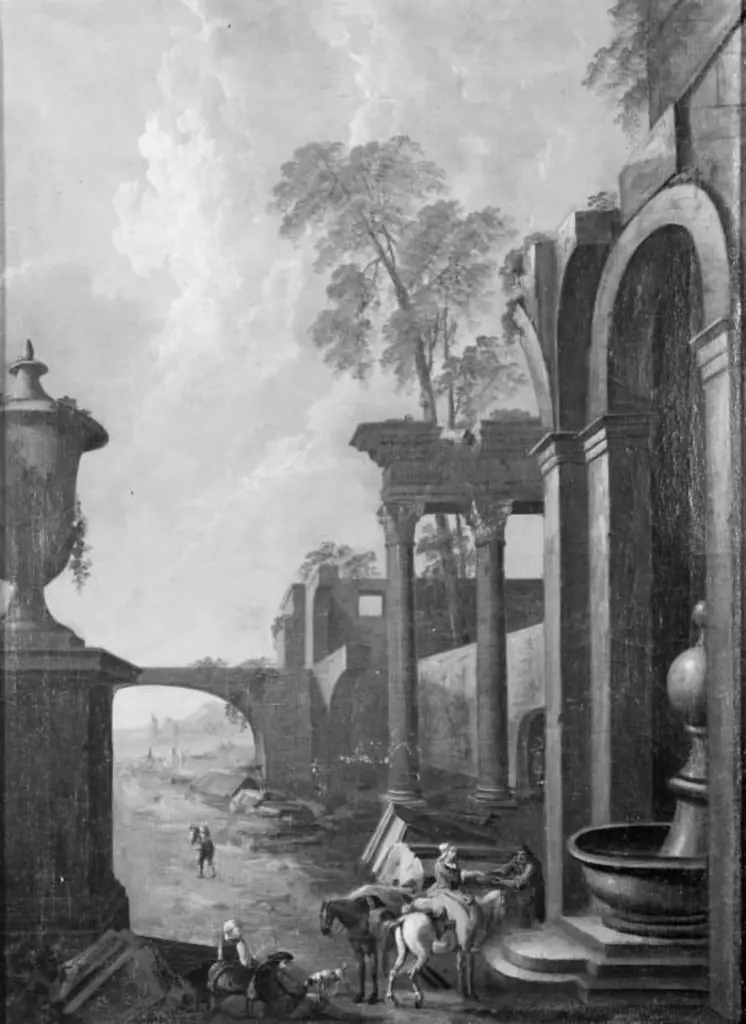 Ruins in a Landscape
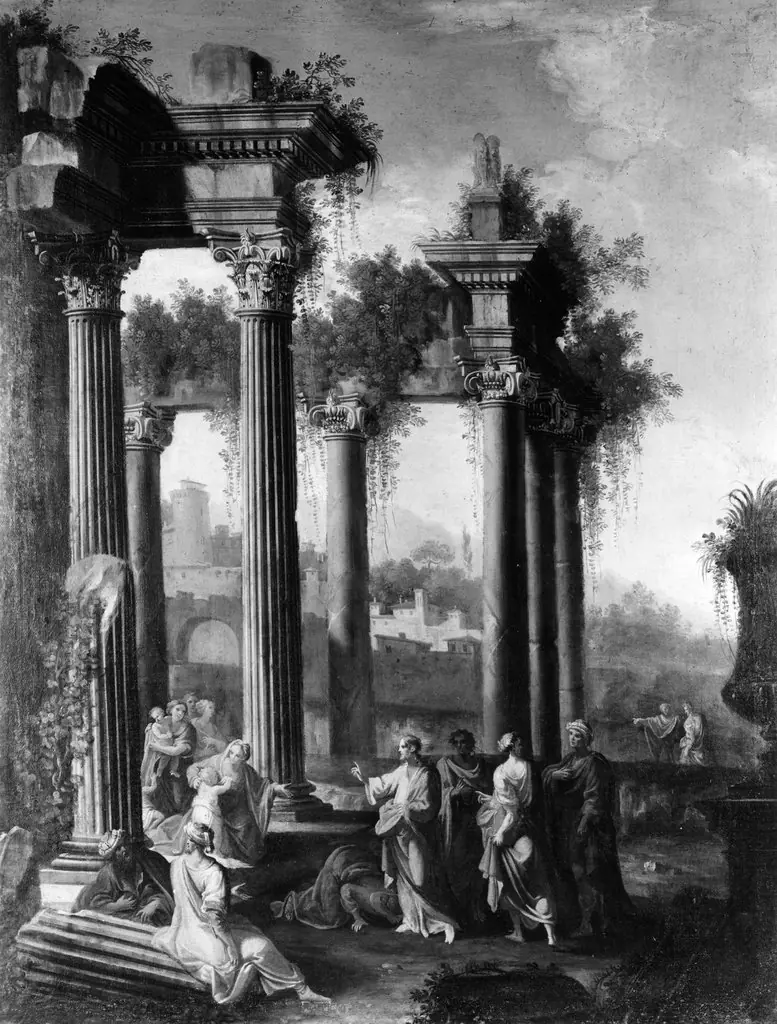 Christ Blessing Little Children among Classical Ruins
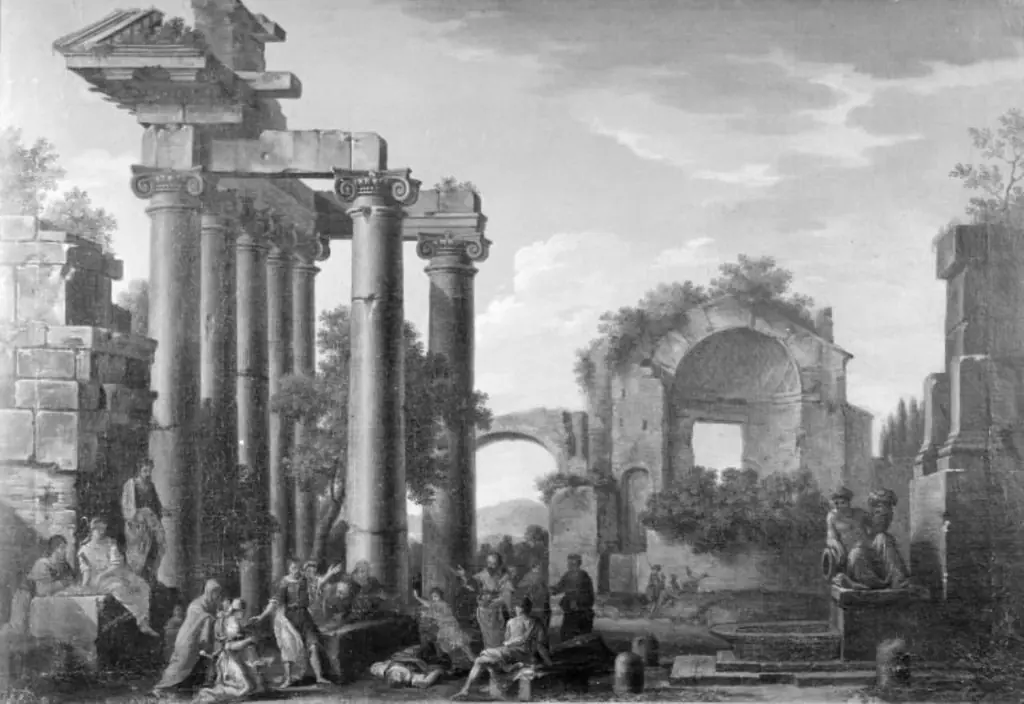 Ruiner af et græsk-romersk tempel med mange figurer
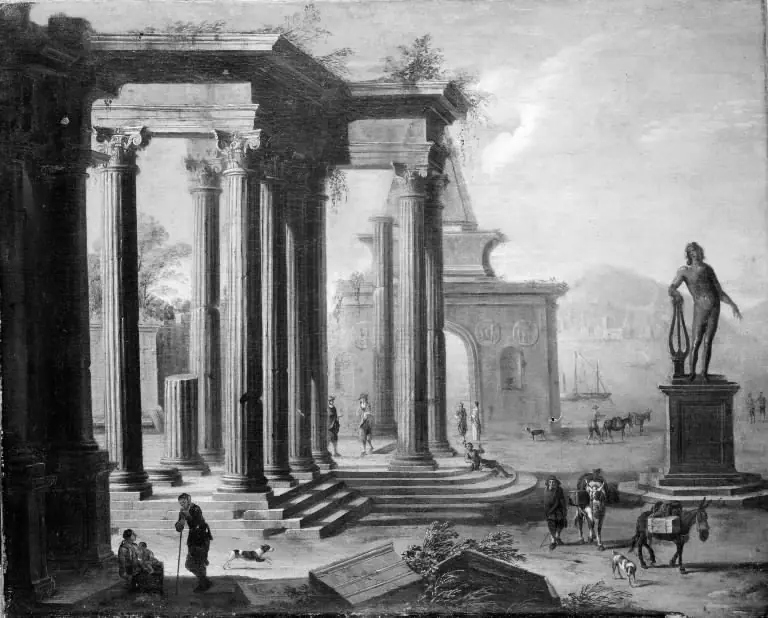 Colonade in Ruins
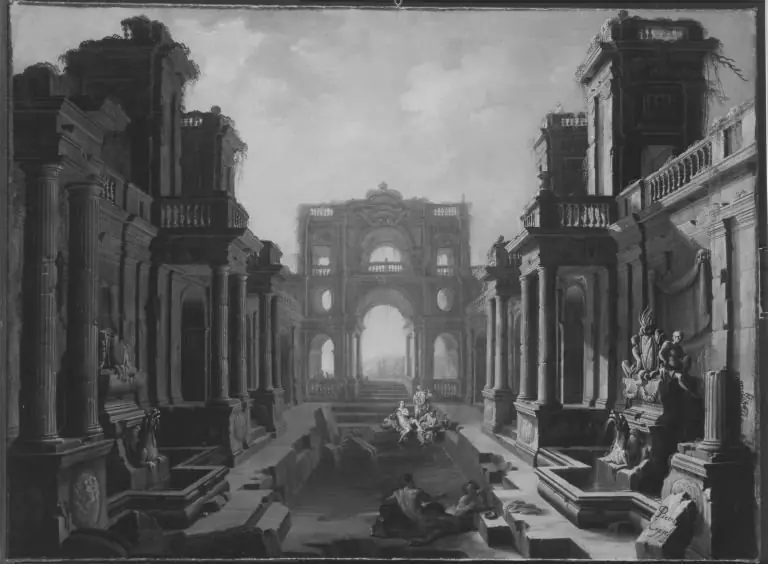 Ruinen römischer Thermen
 Decorative Painting with Imaginary Architecture