Artwork
Three Revelers and a Gardner
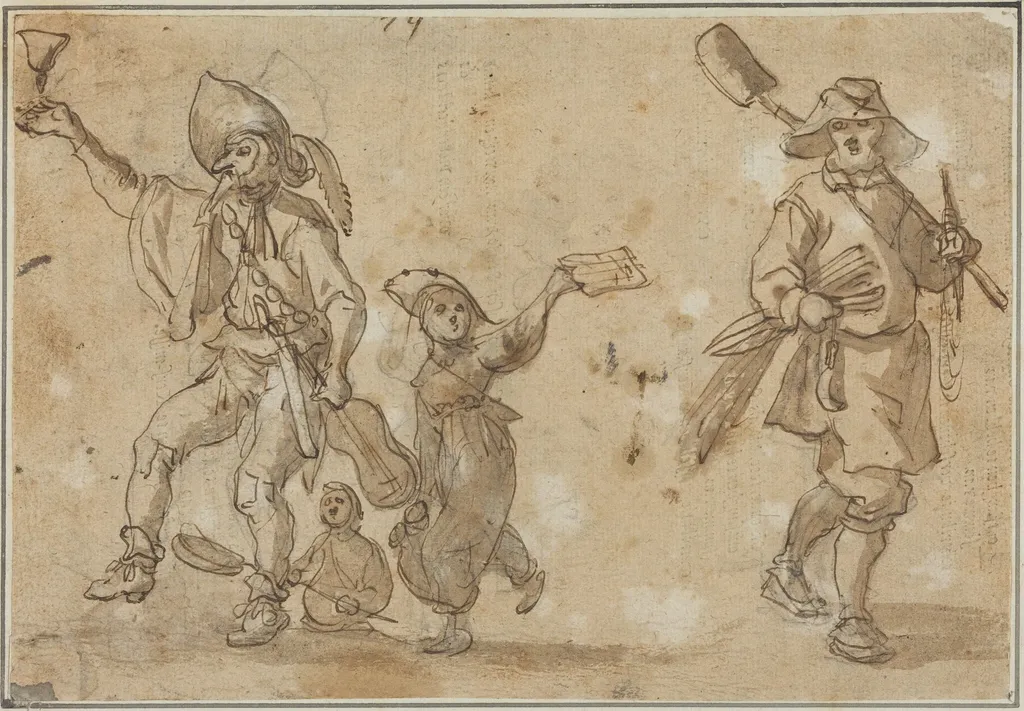
Three Revelers and a Gardner is a chalk drawing by the Renaissance artist Sebastian Vrancx. It dates from 1610 and is held in the collection of the National Gallery of Art.
About this work
Overview
Sebastian Vrancx’s drawing *Three Revelers and a Gardner* dates from 1610. Executed on laid paper, the work combines pen and brown ink with a brown wash applied over an initial black chalk sketch. It records a brief, informal scene populated by four figures, rendered in a rapid, gestural manner that emphasizes action and character rather than precise detail.
Subject & Meaning
The juxtaposition of revelry and labor invites reflection on the coexistence of leisure and work in early‑modern daily life.
The composition presents a lively gathering: a man on the left, distinguished by a tall feathered hat, clutches a wine jug; a woman in an ample, puffed dress extends her arm as if dancing; a small child sits at their feet; and a second man on the right, wearing a broad‑brimmed hat, holds a shovel and rake, suggesting a gardening task. The juxtaposition of revelry and labor invites reflection on the coexistence of leisure and work in early‑modern daily life.
Technique & Style
Vrancx employed a loose, sketch‑like approach, beginning with black chalk to outline forms before overlaying pen work and brown ink. Cross‑hatching creates tonal depth, while a light brown wash unifies the surface and softens contrasts. The swift, expressive lines capture movement and posture, prioritising the overall rhythm of the scene over meticulous rendering of individual features.
History & Provenance
Created in the early seventeenth century, the drawing reflects Vrancx’s interest in genre subjects alongside his more widely known battle scenes. Its provenance traces back to private collections before entering a museum holding in the early twentieth century, where it has been catalogued as a representative example of the artist’s preparatory studies and his engagement with everyday subjects.
Artist & collection


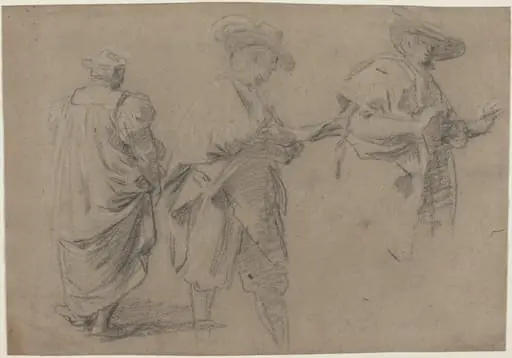 A Judge and Two Gentlemen Lawyers
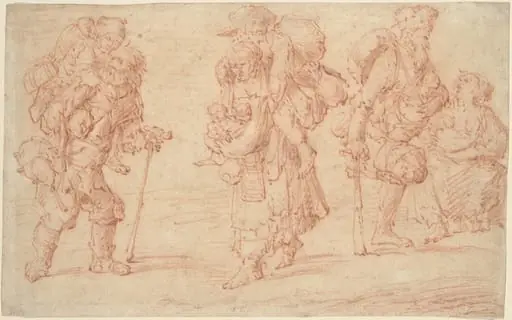 Three Pairs of Beggars with Babies
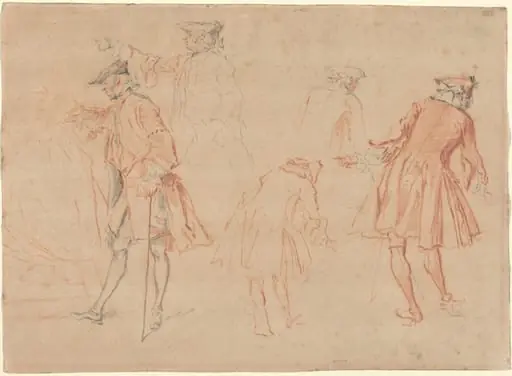 Sketches of a Gentleman
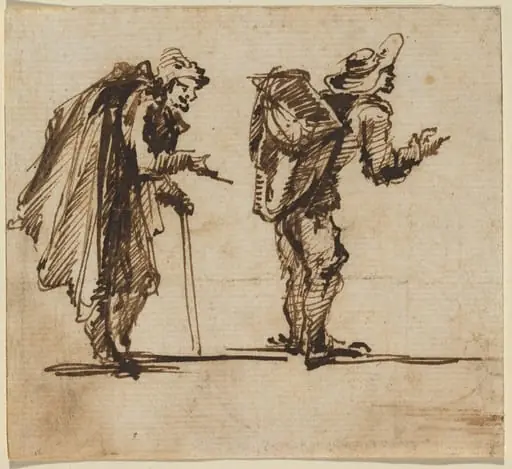 An Old Man with a Cape and a Rustic with a Backpack
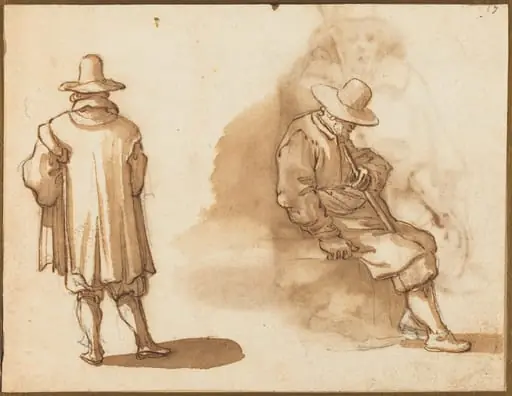 Two Studies of a Man
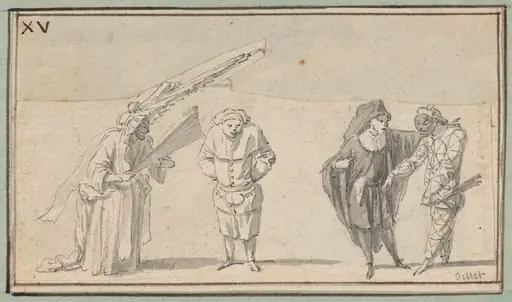 Four Commedia dell'Arte Figures: Harlequin "en femme," Mezzetin(?), Scaramouche, and Harlequin
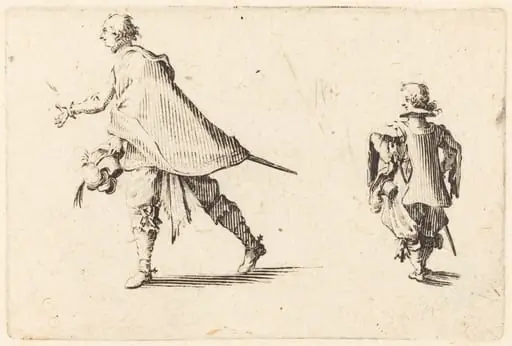 Gentleman and His Page
 Man with Sword
 Five Figure Studies (verso)
 Two drawings of Chinese men
 Four Horsemen
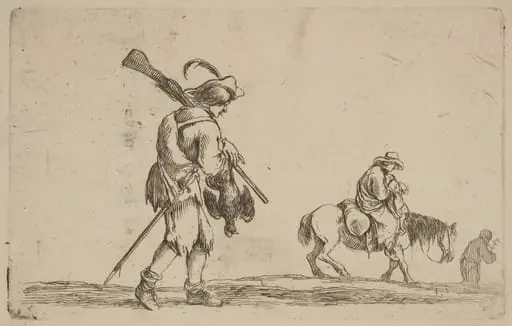 Soldier Holding a Fowl by the Feet