Artwork
Ploughing
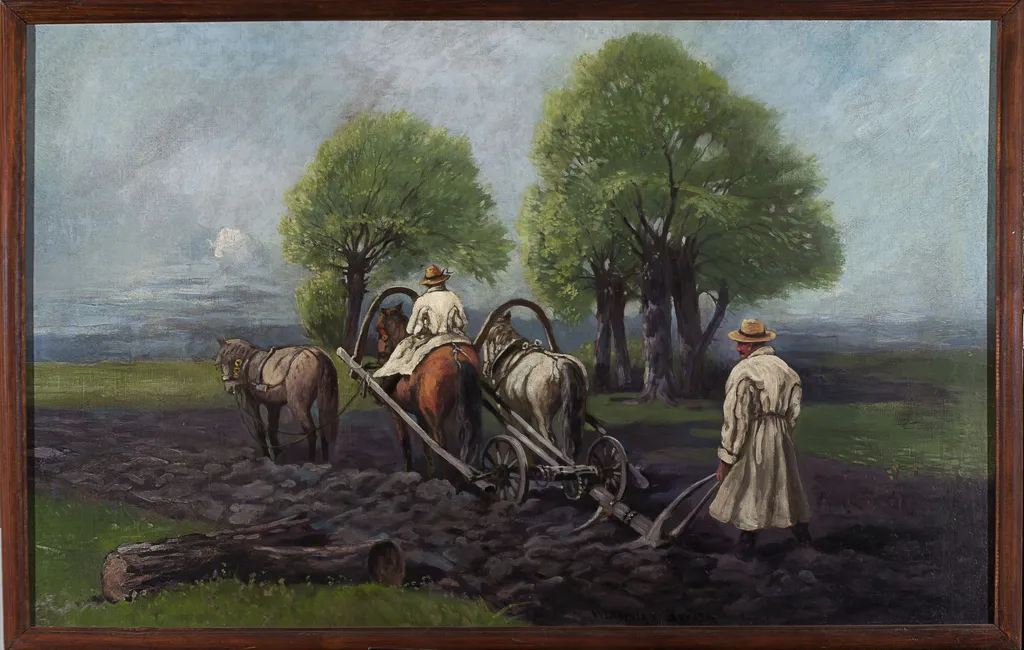
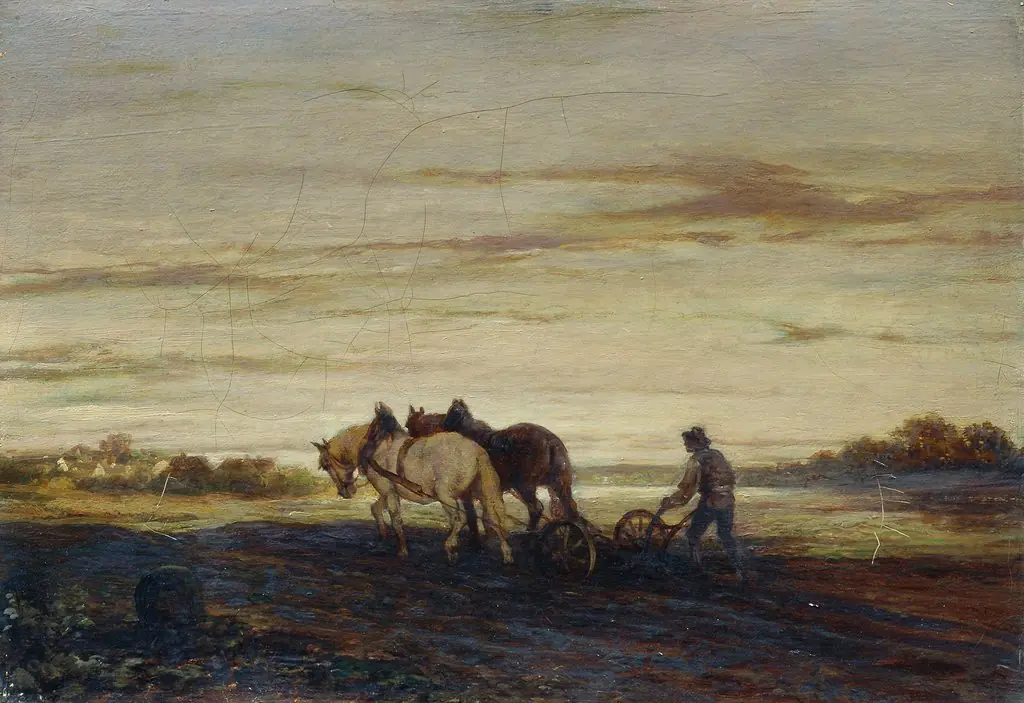
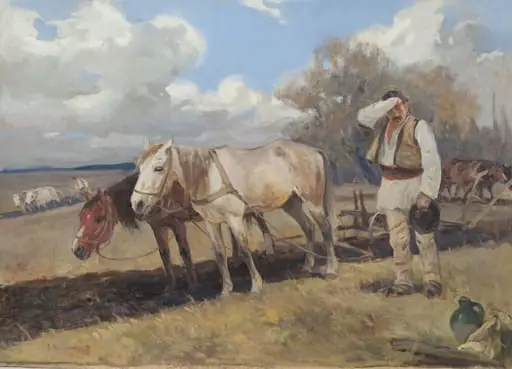
Ploughing is an oil painting by the Post-Impressionist artist Władysław Bończa-Rutkowski. It dates from 1899 and is held in the collection of the National Museum in Warsaw.
About this work
Overview
The composition centers on agricultural labor, rendered with restrained tones and deliberate brushwork that emphasize texture over detail.
Painted in 1899 by Władysław Bończa-Rutkowski, Ploughing is an oil-on-canvas work depicting a quiet rural scene. It is part of the collection at the National Museum in Warsaw. The composition centers on agricultural labor, rendered with restrained tones and deliberate brushwork that emphasize texture over detail. The painting avoids dramatic flourish, instead focusing on the rhythm of daily farm life.
Subject & Meaning
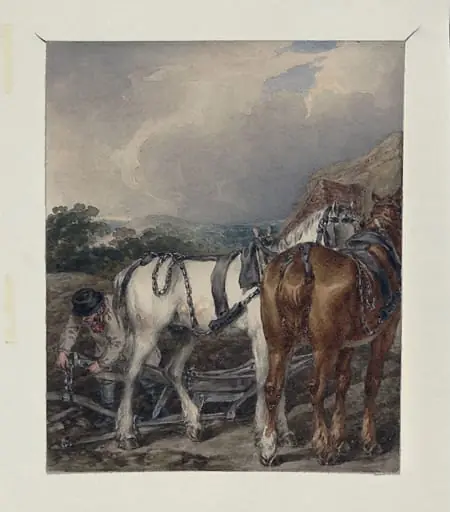
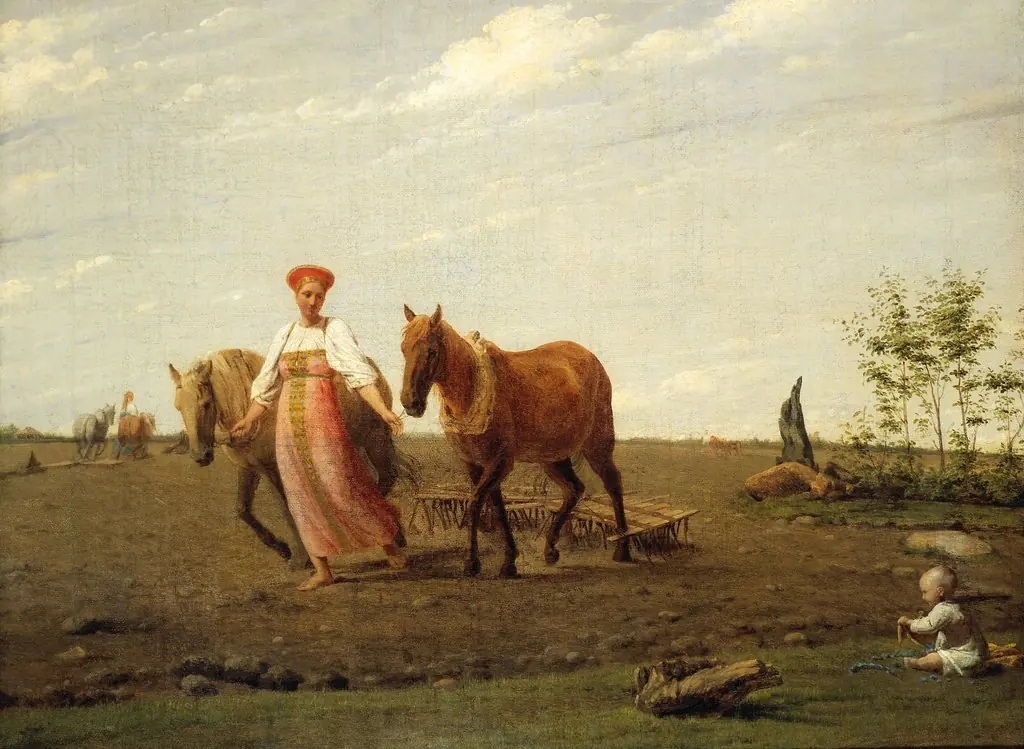
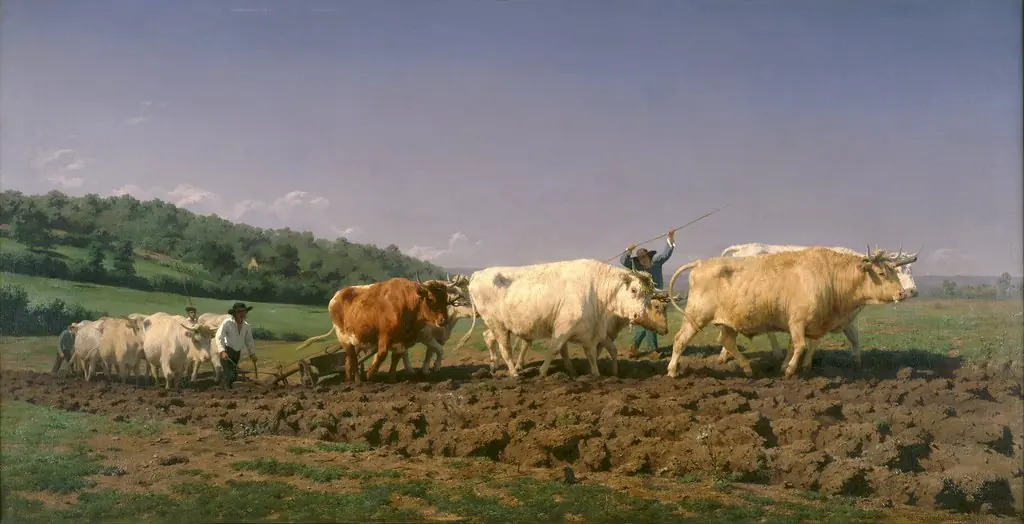
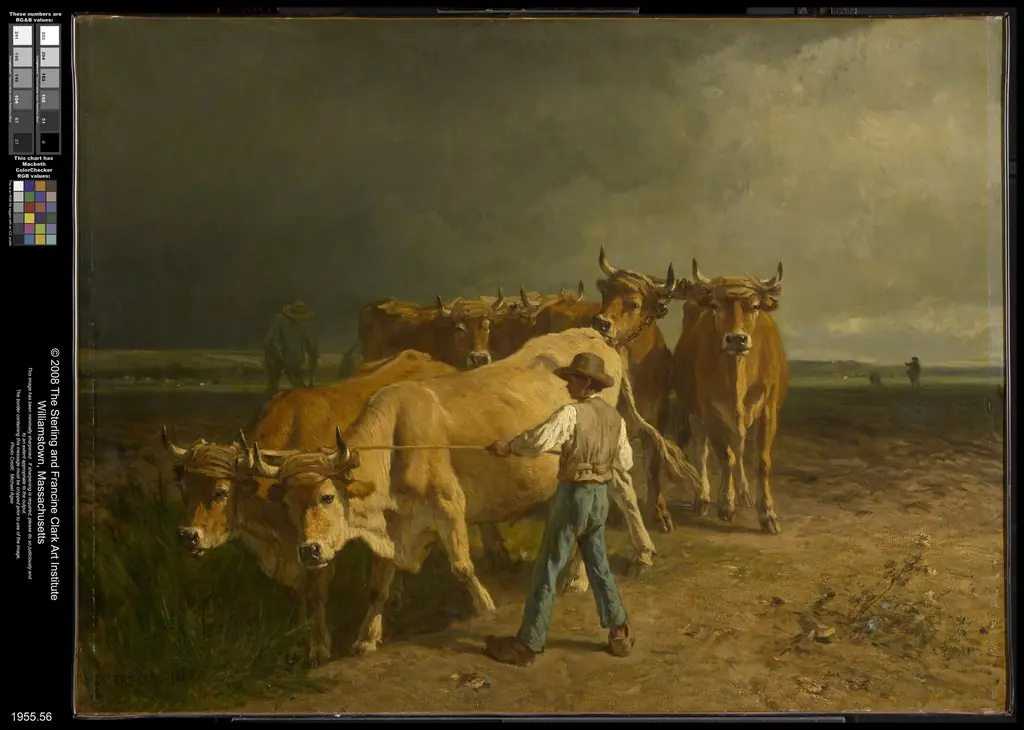
The scene shows two horses—brown and white—drawing a plow through a field, guided by a farmer in a white coat and straw hat. The figures are small within the landscape, suggesting the quiet dignity of labor rather than its heroism. No narrative climax is present; the work conveys endurance and routine, reflecting the uncelebrated rhythms of peasant existence in late 19th-century Poland.
Technique & Style
Bończa-Rutkowski employed visible, tactile brushstrokes to build the surface of the painting, avoiding smooth finishes. The palette is subdued, dominated by earthy greens, browns, and muted grays, with soft blues in the sky. Light is diffused and even, without strong contrasts, reinforcing the calm mood. The texture of the paint mirrors the roughness of the soil and the natural world it portrays.
History & Provenance
Created in 1899, the painting entered the collection of the National Museum in Warsaw shortly after its completion. It has remained in public ownership since, with no documented private sales or significant transfers. Its preservation reflects institutional interest in documenting regional rural life during a period of national cultural consolidation in partitioned Poland.
Context
Painted during the final years of Poland’s partition, the work aligns with broader artistic movements that sought to affirm national identity through depictions of peasant life. While not overtly political, its focus on agrarian labor resonated with cultural efforts to celebrate indigenous traditions. Similar themes appear in the work of contemporaries like Józef Chełmoński and Stanisław Witkiewicz.
Legacy
Ploughing remains a representative example of late 19th-century Polish realist painting, valued for its quiet observation rather than dramatic impact. It has not been widely reproduced or exhibited internationally, but within Poland, it is recognized as a thoughtful contribution to the genre of rural realism. The painting continues to inform discussions on regional identity and the aesthetics of everyday labor.
Artist & collection
Artist
Władysław Bończa-Rutkowski painted rural scenes in oils around the late 1800s, showing fields and labor with straightforward realism.