Artwork
Portrait of John Fawcett
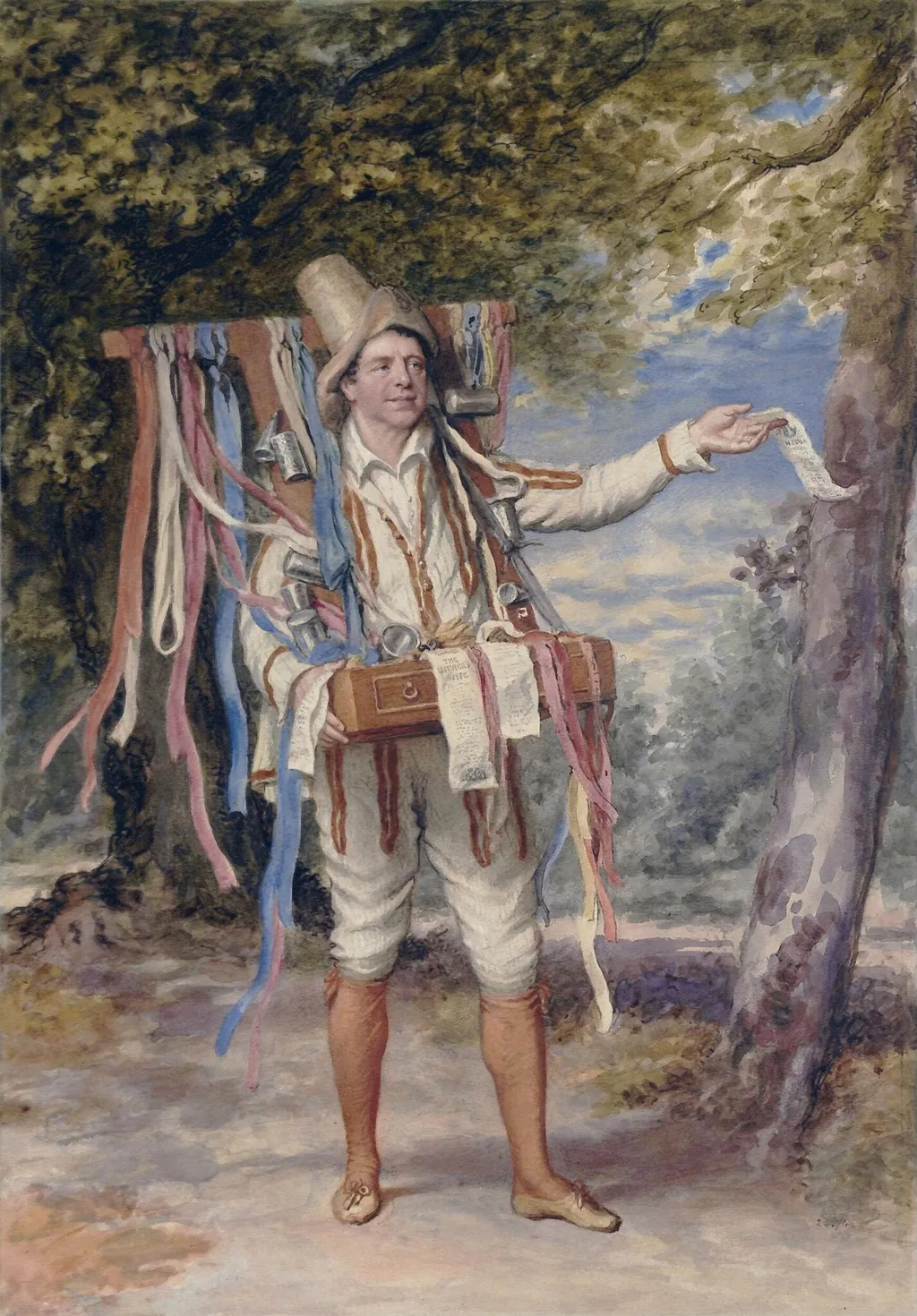
Portrait of John Fawcett is a watercolor work on paper by the Biedermeier artist Wageman. It dates from 1828 and is held in the collection of the Victoria and Albert Museum.
About this work
Overview
This 1828 watercolour portrait by Wageman captures John Fawcett, a renowned actor and dramatist, in character as Autolycus from Shakespeare’s *A Winter’s Tale*. Signed and dated by the artist, the work showcases Fawcett in a serene, wooded setting.
Subject & Meaning
Depicting Fawcett as Autolycus, the portrait references the character's role as a rogue and peddler. Fawcett holds a wooden box (symbolizing his wares) and a paper, while colorful ribbons and papers adorn his attire and box, reflecting Autolycus’s cunning, theatrical nature.
Technique & Style
Executed in watercolour, the portrait exhibits soft, delicate brushwork, contributing to an overall atmosphere of tranquility. The style aligns with early 19th-century Romanticism, emphasizing natural settings and emotive subtlety.
History & Provenance
Created in 1828, the portrait is signed and dated by Wageman, indicating a direct attribution. However, detailed provenance (ownership history) is not provided in the available information.
Context
The work reflects the early 19th-century theatrical scene, where actors like Fawcett would embody Shakespearean characters on stage. The choice of Autolycus highlights the popularity of *A Winter’s Tale* during this period.
Legacy
While specific influence or notable exhibitions of this portrait are not detailed, it contributes to the visual record of early 19th-century theatre personalities and the artistic interpretation of Shakespearean characters during the Romantic era.
Artist & collection
Artist
This British watercolorist and printmaker worked in the 1820s, leaving behind crisp portraits and printed scenes.