Artwork
Jeux innocens de Zephyr et Flore
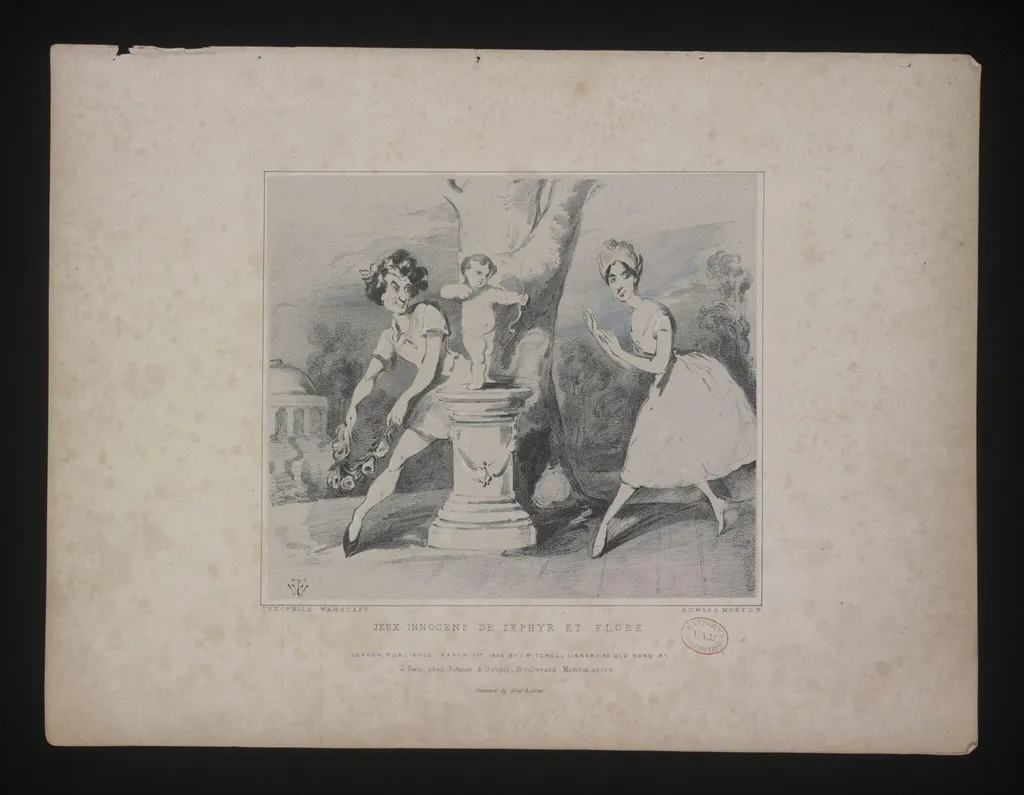
Jeux innocens de Zephyr et Flore is a print by the Romanticist artist Theophile Wagstaff. It dates from 2 and is held in the collection of the Victoria and Albert Museum.
About this work
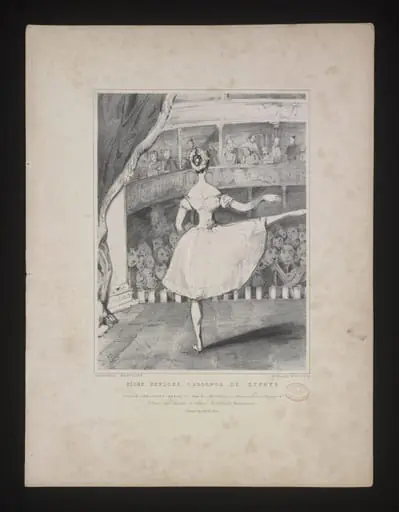
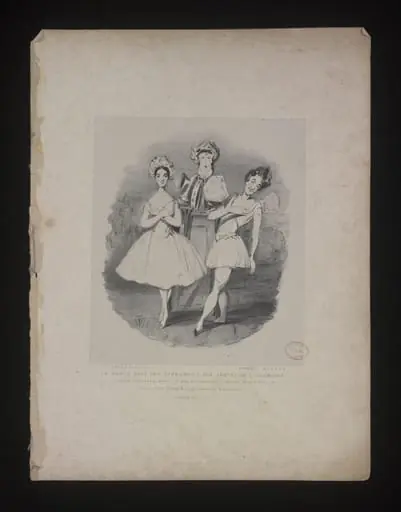
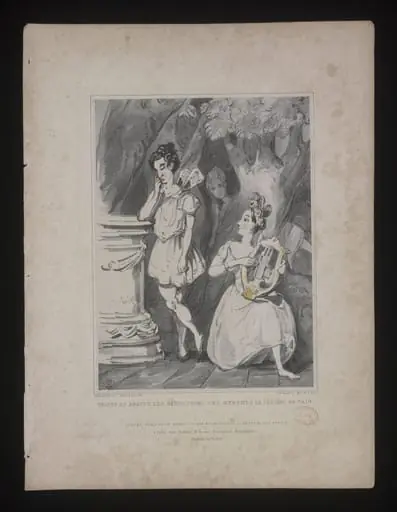
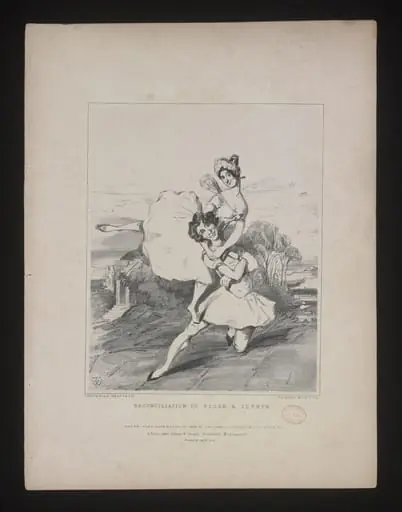
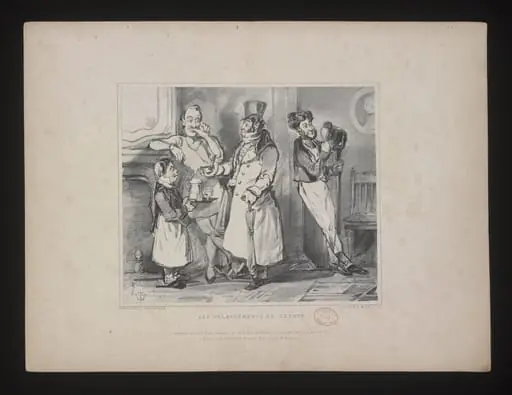
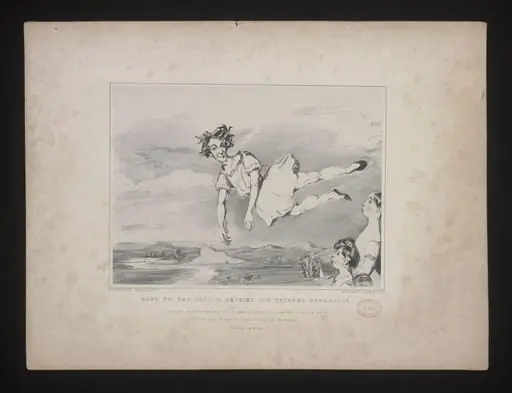
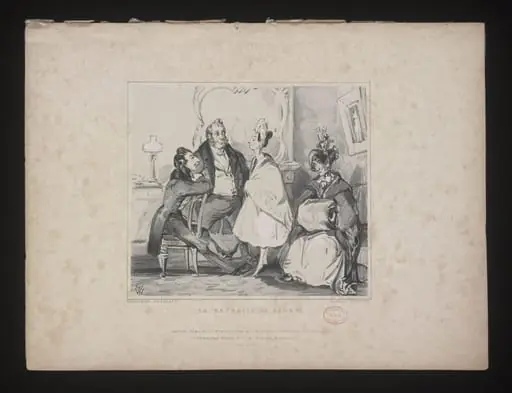
This print pokes fun at a famous ballet. Made in London in 1836, it shows eight comic scenes. The artist used a writer’s pen name to hide his real identity.
The prints were hand-colored after engraving. They came out just weeks after the ballet’s run at the Theatre Royal, Drury Lane.
Look up the Victoria and Albert Museum to see its copy.
Overview
This hand-colored print, published in London on March 1, 1836, is one of eight satirical images depicting Zephyr and Flora in playful, exaggerated scenes.
This hand-colored print, published in London on March 1, 1836, is one of eight satirical images depicting Zephyr and Flora in playful, exaggerated scenes. Engraved by Edward Morton and attributed to the pseudonym Théophile Wagstaff, the series was created by William Makepeace Thackeray as a humorous response to a recent ballet. The work blends literary wit with visual caricature, produced shortly after the ballet’s debut at Drury Lane.
Subject & Meaning
The prints parody 'Flore et Zéphire,' a popular ballet by Charles-Louis Didelot, transforming its graceful mythological themes into absurd, comic tableaux. Thackeray, under a pseudonym, mocked the ballet’s theatricality and perceived sentimentality through exaggerated gestures and improbable scenarios. The humor lies in the contrast between the ballet’s elevated tone and the ridiculous, almost slapstick, interpretations of its characters.
Technique & Style
Each image was engraved by Edward Morton from drawings made by Thackeray, then meticulously hand-colored after printing. The style is linear and expressive, with clear outlines and minimal background detail, emphasizing the figures’ exaggerated postures. The hand-coloring adds a playful, almost theatrical vibrancy, reinforcing the satirical tone while reflecting the popular print culture of the period.
History & Provenance
Created in direct response to the ballet’s 1836 London run, the series was published within weeks of its premiere. Thackeray used the pseudonym Théophile Wagstaff to conceal his authorship, likely to avoid professional repercussions as a writer engaging in visual satire. The complete set survives in a few institutional collections, including the Victoria and Albert Museum, where it is preserved as an example of early 19th-century theatrical parody.
Context
In 1830s London, theatrical entertainment was a major cultural force, and satirical prints were a common way to critique popular performances. Thackeray’s series fits within a tradition of illustrated humor targeting the stage, where writers and artists often used anonymity to critique without consequence. The timing of publication—immediately after the ballet’s debut—suggests a deliberate effort to capitalize on public attention.
Legacy
Though not widely known today, the series represents an early example of Thackeray’s visual wit and his engagement with popular culture beyond literature. It illustrates how writers of the period navigated the boundaries between text and image, and how satire functioned as both entertainment and social commentary. The prints remain valuable for understanding the intersection of theater, print media, and authorial identity in Victorian England.
Artist & collection

Artist
William Makepeace Thackeray was an English novelist and illustrator. He is known for his satirical works, particularly his 1847–1848 novel Vanity Fair, a panoramic portrait of British society, and the 1844 novel The…