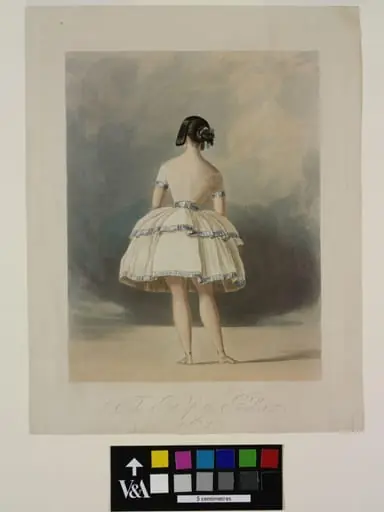
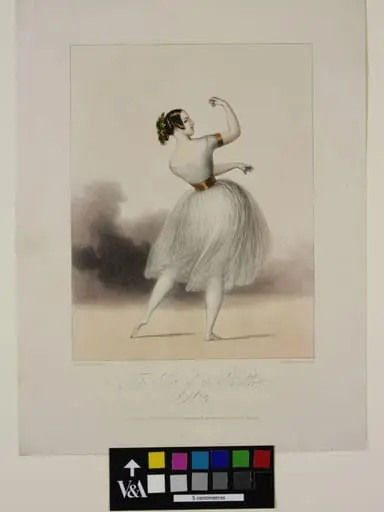
Artwork
La danse fait ses offrandes sur l'autel de l'harmonie
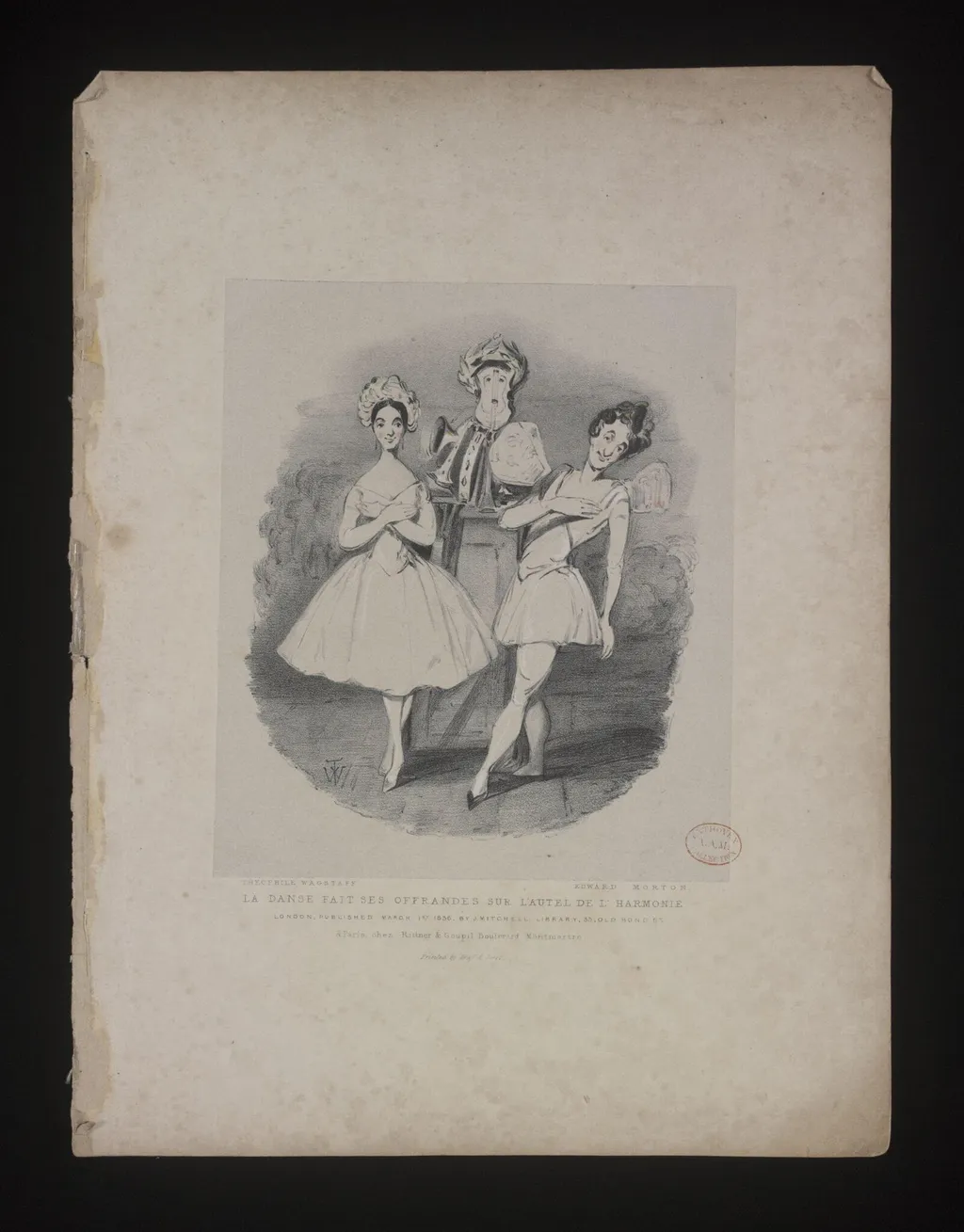
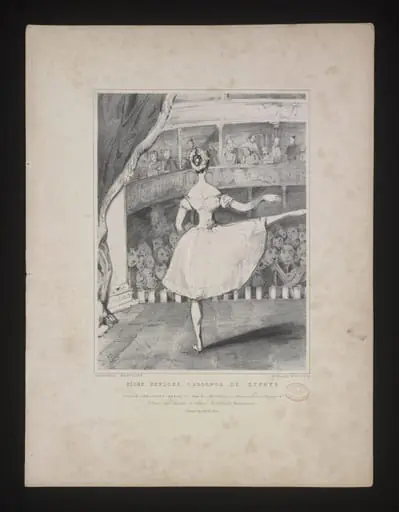
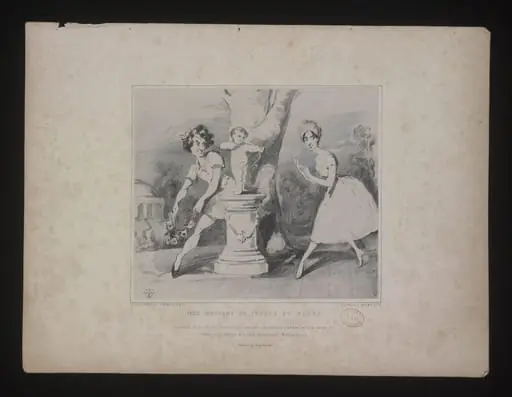
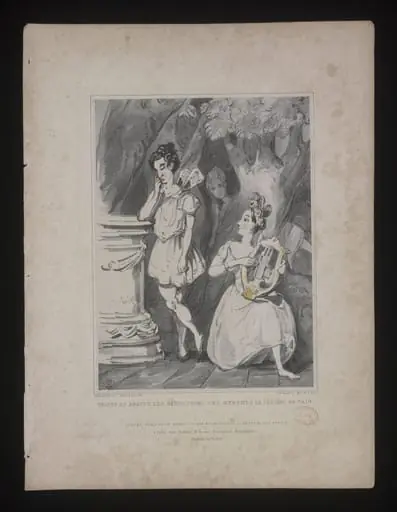
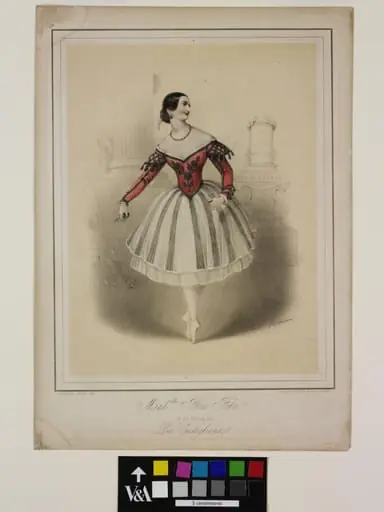
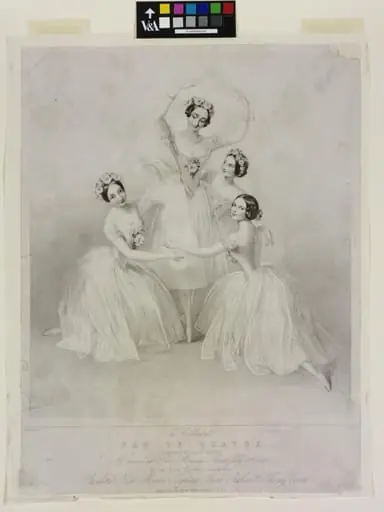
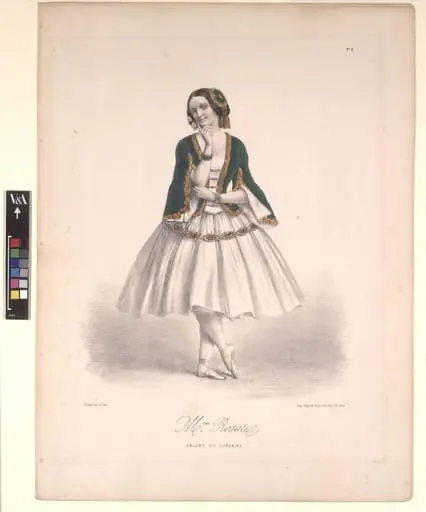
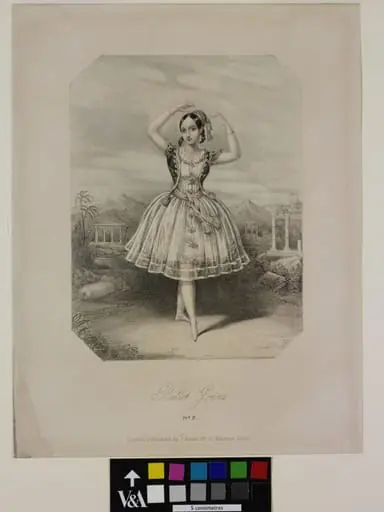
La danse fait ses offrandes sur l'autel de l'harmonie is a print by the Romanticist artist Theophile Wagstaff. It dates from 2 and is held in the collection of the Victoria and Albert Museum.
About this work
This is a 1836 hand-colored print from London. It’s part of a set that pokes fun at a famous ballet called Flore et Zéphire. The artist used the name Théophile Wagstaff, but it was really William Makepeare Thackeray behind it.
The print was engraved by Edward Morton. It also carries Wagstaff’s signature from back in 1836.
Look next at the Victoria and Albert Museum.
Overview
' Engraved by Edward Morton, it was created under the pseudonym Théophile Wagstaff, later revealed to be the writer William Makepeace Thackeray.
This hand-colored print, published in London on March 1, 1836, is one of eight satirical images in a series titled 'La danse fait ses offrandes sur l'autel de l'harmonie.' Engraved by Edward Morton, it was created under the pseudonym Théophile Wagstaff, later revealed to be the writer William Makepeace Thackeray. The work critiques the popular ballet Flore et Zéphire through visual irony, blending theatrical parody with social observation.
Subject & Meaning
The print satirizes Charles-Louis Didelot’s ballet Flore et Zéphire, a romantic piece celebrated for its ethereal choreography and floral motifs. Thackeray’s imagery transforms the ballet’s idealized nymphs and gods into exaggerated, almost absurd figures, mocking its sentimental excesses. The title’s reference to an altar of harmony underscores the irony, suggesting the ballet’s pretensions to artistic purity are performative rather than profound.
Technique & Style
Executed as a hand-colored engraving, the print combines fine line work with delicate washes of color to mimic the theatricality of stage costumes and settings. The figures are rendered with elongated proportions and exaggerated gestures, typical of caricature traditions. Thackeray’s draftsmanship, though playful, reveals a keen eye for physical comedy and costume detail, enhancing the satire without sacrificing visual coherence.
History & Provenance
Created in 1836, the print was part of a series published in London during a period of intense public fascination with French ballet. Thackeray, then a young journalist, used the pseudonym Théophile Wagstaff to distance himself from the critique. The set was distributed as a pamphlet and later collected by British institutions, with examples now held in the Victoria and Albert Museum’s graphic arts collection.
Context
In the 1830s, British audiences were captivated by French ballet, particularly Flore et Zéphire, which toured London with great acclaim. Thackeray’s series emerged amid growing cultural skepticism toward imported continental spectacle. His caricatures reflect a broader English literary tradition of mocking artistic pretension, aligning with the satirical tone of periodicals like Punch, which he would later contribute to.
Legacy
Though not widely exhibited during Thackeray’s lifetime, the series is now recognized as an early example of his visual wit and social commentary. It reveals his artistic sensibility before his rise as a novelist and offers insight into the cross-cultural tensions of 19th-century British theater. The prints remain valuable for understanding how literature and visual satire intersected in the age of mass print culture.
Artist & collection

Artist
William Makepeace Thackeray was an English novelist and illustrator. He is known for his satirical works, particularly his 1847–1848 novel Vanity Fair, a panoramic portrait of British society, and the 1844 novel The…