Artwork
Flore deplore l'absence de Zephyr
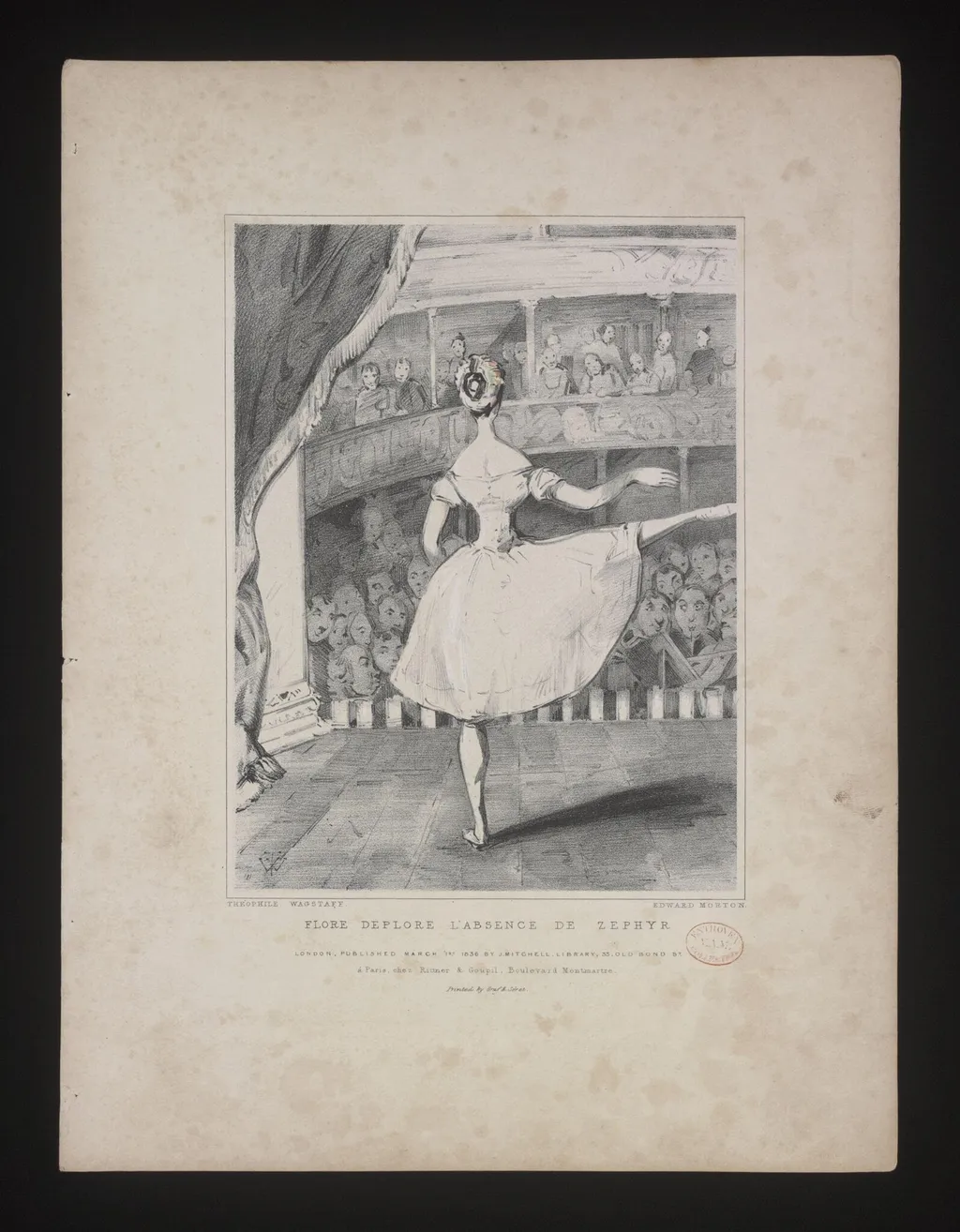
Flore deplore l'absence de Zephyr is a print by the Romanticist artist Theophile Wagstaff. It dates from 2 and is held in the collection of the Victoria and Albert Museum.
About this work
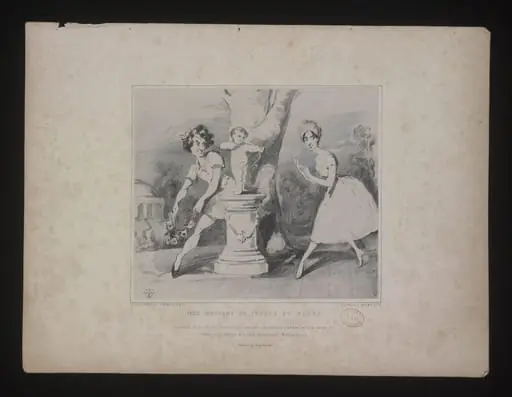
This hand-colored print pokes fun at a famous ballet. It shows a character named Flore missing her partner Zephyr. The print was made in London in 1836 and belongs to the Romanticism movement.
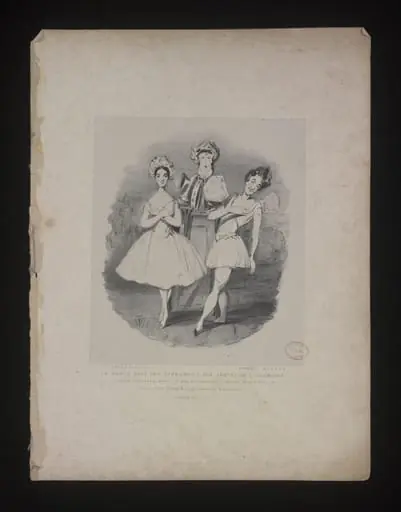
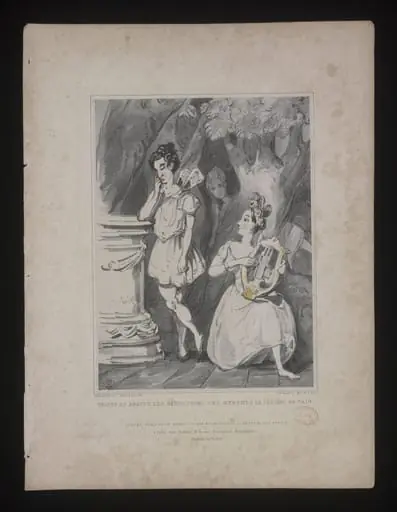
It’s part of a set of eight caricatures by writer William Makepeare Thackeray. He published them under the name Théophile Wagstaff.
The print is at the Victoria and Albert Museum.
Overview
The work blends literary wit with visual caricature, reflecting Thackeray’s early engagement with theatrical culture and his talent for ironic observation.
This hand-coloured print, published in London on 1 March 1836, is one of eight satirical images created by William Makepeace Thackeray under the pseudonym Théophile Wagstaff. Engraved by Edward Morton, it humorously responds to the popular ballet Flore et Zéphire by Charles-Louis Didelot. The work blends literary wit with visual caricature, reflecting Thackeray’s early engagement with theatrical culture and his talent for ironic observation.
Subject & Meaning
The image depicts Flore, the female lead of the ballet, expressing sorrow at the absence of Zephyr, her mythological wind-god partner. Rather than honoring the ballet’s romantic idealism, the print exaggerates her emotional display as absurdly theatrical. The satire targets the sentimental excesses of Romantic-era dance, using exaggerated gesture and facial expression to mock the genre’s emotional pretensions.
Technique & Style
Executed as a hand-coloured engraving, the print employs fine line work and delicate washes to suggest texture and mood. The figures are rendered with caricatured proportions and expressive poses, typical of early 19th-century British satirical prints. The addition of colour enhances the theatricality, while the precision of the engraving underscores the work’s publication as a refined, if ironic, object of popular culture.
History & Provenance
Created in 1836, the print was part of a series published in London during Thackeray’s early career, before his rise as a novelist. It was issued under the pseudonym Théophile Wagstaff to distance the author from the irreverent tone. The set was likely distributed as a novelty item among London’s literate middle class. The print is now held in the collection of the Victoria and Albert Museum, acquired as part of its broader holdings in graphic satire.
Context
The print emerged during a period when London theatres were saturated with Romantic ballets, many featuring mythological themes and ethereal choreography. Thackeray’s series responded to the cultural dominance of Didelot’s Flore et Zéphire, which had drawn large audiences. His caricatures tapped into a growing appetite for humorous critiques of high art, positioning himself within a tradition of British visual satire that questioned artistic pretension.
Legacy
Though little known today outside specialized collections, the series represents an early example of Thackeray’s satirical voice, foreshadowing his later literary critiques of social and cultural pretensions. The prints offer insight into the intersection of literature, theatre, and graphic art in Victorian England. As a preserved artifact of popular satire, they document how audiences engaged critically with the performing arts of their time.
Artist & collection

Artist
William Makepeace Thackeray was an English novelist and illustrator. He is known for his satirical works, particularly his 1847–1848 novel Vanity Fair, a panoramic portrait of British society, and the 1844 novel The…