Artwork
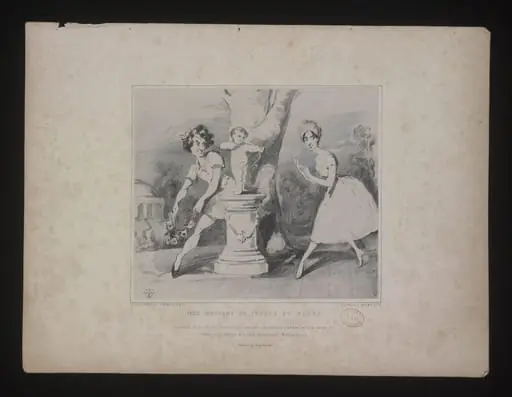
Triste et abattu les seductions des nymphes le tentent en vain
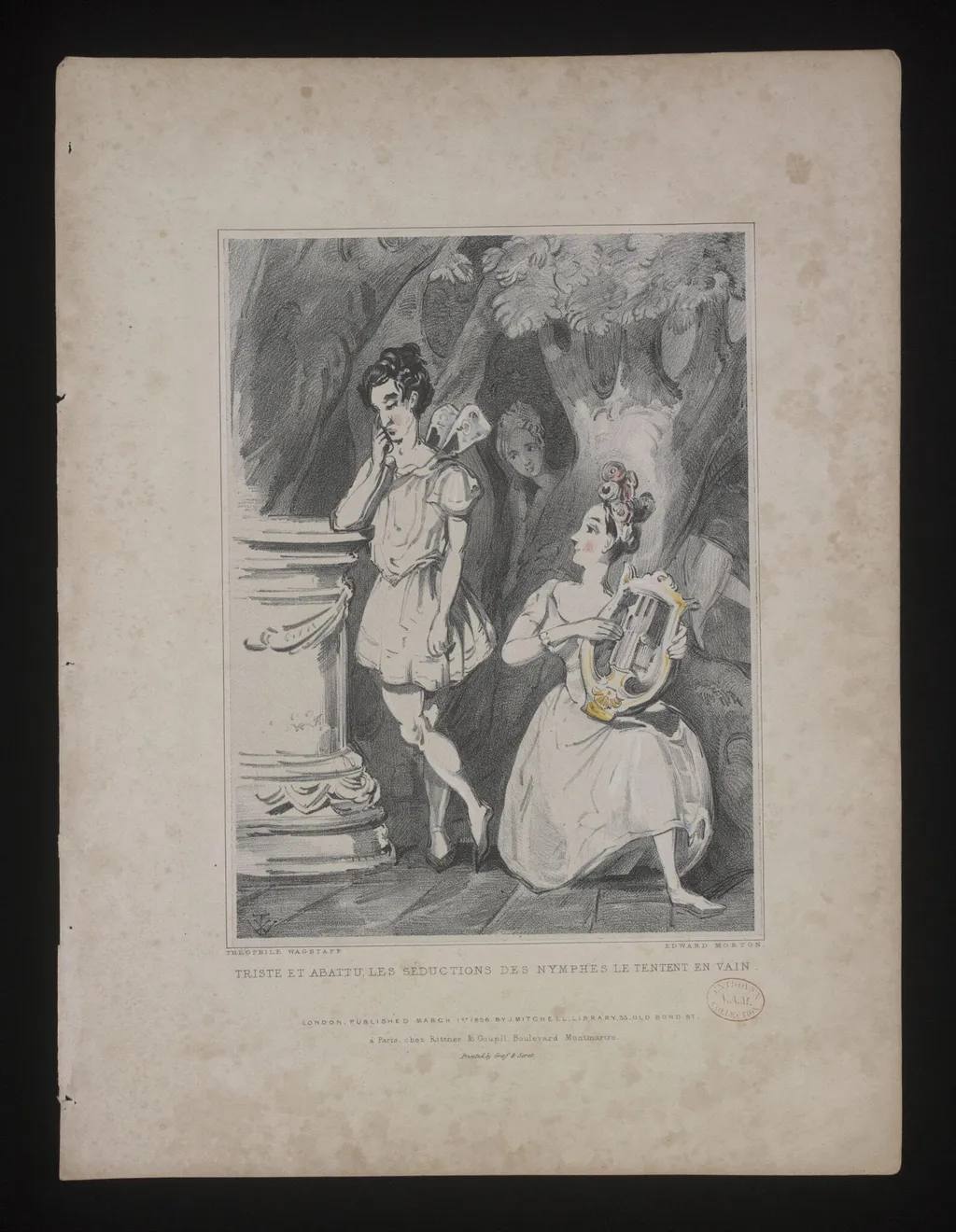
Triste et abattu les seductions des nymphes le tentent en vain is a print by the Romanticist artist Theophile Wagstaff. It dates from 2 and is held in the collection of the Victoria and Albert Museum.
About this work
This print is called “Triste et abattu les seductions des nymphes le tentent en vain.” It’s a hand-colored engraving from 1836, linked to Romanticism.
It pokes fun at a popular ballet called Flore et Zéphire. The artist used a fake name, Théophile Wagstaff, to hide that the real writer was William Makepeare Thackeray.
Next time you’re near London, look up the Victoria and Albert Museum.
Overview
The hand‑coloured print titled *Triste et abattu les seductions des nymphes le tentent en vain* is an 1836 engraving produced in London. The image was engraved by Edward Morton after a drawing signed “T.W.” and was first issued on 1 March 1836.
Subject & Meaning
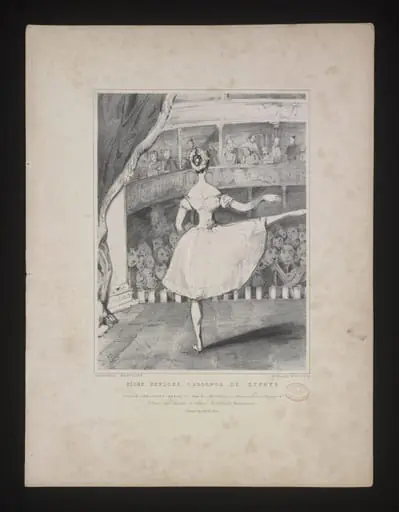
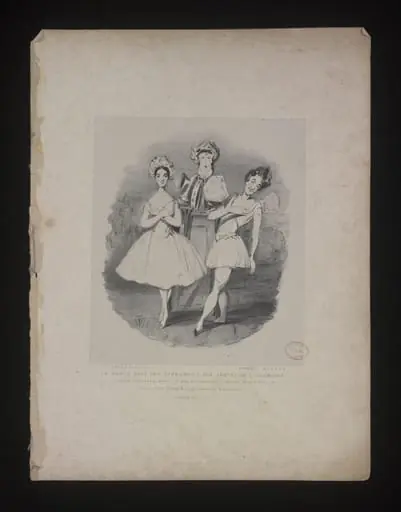
The work belongs to a series of eight satirical caricatures that lampoon the ballet *Flore et Zéphire*, a popular production choreographed by Charles‑Louis Didelot. By depicting the nymphs’ unsuccessful attempts to console a dejected figure, the print mocks the ballet’s romantic themes.
Technique & Style
Executed as a hand‑coloured copper engraving, the print combines line work typical of early nineteenth‑century printmaking with applied watercolor washes. The style reflects the Romantic era’s interest in theatrical subjects and the exaggerated gestures common to caricature.
History & Provenance
The original drawing was created by writer William Makepeace Thackeray, who published the series under the pseudonym “Théophile Wagstaff” to conceal his authorship. The engraving was produced by Edward Morton and distributed in London, later entering the collection of the Victoria and Albert Museum.
Context
During the 1830s, ballet enjoyed widespread popularity in England, and *Flore et Zéphire* was a cultural touchstone. Satirical prints such as this one offered contemporary commentary, using humor to critique the excesses of Romantic stage productions.
Artist & collection

Artist
William Makepeace Thackeray was an English novelist and illustrator. He is known for his satirical works, particularly his 1847–1848 novel Vanity Fair, a panoramic portrait of British society, and the 1844 novel The…