Artwork
Professor Richard Codman lll's Punch & Judy booth
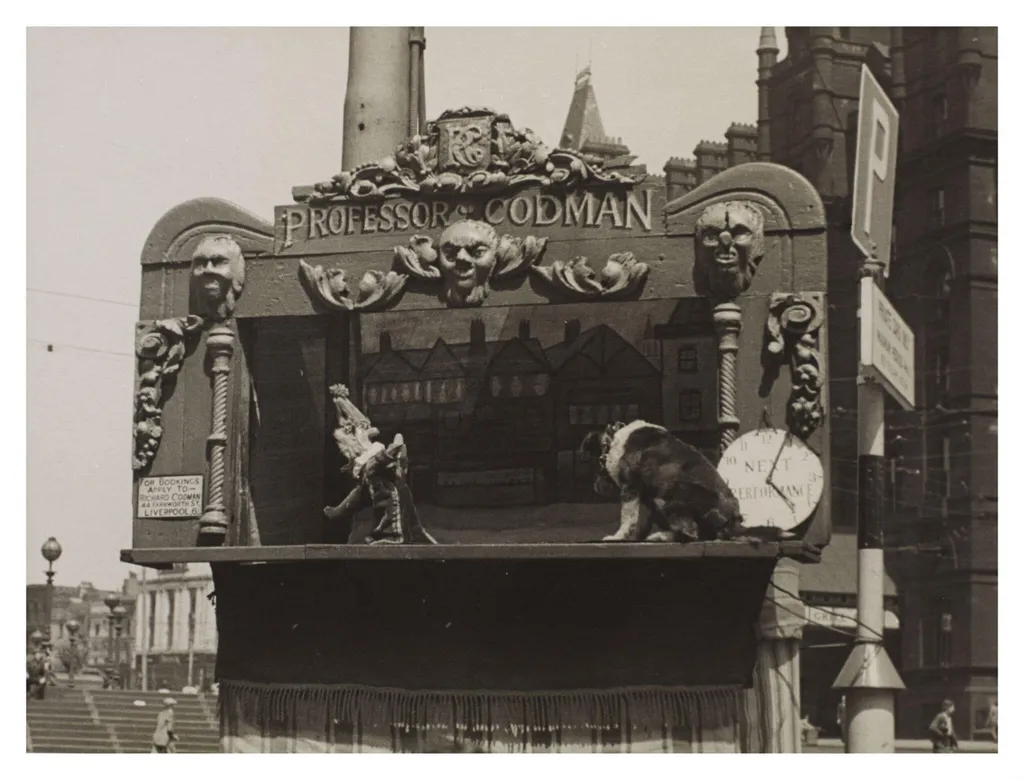
Professor Richard Codman lll's Punch & Judy booth is a photographic photography by Waldo S. Lanchester. It is held in the collection of the Victoria and Albert Museum.
About this work
This black-and-white photo shows Professor Richard Codman III on stage with his Punch & Judy booth outside Liverpool Lime Street station.
This black-and-white photo shows Professor Richard Codman III on stage with his Punch & Judy booth outside Liverpool Lime Street station. Waldo S. Lanchester captured the scene between 1936 and 1951.
The Codman family ran Punch & Judy shows for over a century. Richard Codman I started in 1868, passing the booth down through three generations.
Look up Waldo S. Lanchester to see more of his puppetry work.
Overview
A black-and-white photograph captures Professor Richard Codman III performing his Punch and Judy show outside Liverpool Lime Street railway station between 1936 and 1951. The image, taken by puppetry historian Waldo S. Lanchester, documents a moment in the long-running tradition of the Codman family’s seaside puppetry. The booth’s carved shield displays the initials RC, marking the family’s generational stewardship of the act.
Subject & Meaning
The scene depicts Mr. Punch and Toby the dog mid-performance, emblematic of the traditional British Punch and Judy puppet show. The booth, a mobile stage passed through three generations of Codmans, represents more than entertainment—it embodies a lineage of itinerant labor and cultural continuity. The characters, though comedic, serve as enduring symbols of folk theater’s resilience in public spaces.
Technique & Style
The photograph is a straightforward documentary image, capturing the booth’s wooden structure, painted details, and the puppeteer’s positioning on stage. No theatrical lighting or staging embellishments are present; the focus remains on the booth’s craftsmanship and the immediacy of the performance. The composition reflects Lanchester’s interest in preserving puppetry as a living, unvarnished tradition.
History & Provenance
The Codman family operated Punch and Judy booths for nearly a century, beginning with Richard Codman I in 1868. His son Richard II assumed the pitch in 1888, followed by Richard III. Other family members maintained shows in Llanduddno and Colwyn Bay. The Liverpool booth, photographed by Waldo Lanchester, was one of the last active sites of this multi-generational enterprise before the decline of seaside puppetry.
Context
During the early to mid-20th century, Punch and Judy shows thrived at British seaside resorts and railway stations, drawing crowds with their slapstick humor. The Codmans were part of a broader network of traveling puppeteers who sustained the tradition despite economic hardship and changing public tastes. Lanchester’s documentation was part of a wider effort to record these vanishing folk practices before they disappeared.
Legacy
The Codman family’s century-long commitment to Punch and Judy helped preserve a distinctly British theatrical form. Waldo Lanchester’s photograph, along with his other archival work, ensured that their contribution was not lost to obscurity. The image stands as a quiet testament to the endurance of itinerant performance and the familial transmission of cultural labor across generations.
Artist & collection
Artist

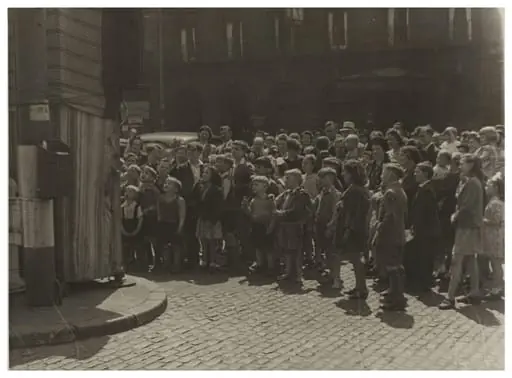 The audience at Professor Richard Codman lll's Punch and Judy booth, Liverpool, ca.1940
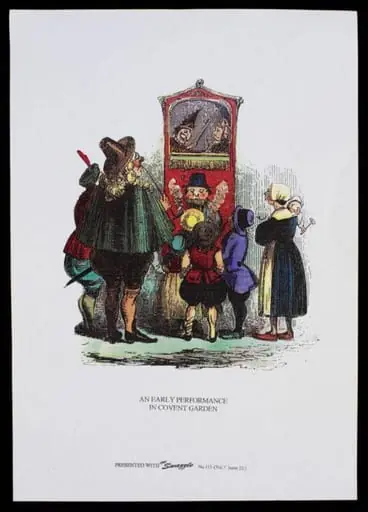 George Speaight Punch & Judy Collection
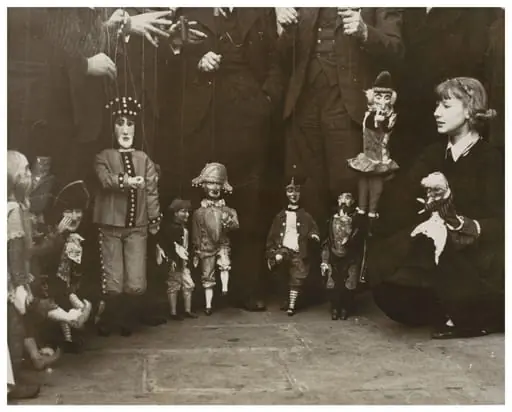 Photograph of puppeteers at the opening of the 13th Exhibition of the British Puppet and Model Theatre Guild, 1938
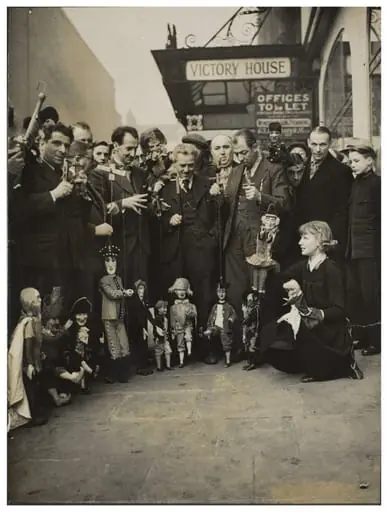 Photograph of puppeteers at the opening of the 13th Exhibition of the British Puppet and Model Theatre Guild, 1938