Artwork
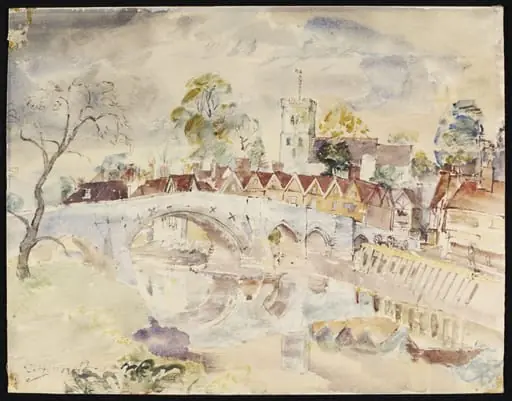
The Bridge and Chantrey Chapel, St.Ives
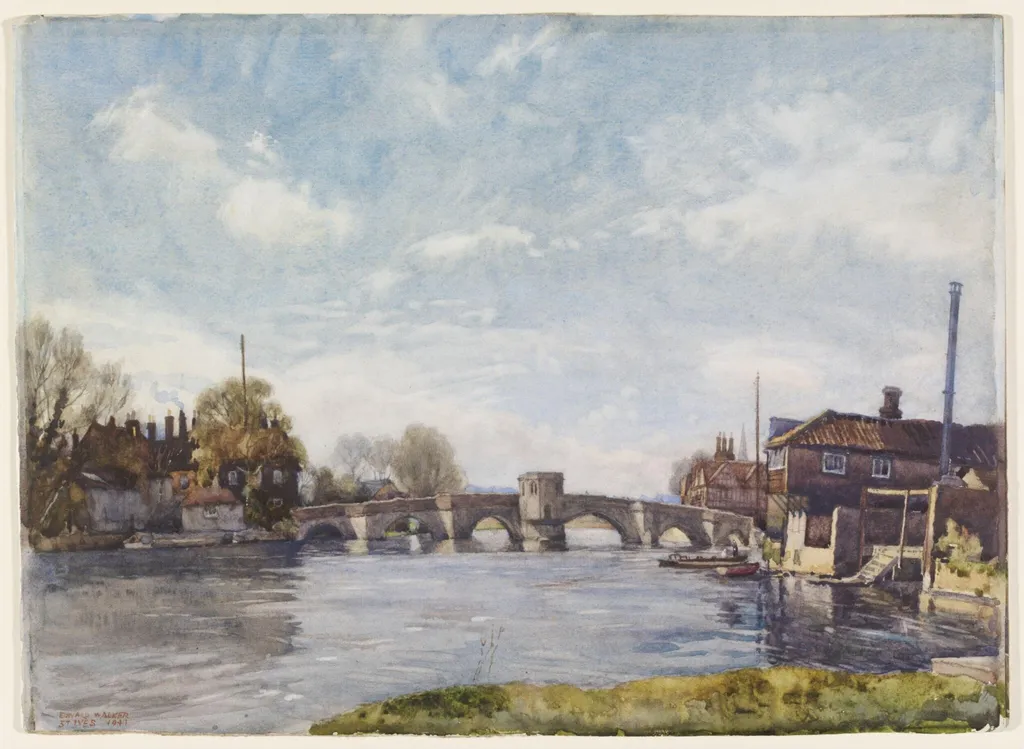
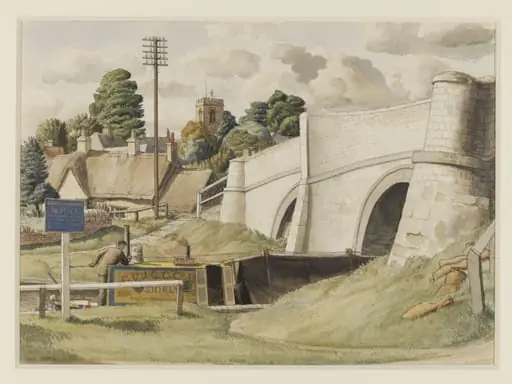
The Bridge and Chantrey Chapel, St.Ives is a watercolor work on paper by the British Romanticist artist Walker. It dates from 1941 and is held in the collection of the Victoria and Albert Museum.
About this work
Overview
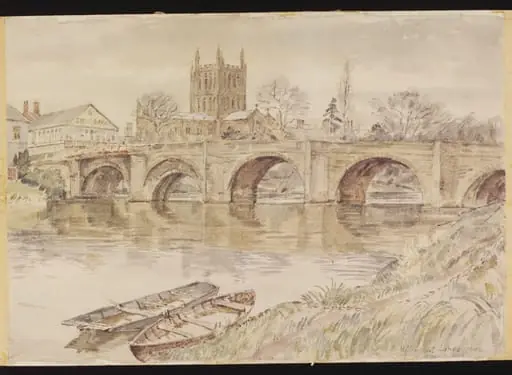
The watercolour, executed by artist John Walker in 1941, portrays the historic 15th‑century bridge spanning the River Great Ouse at St Ives, Cambridgeshire, together with the adjoining Chantrey Chapel dedicated to St Lawrence. The composition captures the tranquil river, modest dwellings with dark roofs, a small boat, and a softly clouded sky, rendered in a restrained palette of blues and greys.
Subject & Meaning
The image records a quintessential English riverside scene, emphasizing the continuity of rural life and the architectural heritage of the medieval bridge and its chapel. By focusing on everyday elements—a calm waterway, modest homes, and a lone vessel—the work underscores the quiet resilience of the landscape amid the uncertainties of wartime Britain.
Technique & Style
Walker employs loose, airy brushwork that simplifies forms while preserving essential details. Muted tonalities of blue and gray dominate, creating a subdued atmosphere. The water’s surface reflects surrounding structures, achieved through delicate washes that suggest rather than delineate texture, reinforcing the work’s documentary yet poetic character.
History & Provenance
The painting forms part of the Recording Britain initiative, a wartime project run by the Committee for the Employment of Artists in Wartime under the Ministry of Labour and National Service, and financed by the Pilgrim Trust. Directed by Sir Kenneth Clark, the scheme aimed to capture at‑risk sites between 1940 and 1943; Walker’s piece was signed, dated, and entered into the collection during that period.
Context
Recording Britain sought to preserve visual records of such vulnerable locations, focusing on English architecture, landscapes, and rural communities.
During the early 1940s, many historic structures faced threats from aerial bombardment and post‑war redevelopment. Recording Britain sought to preserve visual records of such vulnerable locations, focusing on English architecture, landscapes, and rural communities. Walker’s depiction of St Ives’ bridge and chapel reflects this broader effort to document the nation’s cultural patrimony before potential loss.
Artist & collection
Artist
An English watercolorist active in the early 1940s, this artist painted the spires, bridges, and inns of small-town England in quick, transparent washes.