Artwork
Whirling
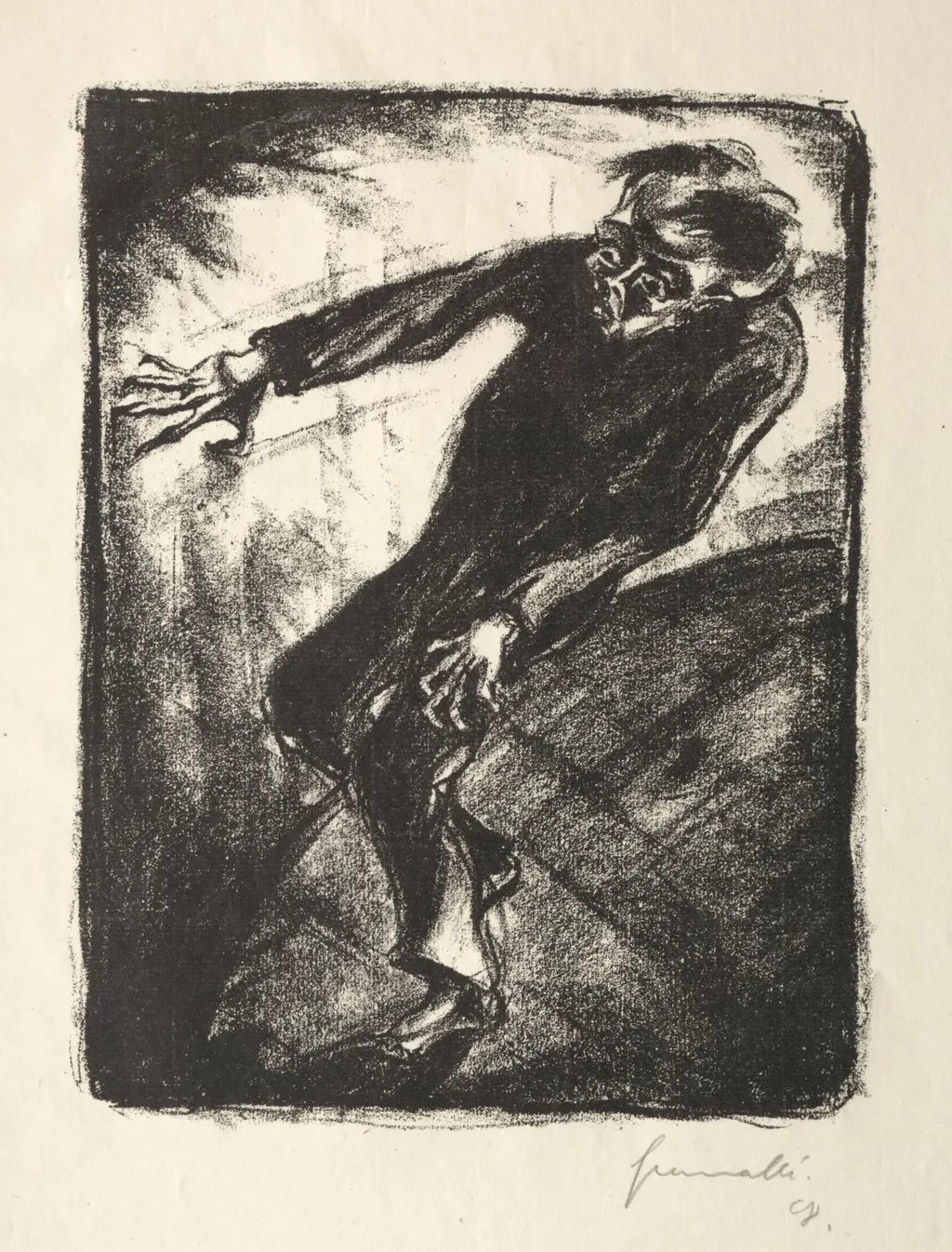
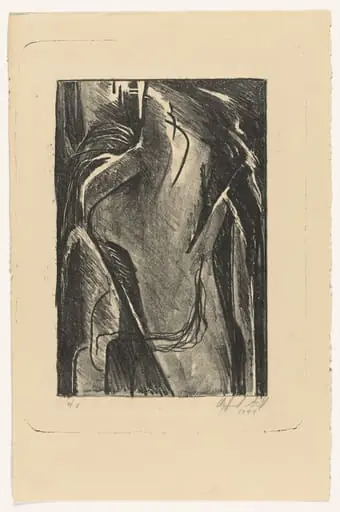
Whirling is a print by Walter Grammatté. It dates from 1924 and is held in the collection of the Cleveland Museum of Art.
About this work
Overview
Whirling, created around 1924 by German artist Walter Grammatté, is a dynamic graphic work on paper. It resides in the collection of The Cleveland Museum of Art. The piece captures a single moment of physical motion through minimal yet forceful marks, emphasizing energy over detail. Its raw execution suggests immediacy, as if drawn in real time during the subject’s movement.
Subject & Meaning
The figure depicts a person in mid-spin, limbs extended and body tilted, suggesting a dance or ritual motion. The blurred form and low stance imply centrifugal force and instability, evoking physical exertion rather than grace. The absence of context or narrative elements focuses attention solely on the body’s kinetic state, turning motion itself into the subject.
Technique & Style
The dark, indistinct background enhances the figure’s intensity, while the lack of shading or refinement prioritizes rhythm over realism.
Grammatté employed rapid, angular strokes with a dry, abrasive medium, likely charcoal or graphite, to simulate motion through smudged contours and fragmented lines. The dark, indistinct background enhances the figure’s intensity, while the lack of shading or refinement prioritizes rhythm over realism. The surface appears scratched or dragged, reinforcing the sense of urgency in the artist’s hand.
History & Provenance
The work dates from Grammatté’s early career in Germany, a period marked by experimentation with expressionist forms. It entered The Cleveland Museum of Art’s collection through documented acquisition, though its path from the artist’s studio to the museum remains largely unrecorded. No exhibition history prior to its inclusion in the museum is publicly documented.
Context
Created in the aftermath of World War I, Whirling reflects broader European artistic interest in the body as a site of emotional and physical disruption. Grammatté’s approach aligns with Expressionist concerns for inner experience over outward appearance, though his focus on motion distinguishes it from more figurative or psychological works of the era.
Legacy
Whirling stands as a concise example of Grammatté’s interest in capturing transient physical states. While not widely reproduced, it contributes to understanding his role in early 20th-century German graphic art. The work’s emphasis on movement anticipates later explorations of dynamism in modernist drawing, though it remains a relatively obscure piece within his oeuvre.
Artist & collection

![The Great Anxiety (Self-Portrait, in Three-Quarter Profile to the Right) (Die große Angst [Selbstportrat, Kopf im Halbprofil nach rechts]), by Walter Gramatté](https://artifactworldgallery.com/img/walter-gramatte--the-great-anxiety-self-portrait-in-three-quarter-profile-to--7cce5ee2cd482abe-w320.webp) The Great Anxiety (Self-Portrait, in Three-Quarter Profile to the Right) (Die große Angst [Selbstportrat, Kopf im Halbprofil nach rechts])
The Great Anxiety (Self-Portrait, in Three-Quarter Profile to the Right) (Die große Angst [Selbstportrat, Kopf im Halbprofil nach rechts]) Untitled
 The Writing Prophet (Saint John on Patmos)
 Untitled
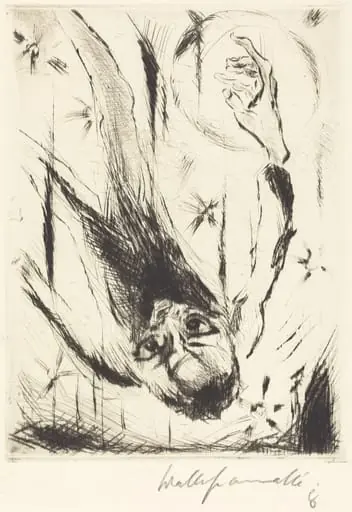 The Fall into Infinity
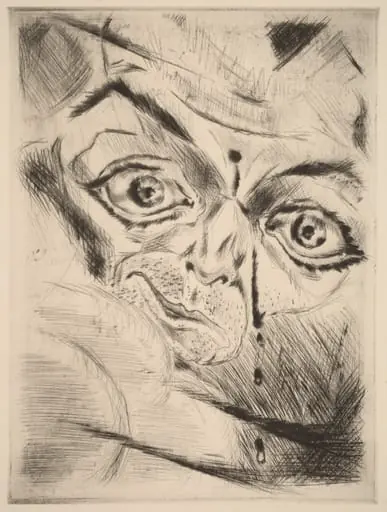 Peter with a Gunshot Wound in His Forehead
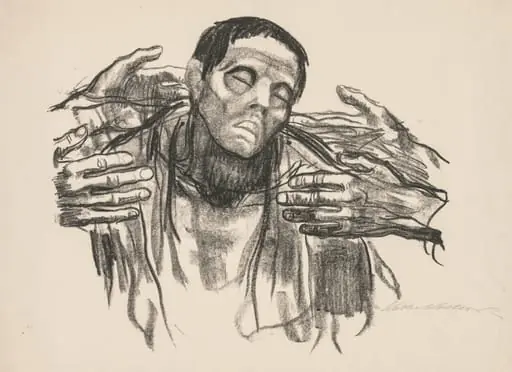 Help Russia
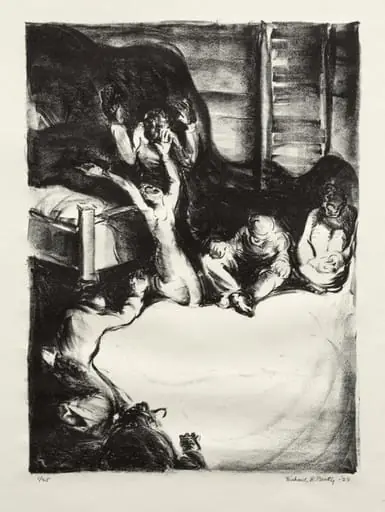 Porgy
Porgy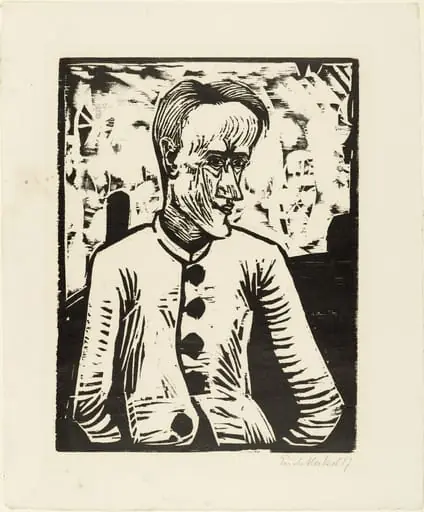 Untitled
 Untitled
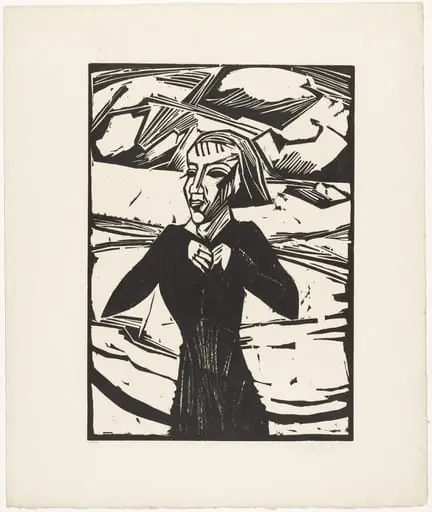 Untitled
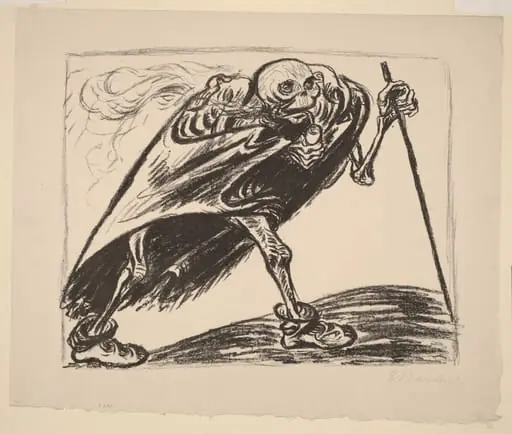 Wandering Death