Artwork
The Ghost Story
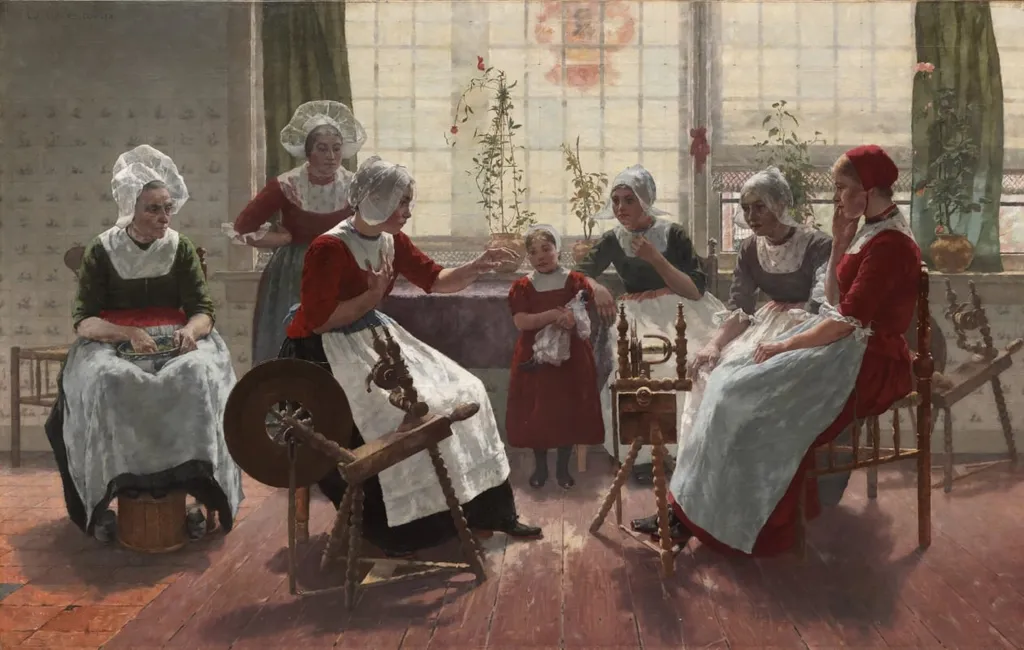
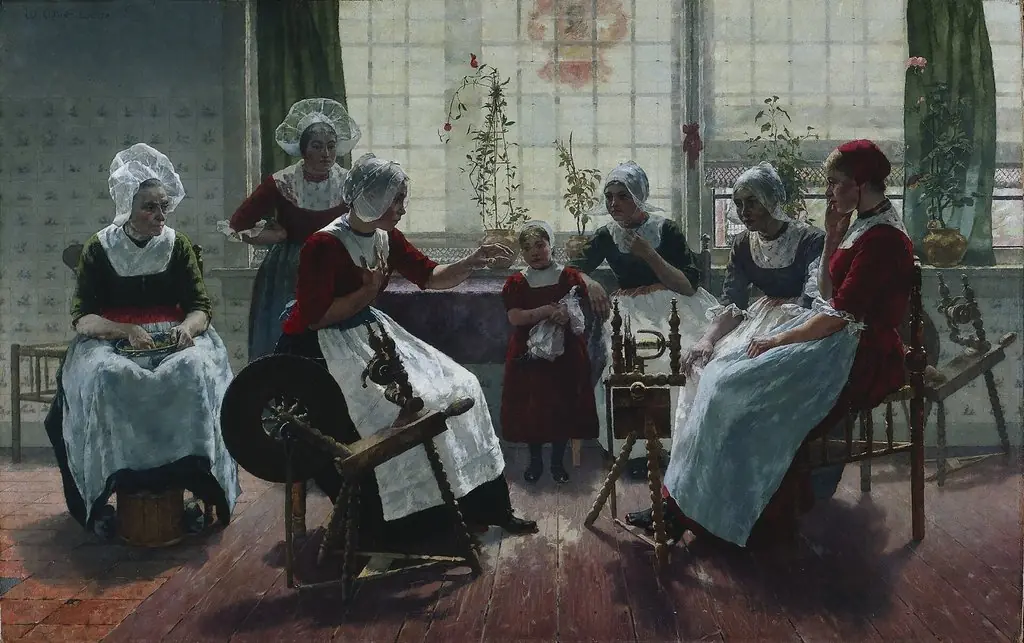
The Ghost Story is an unspecified painting by the American Impressionist artist Walter MacEwen. It dates from 1887 and is held in the collection of the Cleveland Museum of Art.
About this work
Overview
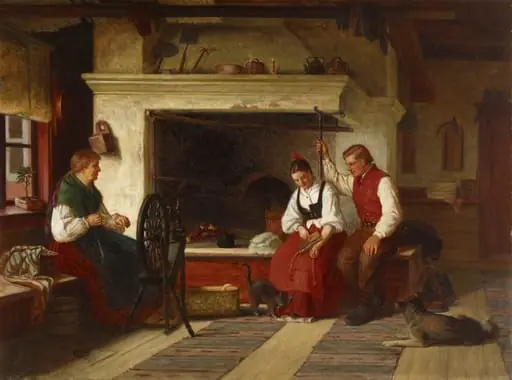
Created in the 1880s by American expatriate Walter MacEwen, The Ghost Story captures a moment inside a modest Dutch home. Warm firelight illuminates a circle of listeners gathered around a woman at a spinning wheel, while a young girl clutches a doll. The composition balances intimacy with an undercurrent of unease, suggesting the anticipation of a supernatural tale.
Subject & Meaning
The central figure, a spinning woman, serves as narrator, delivering a ghost story that holds the attention of the assembled group. Their varied expressions—curiosity, apprehension, fascination—reflect the tension between the comfort of domestic space and the fear evoked by oral folklore. The child's tight grip on her doll underscores the vulnerability of innocence amid the eerie narrative.
Technique & Style
MacEwen employs a pronounced chiaroscuro, letting the fire’s amber glow carve deep shadows across the room’s walls and furniture. The contrast heightens the drama, while the soft rendering of textures—wool, wood, fabric—creates a tactile sense of the interior. The brushwork remains detailed yet restrained, emphasizing the psychological focus over decorative excess.
History & Provenance
During the 1880s a wave of American painters traveled to the Netherlands seeking new subjects, and MacEwen was among them. The Ghost Story emerged from this period of cross‑cultural exploration, reflecting both Dutch genre traditions and the transatlantic interest in narrative painting. Its subsequent ownership records trace a modest exhibition history within American and European collections.
Artist & collection

Artist
Walter MacEwen was an American painter. From 1884 to 1914, he often lived and worked in the Netherlands. He is considered to have been a member of the Egmondse School, named after the mostly American artists' colony near Egmond aan Zee.