Artwork
Portrait of a Man with a Pumpkin
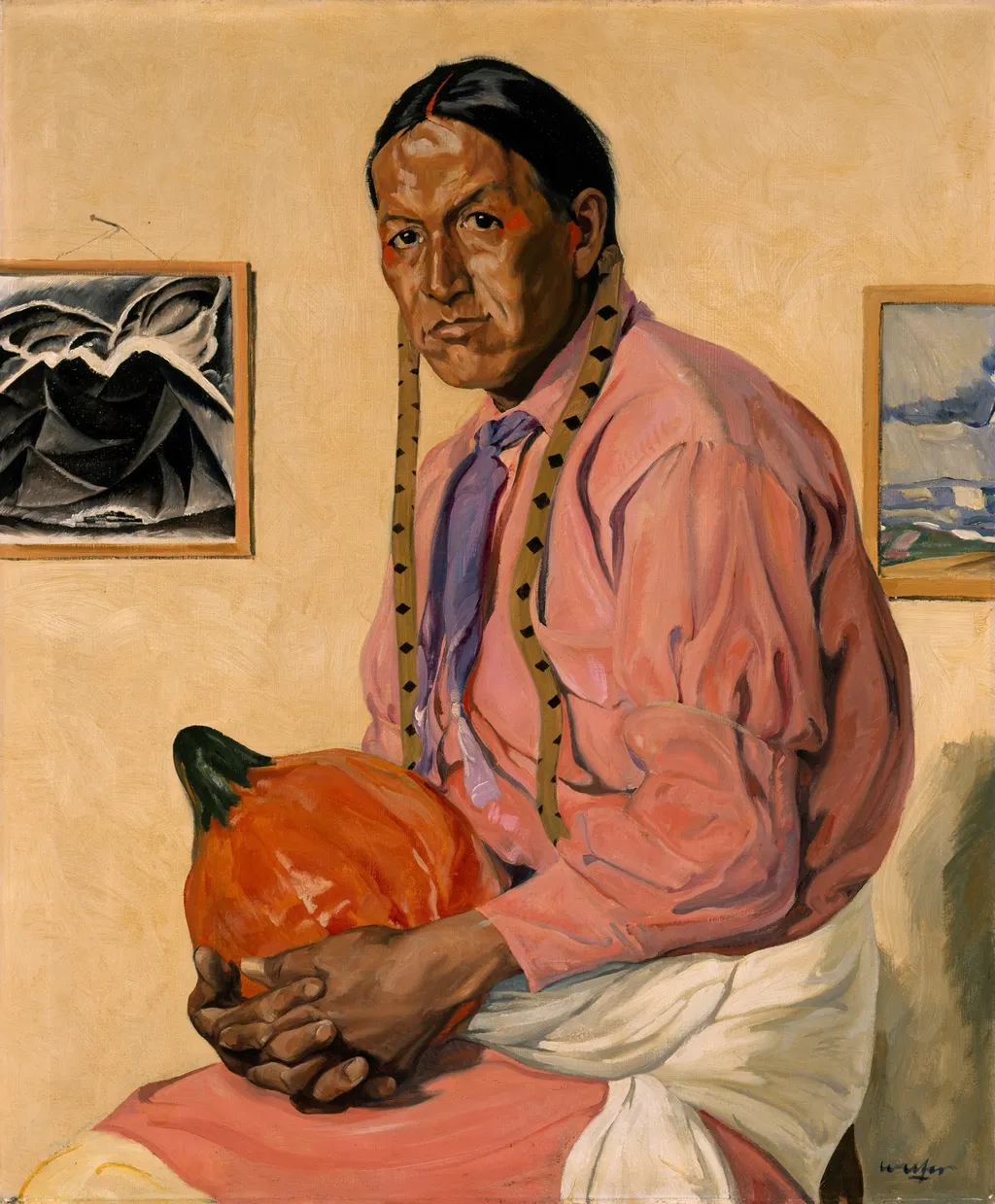
Portrait of a Man with a Pumpkin is an oil painting by the American Impressionist artist Walter Ufer. It dates from 1920 and is held in the collection of the Museum of Fine Arts, Houston.
About this work
Overview
Though Ufer is often associated with American Impressionism, his approach here leans toward careful observation rather than loose brushwork.
Walter Ufer painted this oil portrait in 1920 during his time in Taos, New Mexico. The work belongs to a series of intimate depictions of individuals connected to the local Pueblo communities. Though Ufer is often associated with American Impressionism, his approach here leans toward careful observation rather than loose brushwork. The painting is part of the Museum of Fine Arts, Houston’s permanent collection.
Subject & Meaning
The subject is a man seated with a large pumpkin cradled in his hands, dressed in a pink shirt and purple tie, and wearing a dark beaded necklace. The pumpkin, a seasonal and culturally resonant object, may suggest harvest, domesticity, or personal identity. His composed posture and the quiet setting imply a moment of stillness, possibly reflecting a connection between the individual and the land or tradition.
Technique & Style
Ufer employed rich, saturated hues for the man’s clothing and the pumpkin, contrasting with the subdued beige background and muted frames on the wall. The brushwork is controlled, emphasizing texture in fabric and beadwork without overt impressionistic looseness. Light falls evenly, enhancing the three-dimensionality of the figure and object, creating a sense of tangible presence within a domestic space.
History & Provenance
Created during Ufer’s active years in Taos, the painting remained in private hands until acquired by the Museum of Fine Arts, Houston. It reflects his broader practice of documenting local residents with dignity and attention to personal detail. No record suggests it was exhibited widely before entering the museum’s collection, where it has been preserved as part of early 20th-century Southwestern art.
Context
In the 1920s, Taos attracted artists drawn to Indigenous cultures and the region’s light and landscape. Ufer, though not Indigenous himself, focused on portraying Native and mestizo residents with respect, avoiding romanticized stereotypes. This portrait, with its everyday objects and personal adornments, aligns with a broader effort to capture authentic, unidealized lives amid a wave of cultural documentation.
Legacy
Ufer’s work, including this portrait, contributes to a nuanced record of Southwestern life during a period of rapid change. While less known than some of his contemporaries, his focus on individual presence and material detail offers a quiet counterpoint to more dramatic depictions of Native American subjects. The painting endures as a thoughtful study of identity, place, and ordinary dignity.
Artist & collection
Artist
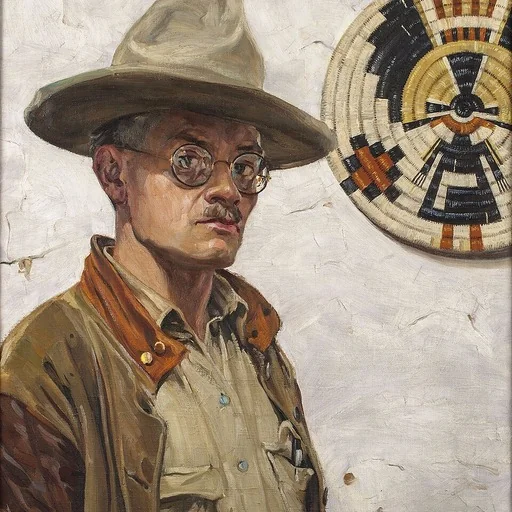
Walter Ufer (July 22, 1876 – August 2, 1936) was an American artist based in Taos, New Mexico. His most notable work focuses on scenes of Native American life, particularly of the Pueblo Indians.