Artwork
Dragoman Mahomet
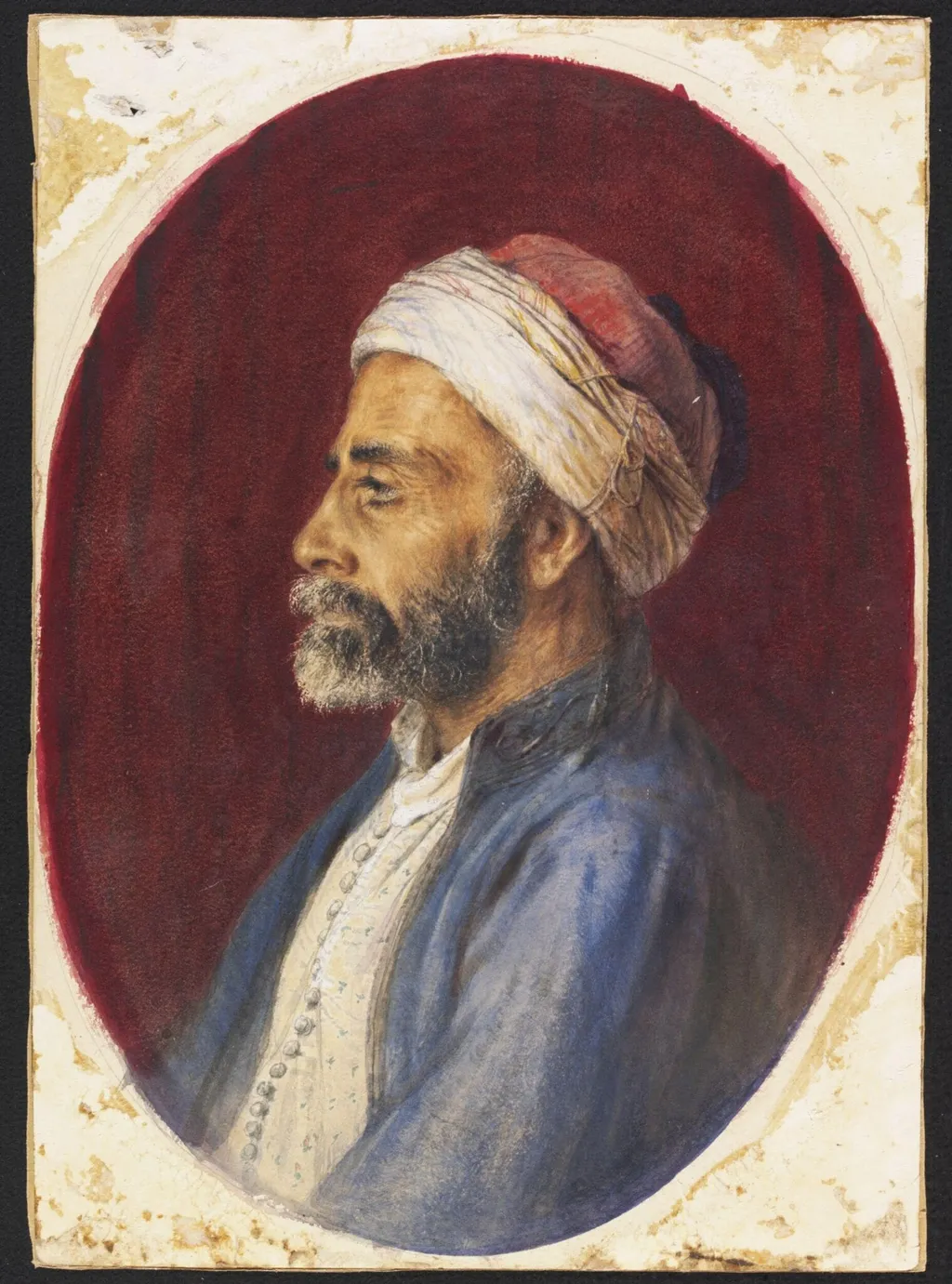
Dragoman Mahomet is a watercolor work on paper by the Impressionist artist Elijah Walton. It dates from 1874 and is held in the collection of the Victoria and Albert Museum.
About this work
Overview
The work was first exhibited in 1868 under a slightly different title at the Pall Mall Gallery and later associated with Walton’s own gallery around 1870.
Elijah Walton created this watercolour portrait in 1874, depicting a man identified as a dragoman—a linguistic intermediary in Ottoman territories. The work was first exhibited in 1868 under a slightly different title at the Pall Mall Gallery and later associated with Walton’s own gallery around 1870. It entered a private collection in 1970 after being acquired from Abbott & Holder for £12, reflecting its modest market value at the time.
Subject & Meaning
The subject is a male figure in traditional attire, likely a local guide or interpreter in Cairo, rendered with quiet dignity. His downward gaze and composed expression suggest introspection or solemn duty. The title and costume imply his role within the cultural and commercial networks of 19th-century Egypt, where dragomans facilitated communication between foreign visitors and local authorities.
Technique & Style
Walton employed delicate watercolour washes to define the folds of the turban and the texture of the jacket, emphasizing subtle shifts in light and fabric. The background—a deep red oval with a stained white border—frames the figure without distraction. The restrained palette and soft brushwork reflect a commitment to observational accuracy, aligning with Realist principles that valued unembellished representation over idealization.
History & Provenance
The painting was first shown in 1868 at the Pall Mall Gallery as *Dragoman (Mohammed), Cairo*, and later re-titled for a possible exhibition at Walton’s own gallery around 1870. Its provenance includes acquisition by a private collector in January 1970 through the art dealer Abbott & Holder, marking its transition from public display to private ownership after nearly a century.
Context
In the mid-19th century, British artists increasingly traveled to the Middle East, documenting local figures and landscapes for domestic audiences. Walton’s portrait reflects this trend, capturing an individual whose role bridged cultures. Unlike Orientalist fantasies, this work avoids exoticism, focusing instead on the quiet presence of a working man within his environment.
Legacy
Though not widely reproduced or critically celebrated, the portrait remains a quiet example of Walton’s interest in ethnographic observation. It contributes to a broader body of 19th-century British watercolours that sought to portray non-European subjects with restraint and dignity, offering an alternative to the more theatrical depictions common in Orientalist art.
Artist & collection
Artist
Elijah Walton (November 1832 – 25 August 1880) was a British landscape painter, and best known for his landscapes of mountains in the Alps.

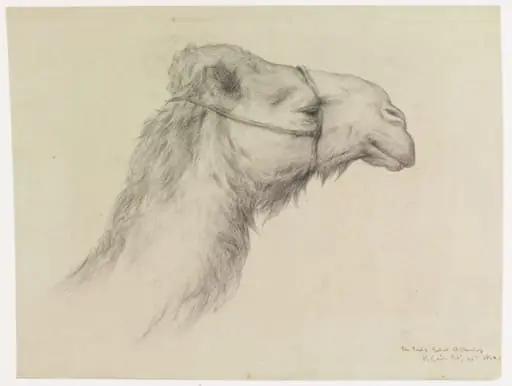
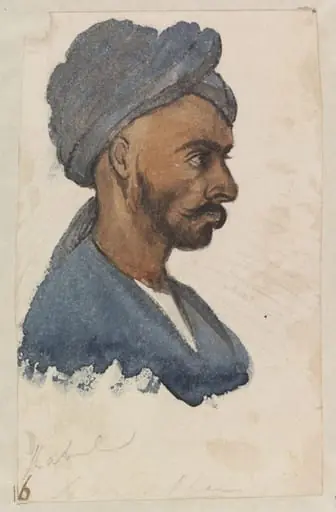 Suliman Khan Kabul
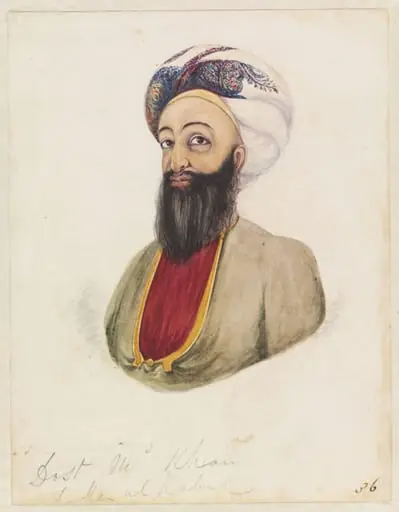 Dost Md Khan taken at Kabul
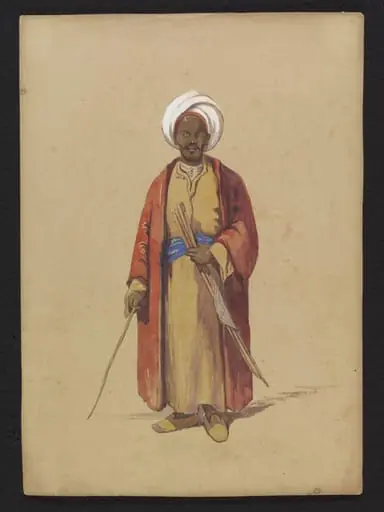 A Nubian selling Canes
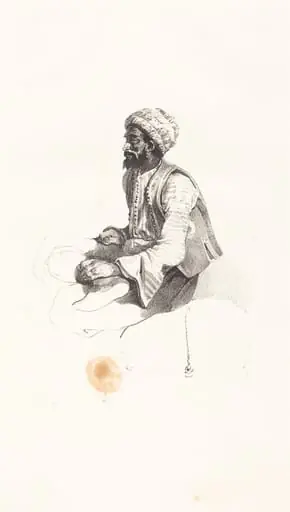 Seated Turk
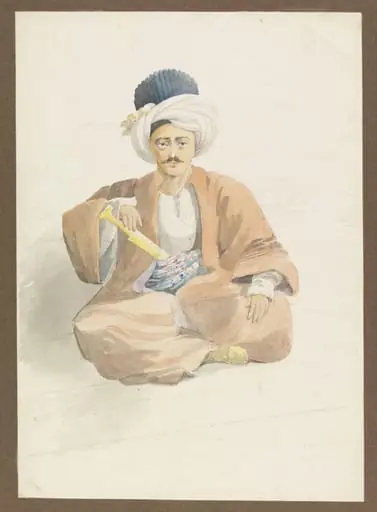 Jafer Beck Affendi
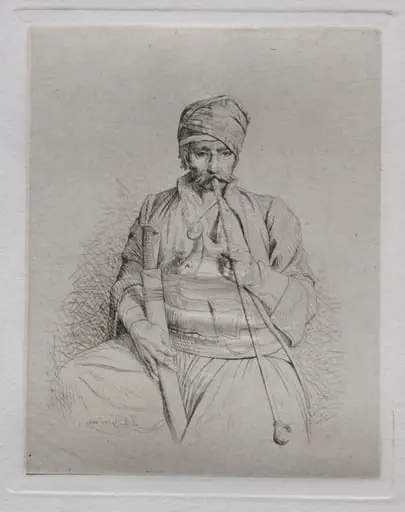 Egyptian Smoker
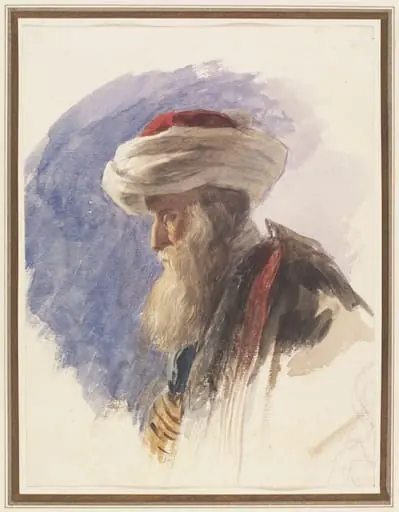 Portrait, head and shoulders, facing left, of an oriental man wearing a white turban
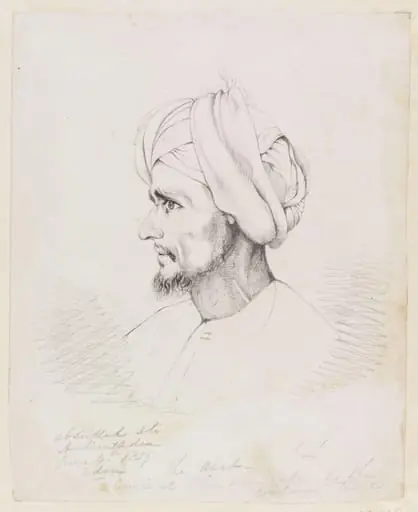 Abdullah Ali Hakim of Aden
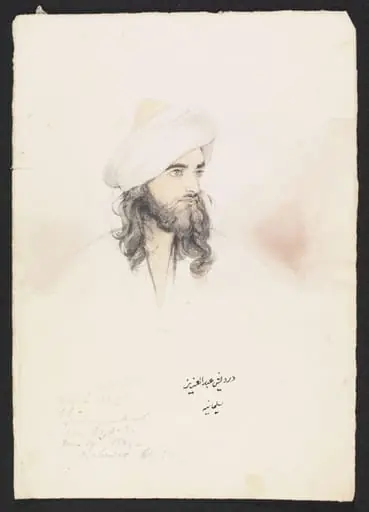 Dervish Abdul Aziz - Suleiman Momd from Bagdad
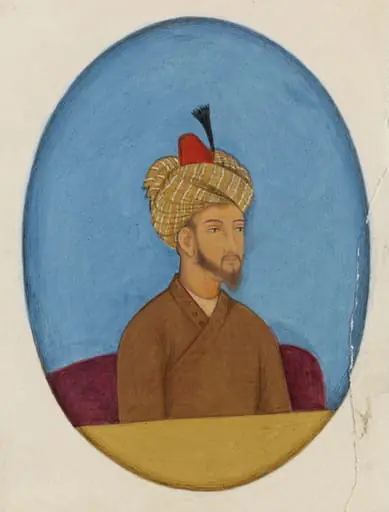 Emperor Babur
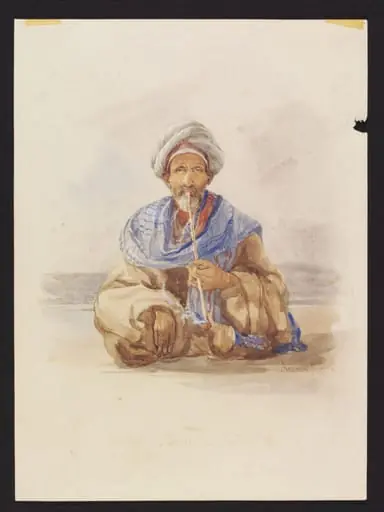 Achmet Girgeh
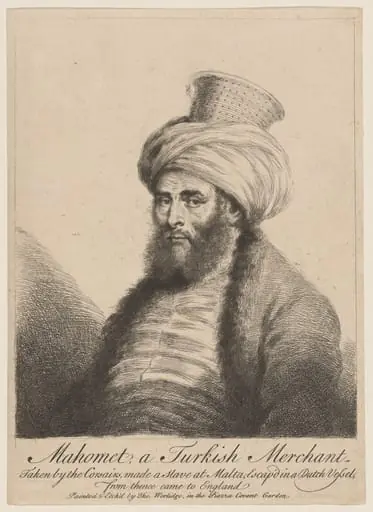 Mahomet, a Turkish Merchant