Artwork
Crossing a Bridge to Visit a Friend
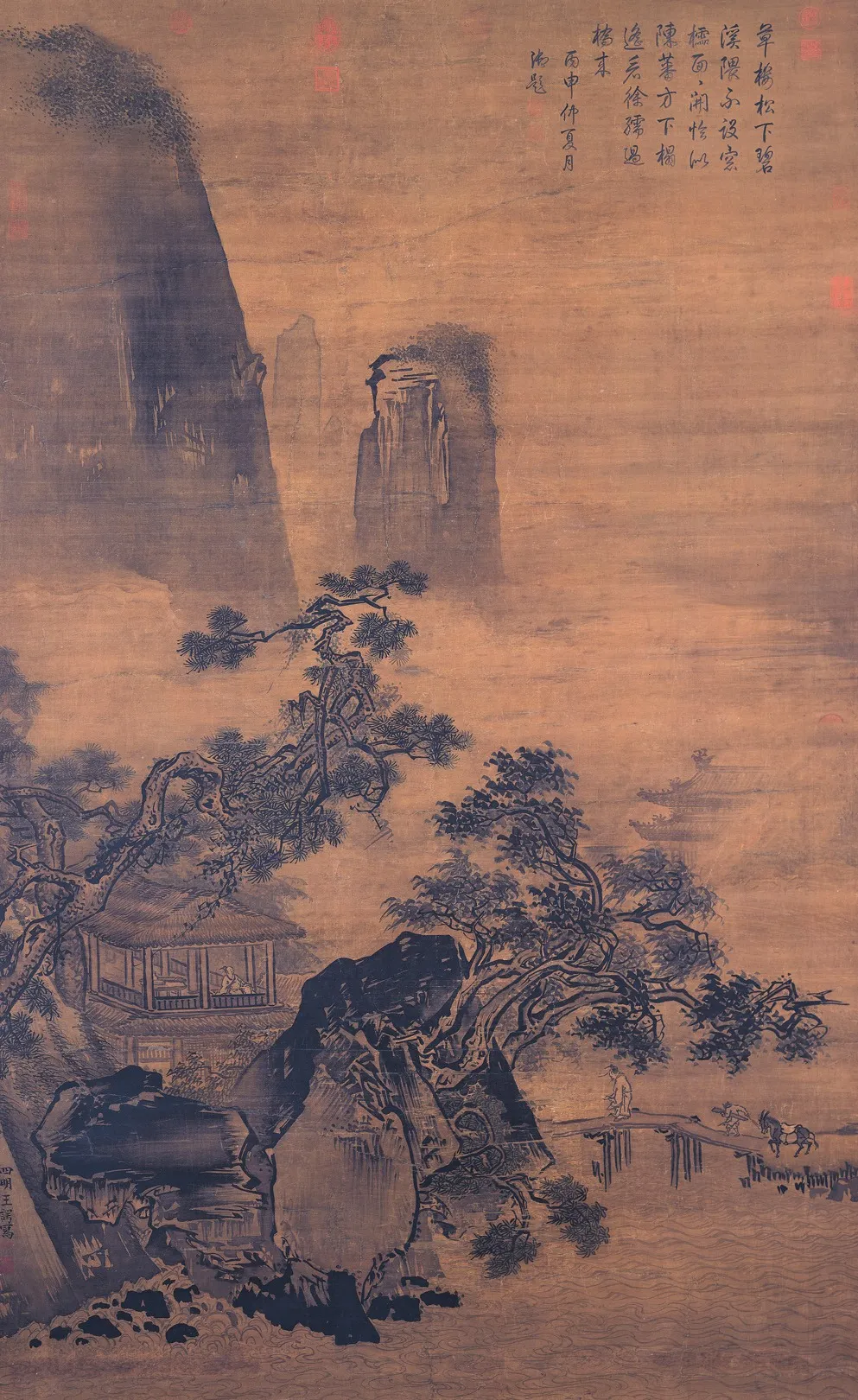
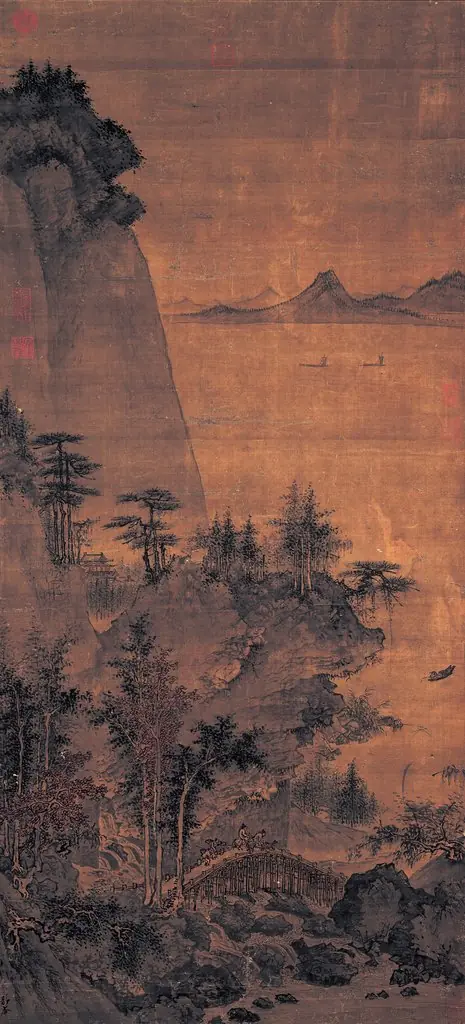
Crossing a Bridge to Visit a Friend is an unspecified painting by the Ming dynasty painting artist Wang E. It is held in the collection of the National Palace Museum.
About this work
Overview
A painter associated with the imperial court under the Hongzhi Emperor, he was recognized for his skill comparable to the Southern Song master Ma Yuan.
Wang E created *Crossing a Bridge to Visit a Friend* circa 1550, during the Ming dynasty. A painter associated with the imperial court under the Hongzhi Emperor, he was recognized for his skill comparable to the Southern Song master Ma Yuan. Trained by Xiao Feng and native to Fenghua in Zhejiang, Wang eventually withdrew from court life to focus on teaching, leaving behind a modest but respected body of work within the literati tradition.
Subject & Meaning
The painting depicts a solitary figure pausing on a bridge, gazing across a quiet landscape. The act of crossing suggests a deliberate journey—not for utility, but for contemplation or companionship. The absence of narrative detail invites reflection on solitude, connection, and the quiet rhythms of nature. This aligns with Ming literati ideals, where landscape served as a mirror for inner stillness and moral harmony.
Technique & Style
Wang E employed subtle ink washes and restrained tonal gradations to evoke depth and atmosphere. Brushwork is deliberate but unobtrusive, with soft contours defining distant hills and sparse, gnarled trees. The muted palette of grays and browns reinforces a sense of quietude. Composition follows the traditional vertical format, guiding the eye upward through layered planes, a hallmark of Southern Song-derived Ming landscape conventions.
History & Provenance
The painting entered the collection of the National Palace Museum, where it remains today. Its survival reflects its status as a representative work of mid-Ming court painting, though Wang E’s oeuvre is less documented than his contemporaries. Records indicate his imperial patronage and later retreat from official life, but few signed works survive, making this piece a rare example of his mature style.
Context
During the mid-16th century, Ming court painters balanced inherited Southern Song aesthetics with emerging literati values. Wang E’s work reflects this synthesis: technically refined yet emotionally restrained. While professional painters like him were often overshadowed by scholar-amateurs, his recognition by the emperor signals a continued appreciation for disciplined craftsmanship within imperial circles.
Legacy
Wang E’s influence lies in his embodiment of a transitional moment in Chinese painting—where courtly precision met introspective landscape ideals. Though not widely imitated, his work contributes to the broader understanding of Ming painting beyond the dominant literati canon. His retreat to teaching also underscores the era’s shifting values, where artistic legacy was increasingly tied to mentorship over public acclaim.
Artist & collection
Artist
Wang E (simplified Chinese: 王谔; traditional Chinese: 王諤; pinyin: Wáng È; Wade–Giles: Wang E; 1465?

 Visiting Tai Kuei on a Snowy Night
 南宋 夏珪 山市晴嵐圖 冊頁|Mountain Market, Clearing Mist
 Landscape
 Untitled
 Fish on the Banks of the Wei River
 宋郭熙豐年瑞雪圖 軸
 Buddhist Retreat by Stream and Mountains
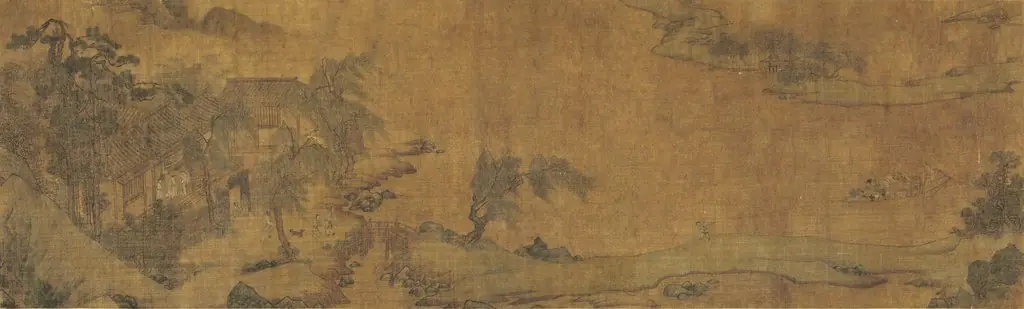 Homecoming Ode
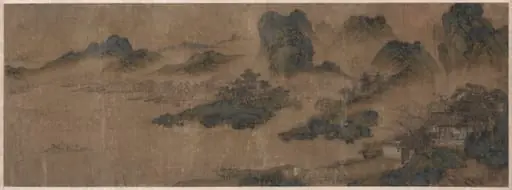 Visiting an Old Friend in the Spring Mountains
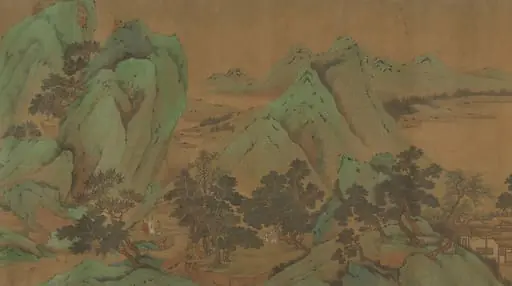 明/清 佚名 劉松年 偽款 山水人物圖|Garden estate
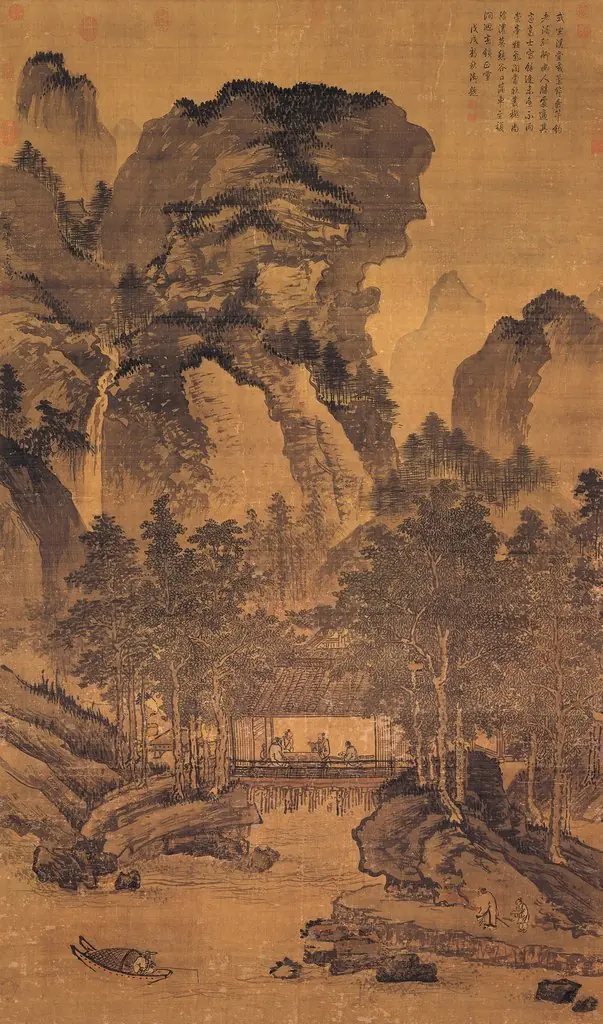 Landscape
 Crossing a Bridge over a Stream