Artwork
Rock Tombs at Myra, Asia minor
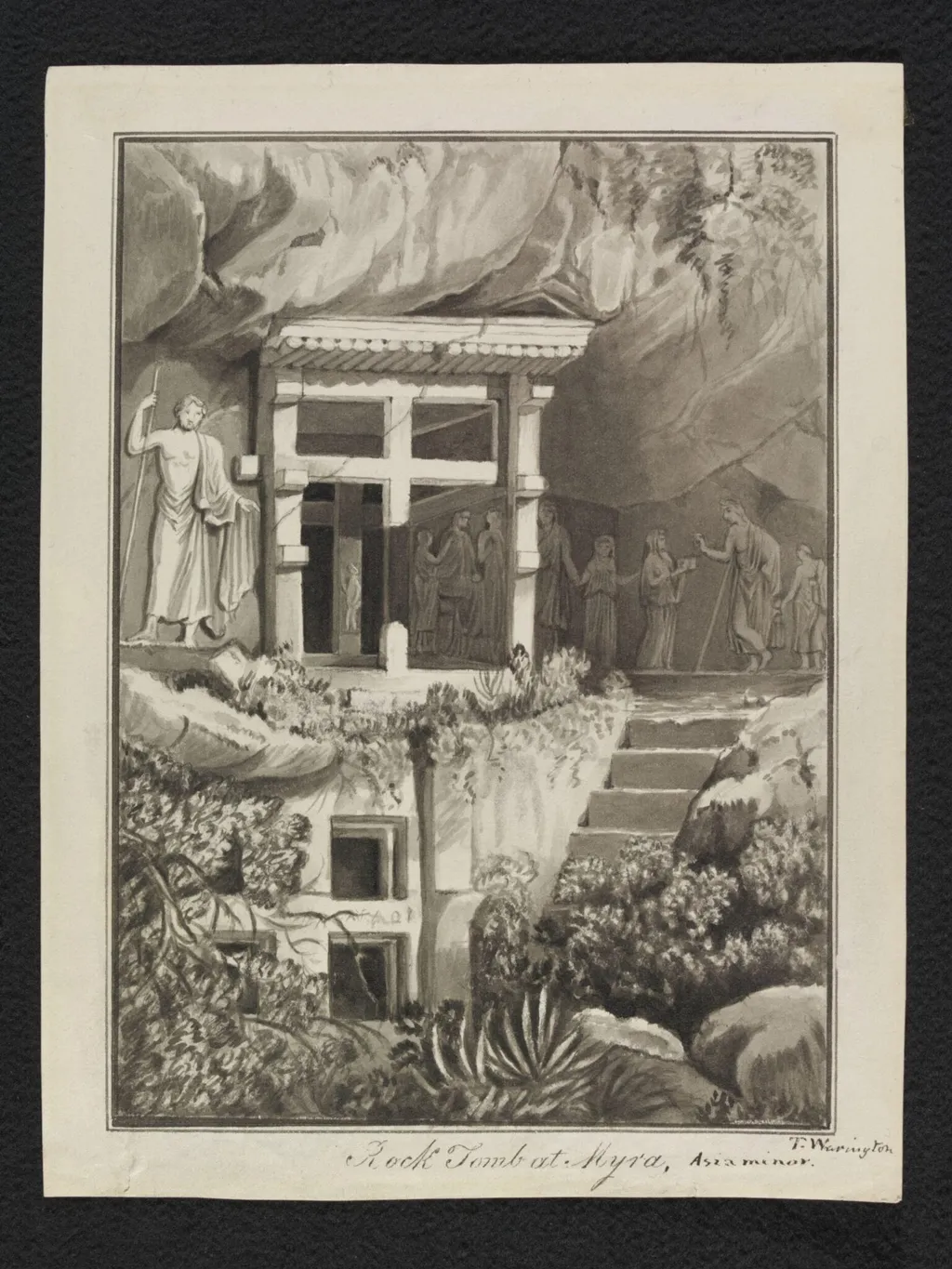
Rock Tombs at Myra, Asia minor is a watercolor work on paper by the Romanticist artist T. Warrington. It dates from 1845 and is held in the collection of the Victoria and Albert Museum.
About this work
Overview
Created in 1845, this watercolour depicts the ancient rock tombs of Myra in Asia Minor, replicating a scene from Charles Fellows' 1841 publication *An Account of Discoveries in Lycia*. The artwork combines architectural detail with natural scenery.
Subject & Meaning
The subject is the monumental rock-cut tombs of Myra, emphasizing their ornate facades, statues of robed figures, and integration into a lush, rocky landscape. The composition conveys reverence for ancient heritage.
Technique & Style
Executed in watercolour, the piece achieves depth and texture through the medium's expressive qualities. Warm, sunny lighting and the inclusion of foreground flora enhance the sense of serenity and natural harmony.
History & Provenance
Inspired by Charles Fellows' 1841 illustrated account of Lycian discoveries, the watercolour reflects mid-19th-century interest in antiquarian exploration and documentation.
Context
This work aligns with the Romantic movement's fascination with antiquity, natural beauty, and the emotional resonance of historical sites.
Artist & collection
Artist
T. Warrington painted early 19th-century landscapes and ruins in watercolour and print. Their Rock Tombs at Myra, Asia minor, shows carved cliff tombs bathed in soft watercolour light around 1840–50. The single dated…

 Frontispiece
 Rocky Landscape with a Cave Chapel
 Ruins of the Palais Gallien in Bordeaux
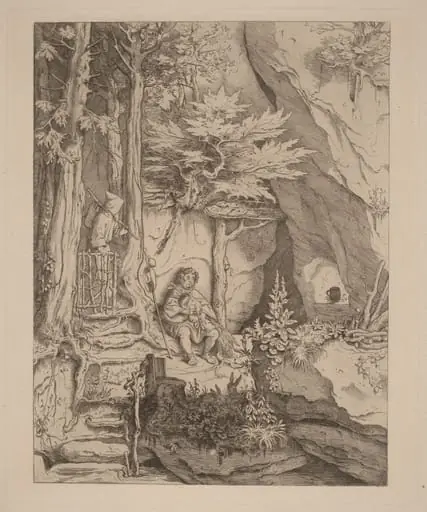 A Monk with a Bagpipe Player
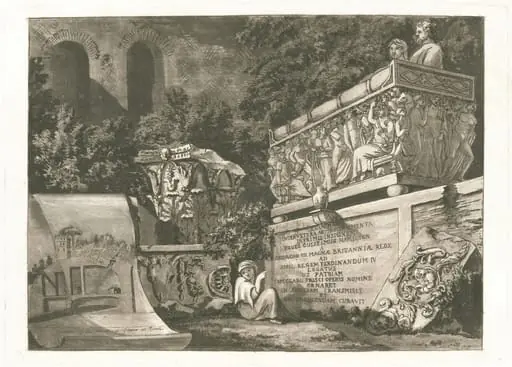 Title Page
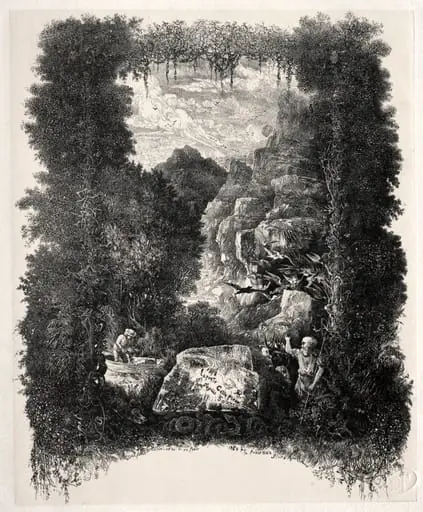 First frontispiece for Fables and Fairy-Tales by Thierry-Faletans
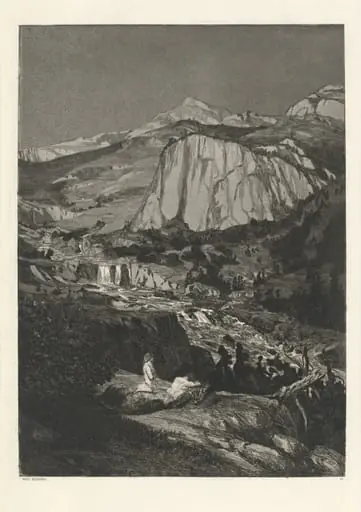 Moonlit Night (Mondnacht): pl. 4
 A figure on a path between rocks and trees
 The Flight into Egypt
 Nymphs in a Cave with Antique Ruins