Artwork
Moonlit Night (Mondnacht): pl. 4
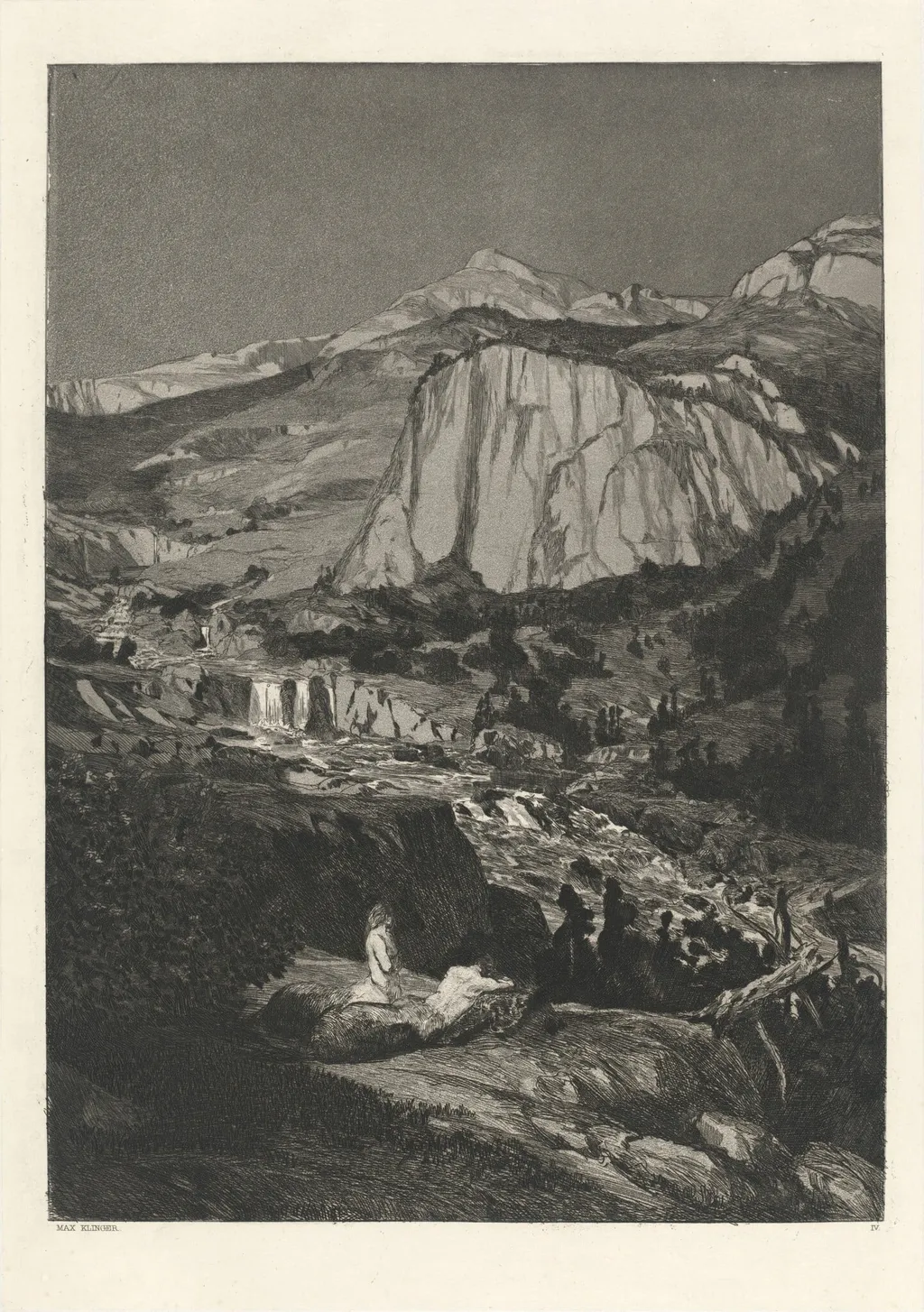
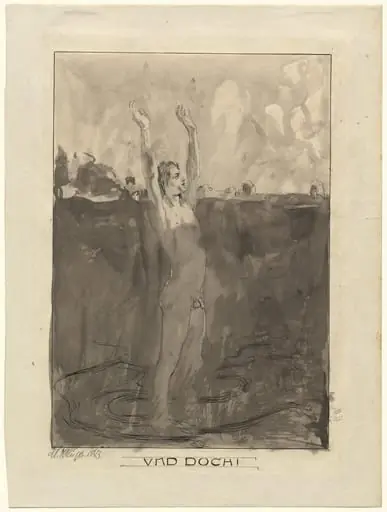
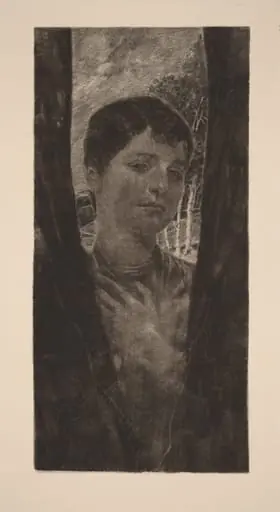
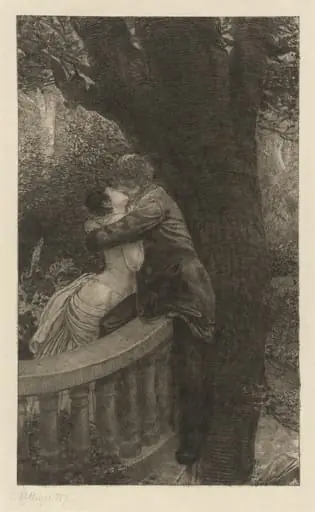
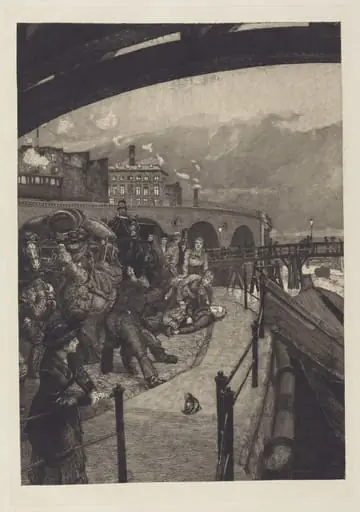
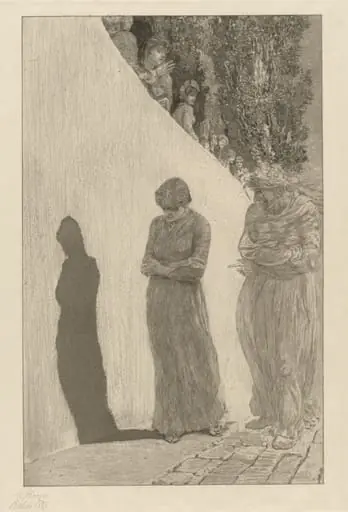
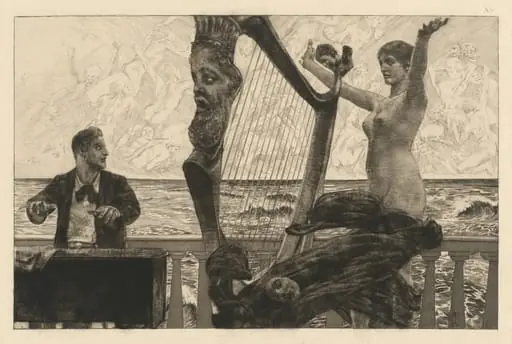
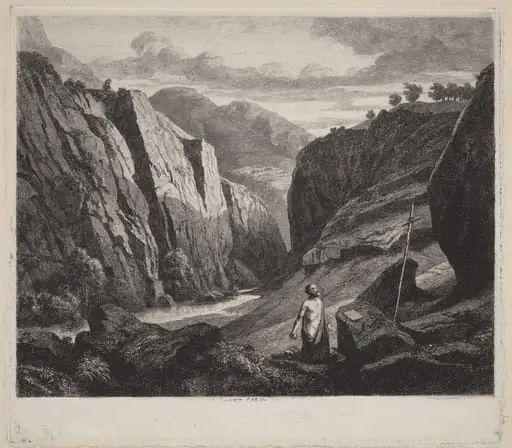
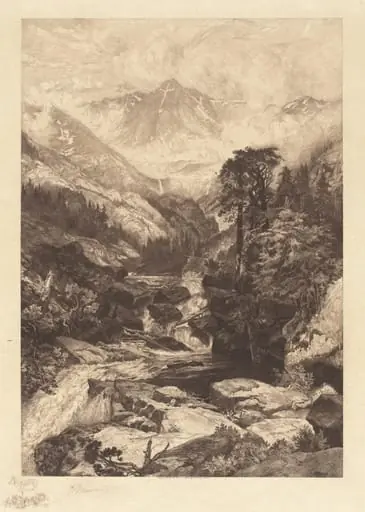
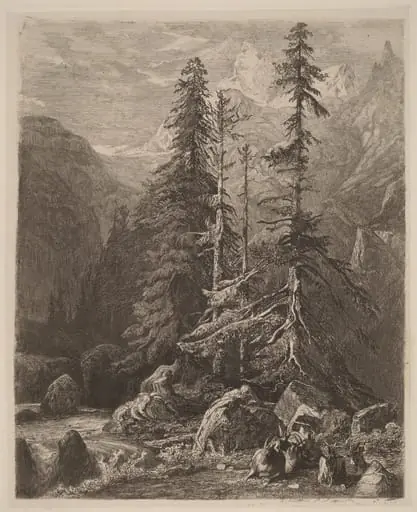
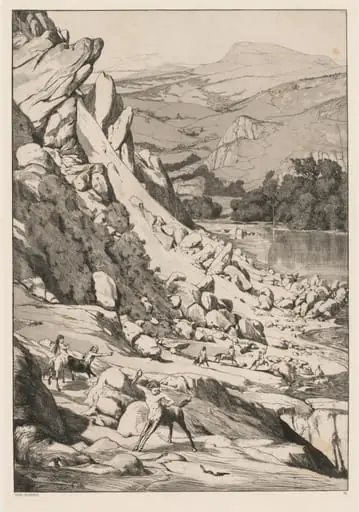
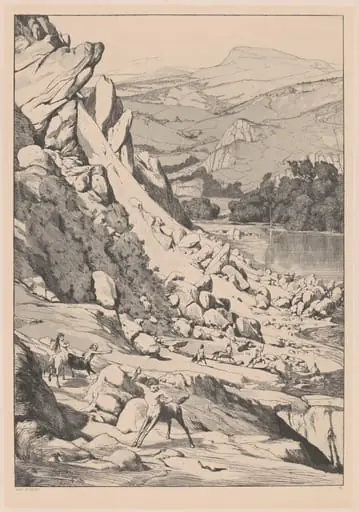
Moonlit Night (Mondnacht): pl. 4 is an ink print by the Impressionist artist Max Klinger. It dates from 1881 and is held in the collection of the National Gallery of Art.
About this work
Overview
Unlike his sculptural or painted works, this piece relies on tonal gradations and fine line work to convey mood rather than narrative.
Max Klinger’s *Moonlit Night (Mondnacht): pl. 4*, created in 1881, is an etching and aquatint from a larger print series. It exemplifies his deep engagement with printmaking as a medium for psychological and atmospheric expression. Unlike his sculptural or painted works, this piece relies on tonal gradations and fine line work to convey mood rather than narrative. The work is part of a broader exploration of inner states through landscape, characteristic of Klinger’s interest in the liminal spaces between reality and reverie.
Subject & Meaning
The image presents a solitary figure seated on a rocky outcrop beneath a vast, luminous night sky. The figure’s posture suggests contemplation, but no specific identity or story is given. The landscape—sparse, rugged, and silent—functions less as a literal place than as a psychological space. Klinger avoids overt symbolism, instead using isolation and stillness to evoke introspection, aligning with Symbolist tendencies that favored suggestion over direct representation.
Technique & Style
Klinger combined etching with aquatint to achieve subtle shifts in tone and texture, mimicking the soft diffusion of moonlight across stone and foliage. The etched lines define contours with precision, while aquatint washes create velvety shadows and atmospheric haze. This technical synthesis allows for a quiet, almost tactile sense of depth, where light emerges not from highlights but from the absence of ink—enhancing the work’s meditative quality without theatrical contrast.
History & Provenance
The print was produced as part of a series Klinger developed during the early 1880s, a period when he was refining his approach to printmaking after early success in sculpture. It was likely circulated among collectors and artists in Germany and Austria, where his work was gaining recognition for its intellectual depth. Though not widely exhibited at the time, it entered institutional collections later, reflecting its growing significance within the context of late 19th-century graphic art.
Context
Klinger worked amid the rise of Symbolism and the early stirrings of Jugendstil, movements that rejected naturalism in favor of emotional and spiritual resonance. His prints, including *Moonlit Night*, responded to a broader cultural turn inward—away from industrial progress and toward personal, often melancholic, experience. Though not formally aligned with the Vienna Secession, his thematic concerns and technical innovation resonated with its members, who similarly sought to elevate printmaking as fine art.
Legacy
Klinger’s integration of multiple print techniques influenced later generations of graphic artists seeking to expand the expressive range of the medium. *Moonlit Night* stands as an early example of how etching and aquatint could convey psychological depth without figural drama. Its quiet intensity contributed to the redefinition of printmaking in the modern era, shifting its perception from reproductive craft to a vehicle for intimate, contemplative art.
Artist & collection
Artist
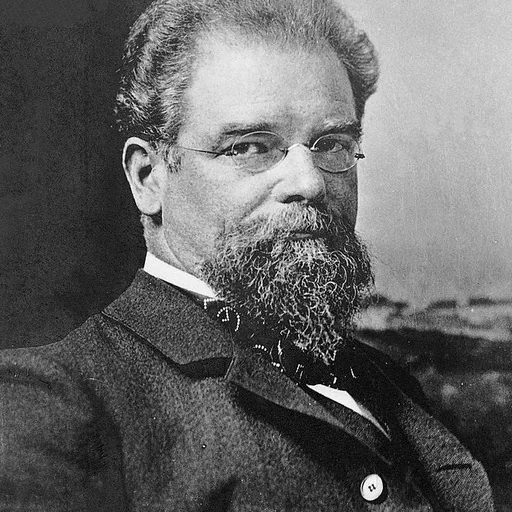
Max Klinger (18 February 1857 – 5 July 1920) was a German artist who produced significant work in painting, sculpture, prints and graphics, as well as writing a treatise articulating his ideas on art and the role of…