Artwork
Le Pont-au-Change, Paris
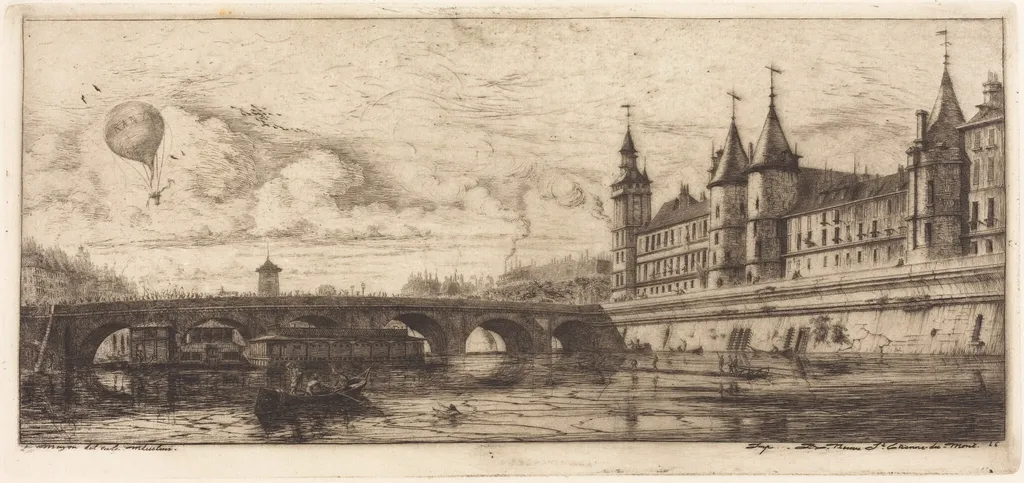
Le Pont-au-Change, Paris is an ink print by the Impressionist artist Charles Meryon. It dates from 1854 and is held in the collection of the National Gallery of Art.
About this work
Overview
Le Pont-au-Change, Paris is an 1854 etching on laid paper by Charles Meryon, characterized by a serene depiction of a Parisian river scene. The work showcases Meryon's distinctive approach to capturing the city's architecture and everyday life.
Subject & Meaning
The etching focuses on the Pont-au-Change bridge, with a castle-like building, horse-drawn wagons, small boats, and a floating hot-air balloon. This composition reflects Meryon's emphasis on architectural subjects and his unique, somewhat dreamy, vision of Paris.
Technique & Style
Meryon employed fine lines to achieve a detailed yet ethereal effect, emphasizing light and shadow. This style, emphasizing everyday life over grand narratives, was innovative for its time.
History & Provenance
Created in 1854, the etching is part of Meryon's celebrated series of Parisian views. Meryon's career was marked by personal struggles, including colour blindness and mental illness, culminating in his death in an asylum in 1868.
Context
Le Pont-au-Change, Paris represents a shift towards depicting mundane city life, distinguishing it from the more common grand or historical themes prevalent in 19th-century art.
Legacy
The etching contributes to Meryon's legacy as a pioneering etcher of Parisian landscapes, known for his Gothic-inspired vision of the city. His work influenced the development of printmaking, particularly in capturing the essence of urban scenes.
Artist & collection
Artist
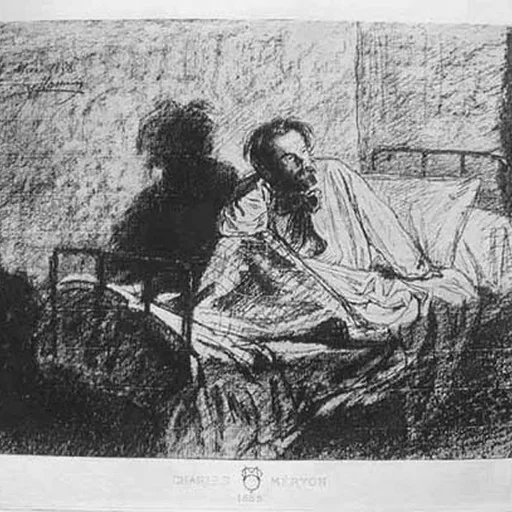
Charles Meryon (sometimes Méryon, 23 November 1821 – 14 February 1868) was a French artist who worked almost entirely in etching, as he had colour blindness.

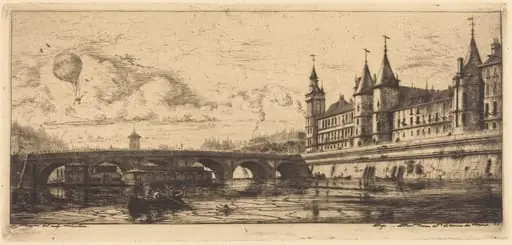 Le Pont-au-Change, Paris
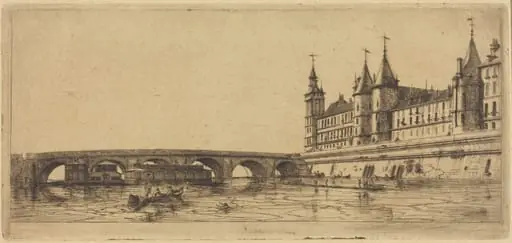 Le Pont-au-Change, Paris
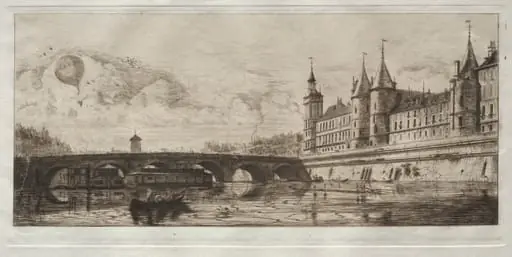 Le Pont-au-Change
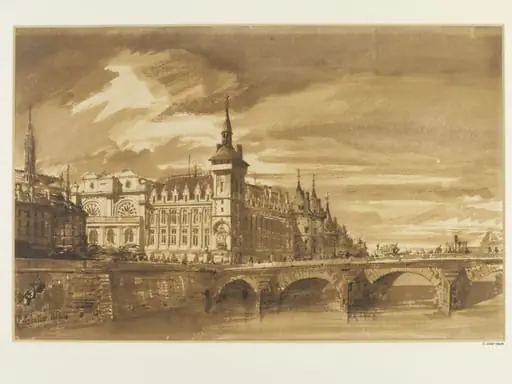 View of the Pont au Change and the Palais de Justice, Paris
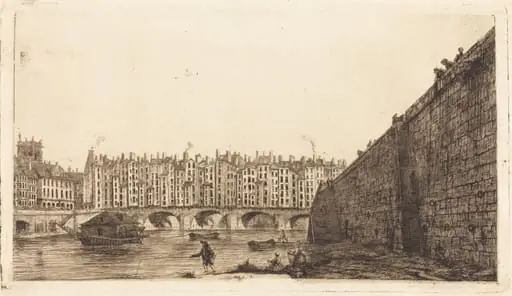 Le Pont-au-Change, Paris, vers 1784
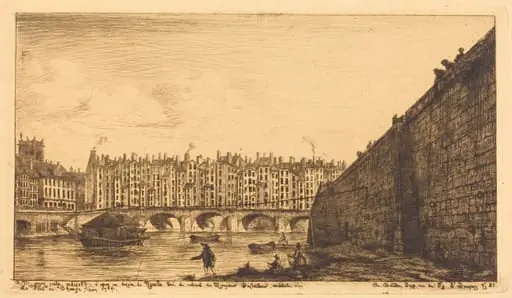 Le Pont-au-Change, Paris, vers 1784
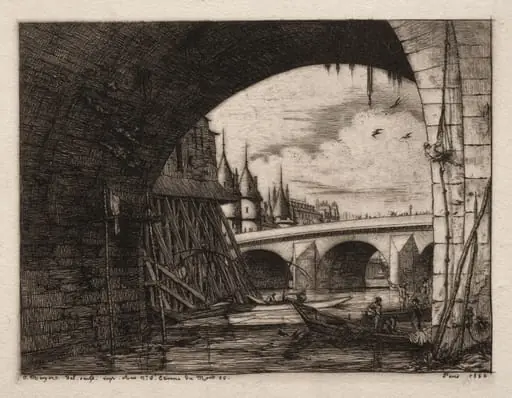 L'arch du Pont Notre Dame, Paris
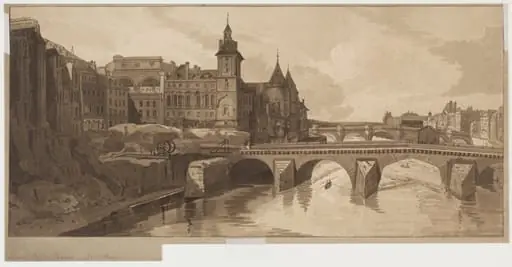 Selection of Twenty of the Most Picturesque Views in Paris:View of Pont au Change
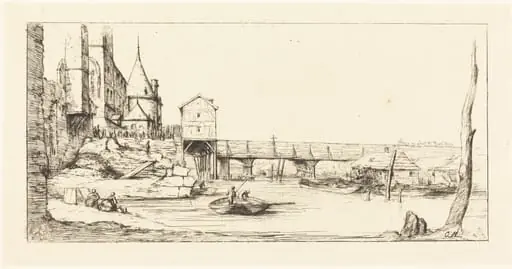 Passerelle du Pont-au-Change, Paris, après l'Incendie de 1621 (Footbridge Temporarily Replacing the Pont-au-Change, Paris, after the Fire of 1621)