Artwork
Magnificent Kensington
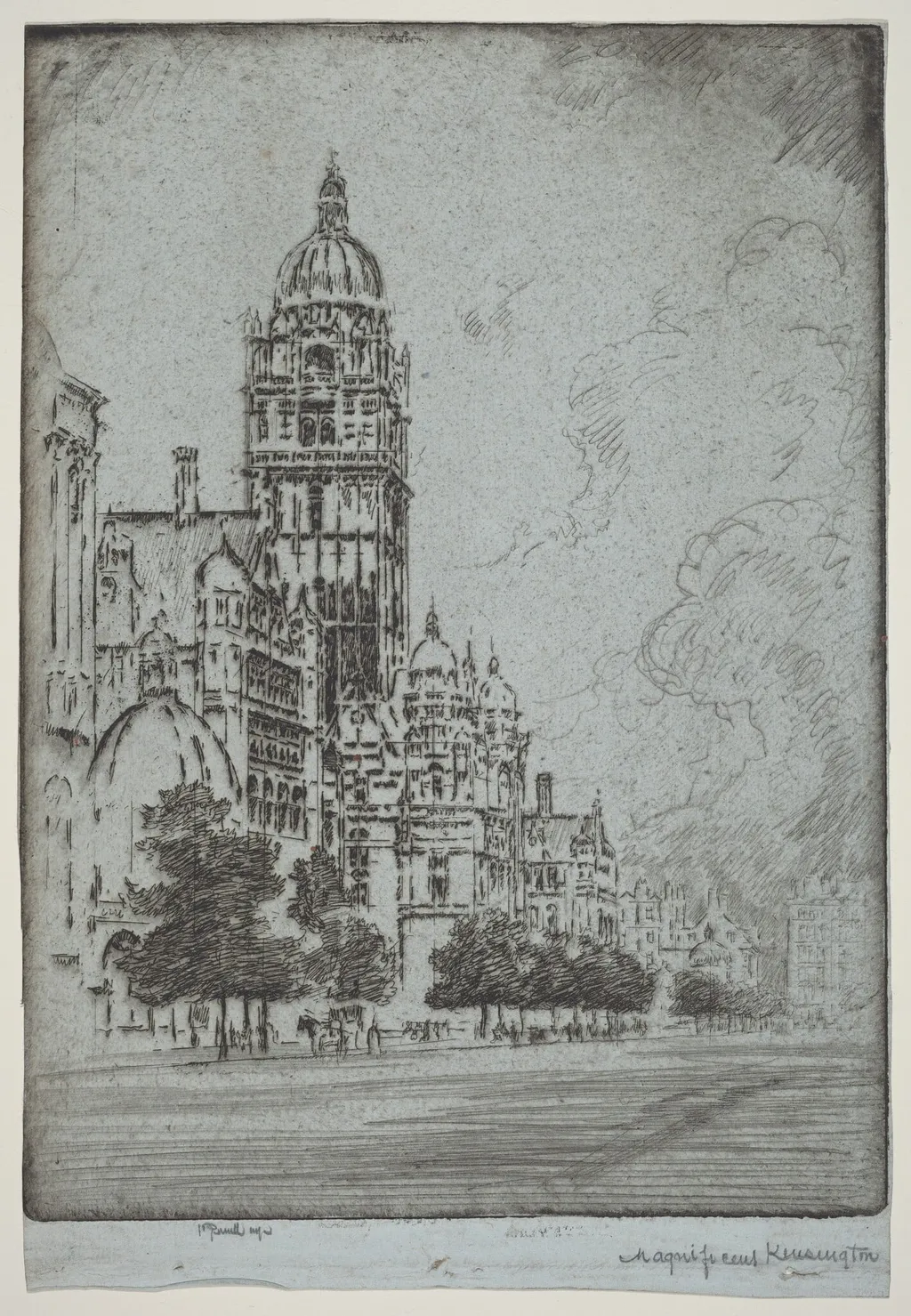
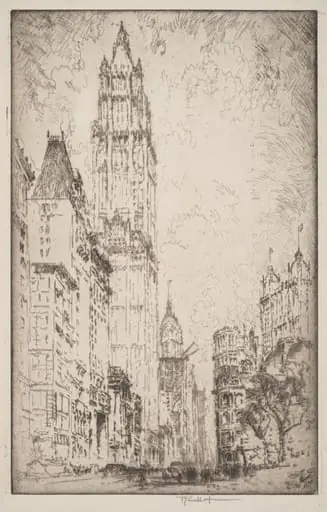
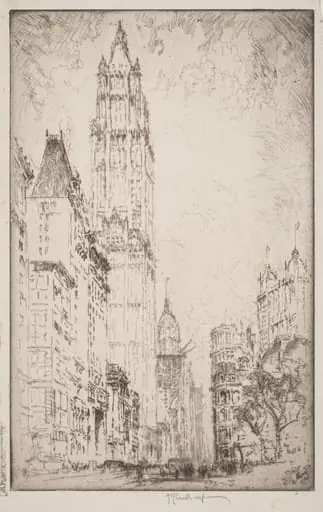
Magnificent Kensington is an ink print by Joseph Pennell. It dates from 1904 and is held in the collection of the National Gallery of Art.
About this work
Overview
Joseph Pennell’s 1904 etching *Magnificent Kensington* captures a London streetscape with a focus on architectural grandeur and everyday movement.
Joseph Pennell’s 1904 etching *Magnificent Kensington* captures a London streetscape with a focus on architectural grandeur and everyday movement. Created during a period when Pennell was deeply immersed in urban observation, the work exemplifies his commitment to documenting the modern city through printmaking. His technique emphasizes line and texture over detail, reflecting both his training and his interest in the rhythm of metropolitan life.
Subject & Meaning
The scene centers on a prominent dome, likely that of Kensington’s Royal Albert Hall, flanked by tall buildings and framed by leafy trees. Small, indistinct figures suggest pedestrian activity, grounding the architecture in lived experience. The title, *Magnificent Kensington*, carries a tone of quiet admiration rather than overt praise, aligning with Pennell’s tendency to observe rather than idealize urban environments.
Technique & Style
Pennell employed etching to achieve a dynamic, sketch-like quality, using incised lines to build form and shadow. The loose, rapid strokes and uneven ink distribution create a sense of immediacy, as if the view were captured in passing. The texture arises from the plate’s bitten surface, not from added media, reinforcing the medium’s capacity for expressive spontaneity within a controlled process.
History & Provenance
Created in 1904, the print is part of Pennell’s extensive series of urban views made during his travels in Europe and the United States. It emerged from a period of sustained collaboration with his wife, Elizabeth Robins, who contributed to his writings on art and travel. The work was likely produced for publication or private circulation, consistent with Pennell’s role as both artist and chronicler of modern cities.
Context
Pennell’s focus on architecture and city life reflected broader late-nineteenth-century interests in documenting industrialization and urban expansion. Influenced by his teachers Lambdin and Eakins, and later by Whistler’s tonal approach, he avoided romanticism in favor of direct observation. His prints contributed to a growing genre of topographical printmaking that valued accuracy and atmospheric nuance over embellishment.
Legacy
Pennell’s etchings, including *Magnificent Kensington*, helped establish printmaking as a legitimate medium for urban documentation in the early twentieth century. His emphasis on line, texture, and transient urban moments influenced later artists interested in the intersection of architecture and daily life. Though less widely known today, his work remains a significant record of how artists responded to the changing face of modern cities.
Artist & collection
Artist
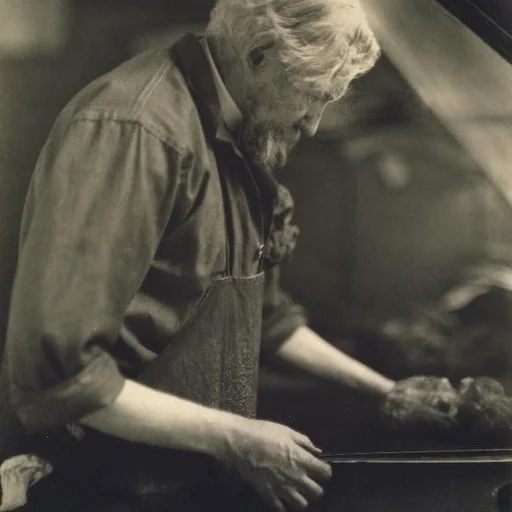
Joseph Pennell (July 4, 1857 – April 23, 1926) was an American draftsman, etcher, lithographer, and illustrator for books and magazines.

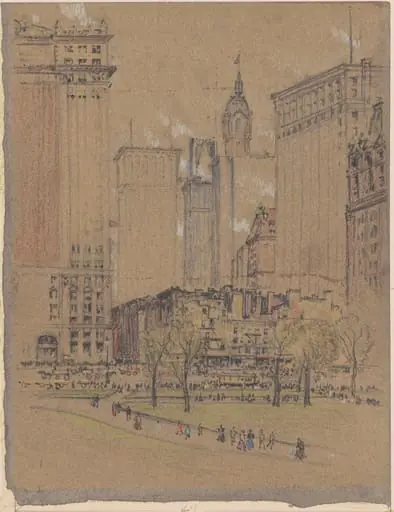
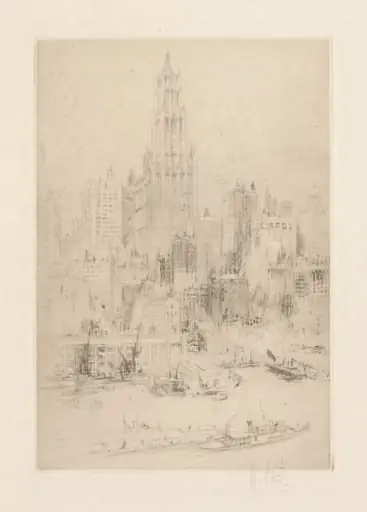 Downtown Manhattan from the East River, with the Woolworth Building
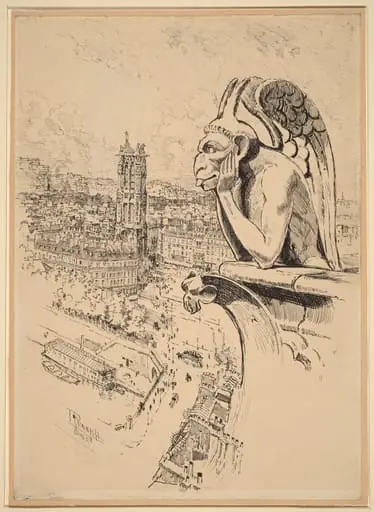
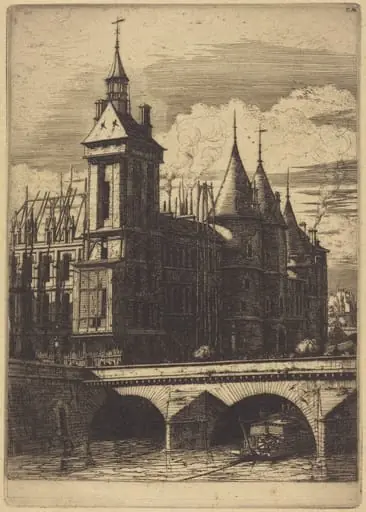 La Tour de l'Horloge, Paris (The Clock Tower, Paris)
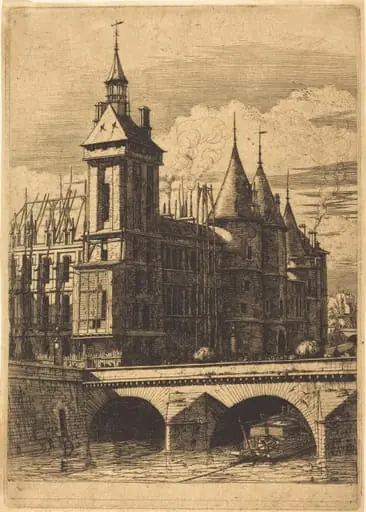 La Tour de l'Horloge, Paris (The Clock Tower, Paris)
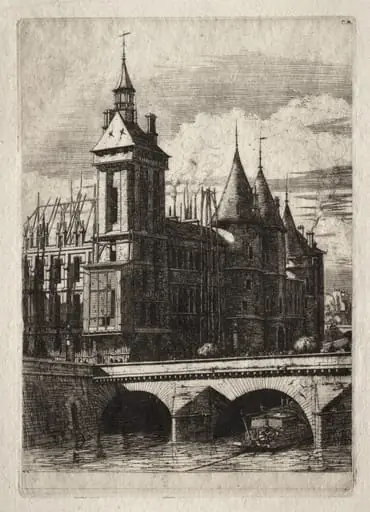 Etchings of Paris: The Clock Tower
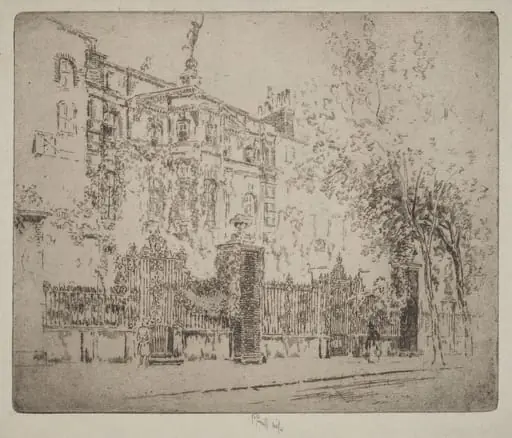 Rossetti's House
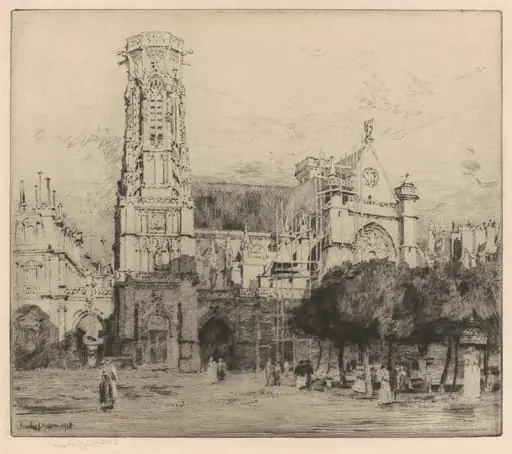 Saint Germain, L'Auxerrois
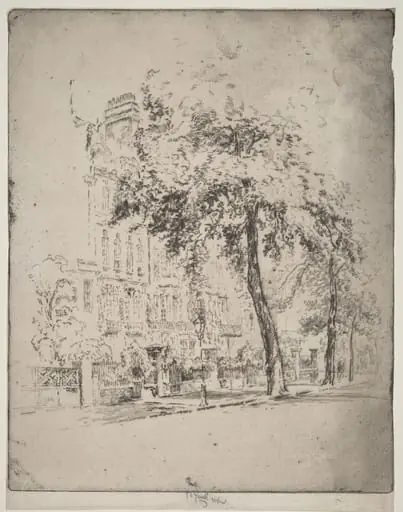 Big Tree, Cheyne Walk
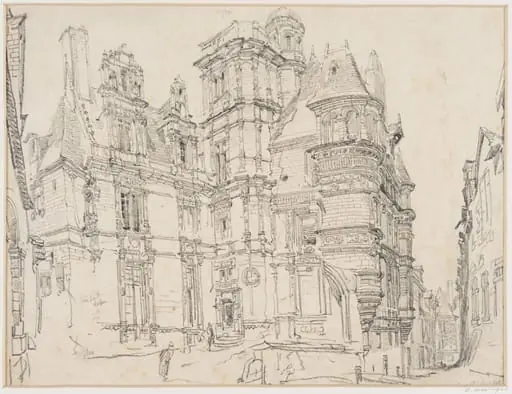 Angers-Maison duc D'Anjou
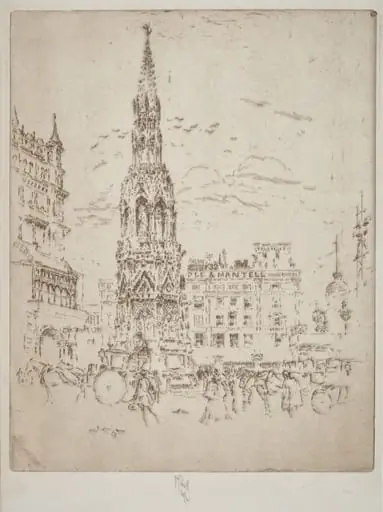 The Elinor Cross, in Front of Charing Cross Railway Station
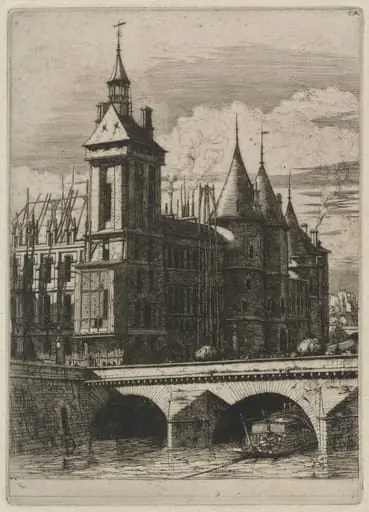 La Tour de l'Horloge, Paris (The Clock Tower, Paris)
 The Woolworth Building
 The Woolworth Building