Artwork
The Bower
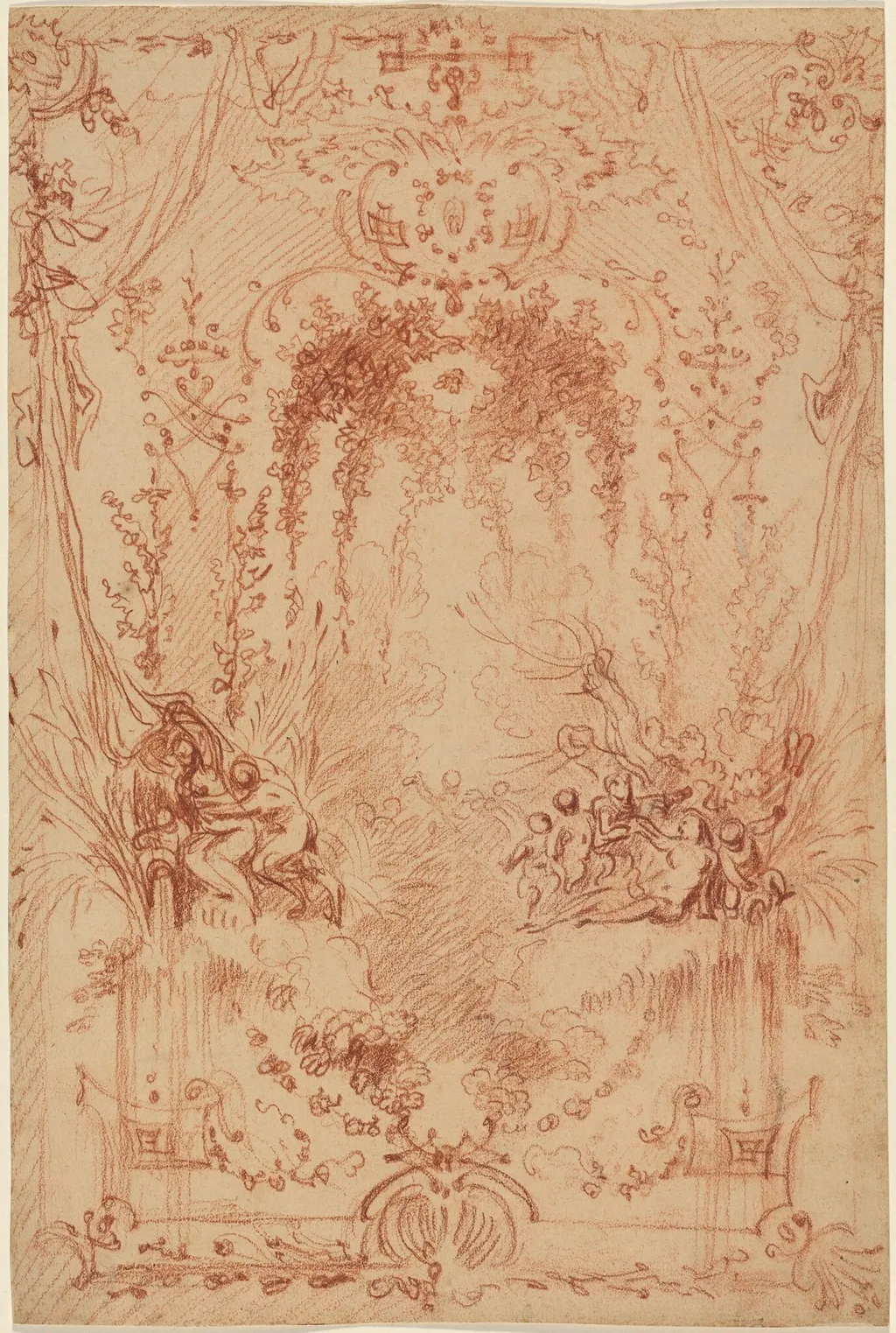
The Bower is a chalk drawing by the Baroque artist Jean Antoine Watteau. It dates from 1716 and is held in the collection of the National Gallery of Art.
About this work
Overview
Antoine Watteau’s drawing known as *The Bower* dates from around 1716. Executed in red chalk on laid paper, the work consists of a single sheet on which the artist builds a dense network of vines, branches and foliage. The composition is rendered in a loose, sketch‑like manner, leaving many areas open and suggesting an unfinished quality.
Subject & Meaning
Within the foliage, faint silhouettes resembling birds or small figures emerge, inviting speculation about hidden narratives or allegorical references.
The tangled vegetation dominates the surface, its sinuous lines forming a chaotic thicket that hints at a garden or arboreal shelter. Within the foliage, faint silhouettes resembling birds or small figures emerge, inviting speculation about hidden narratives or allegorical references. The ambiguous forms encourage viewers to contemplate the interplay between nature’s wildness and the suggestion of human presence.
Technique & Style
Watteau employed only red chalk, applying successive layers to develop tonal variation while preserving the medium’s translucency. The chalk is pressed into the textured laid paper, creating a subtle grain that interacts with the drawing’s soft edges. This method yields lines that are both delicate and assertive, characteristic of Watteau’s preparatory sketches where spontaneity outweighs precise finish.
History & Provenance
Created in the early eighteenth century, *The Bower* reflects Watteau’s practice of producing studies for larger compositions or decorative projects. The drawing’s provenance traces through private collections before entering a museum setting, where it has been catalogued among the artist’s red chalk works, illustrating his exploratory approach to drawing during his mature period.
Artist & collection
Artist
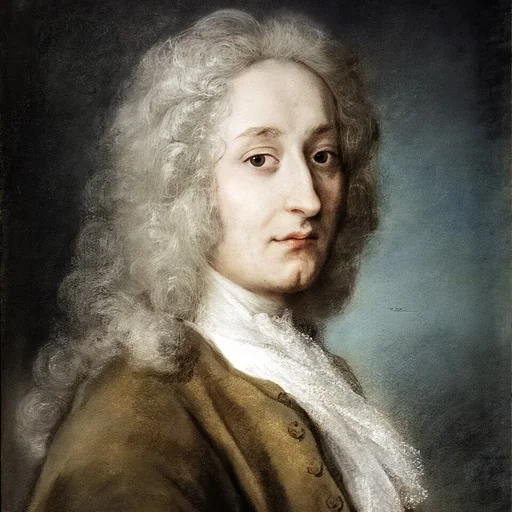
Jean-Antoine Watteau was a French painter and draughtsman whose brief career spurred the revival of interest in colour and movement, as seen in the tradition of Correggio and Rubens.

 The Flight into Egypt
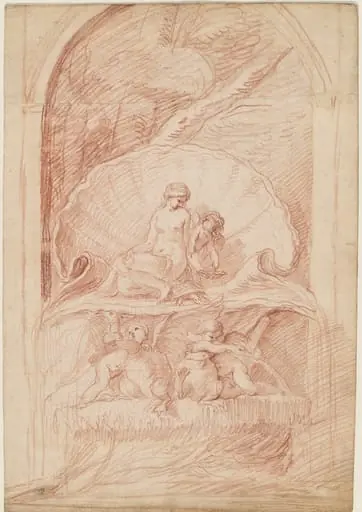 Rocaille Fountain with Venus, Amorini, and Swans
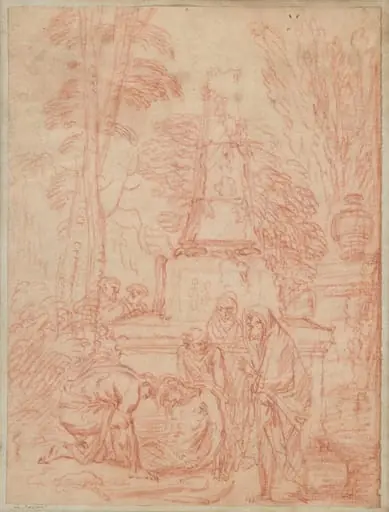 Tobit Burying the Dead
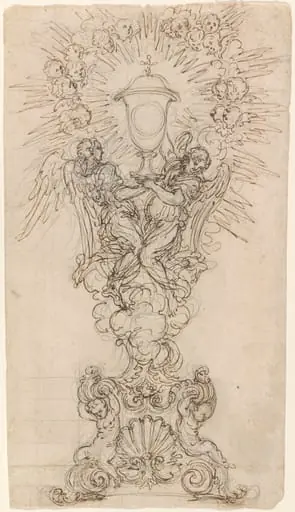 A Monstrance with Two Angels Supporting a Chalice
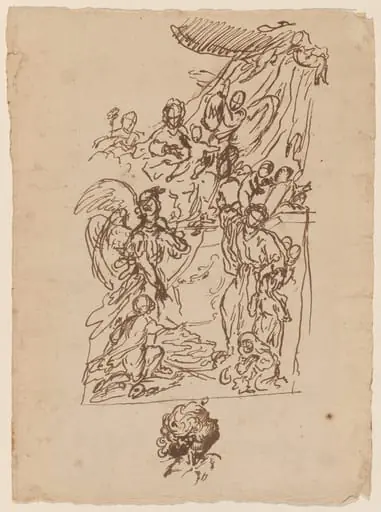 The Madonna and Child Seated on a Dais with Tobias and the Angel and a Saint Presenting Two Children
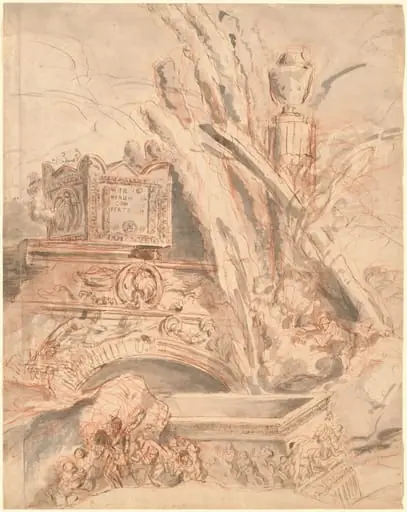 Grottesco with the Tomb of Nero
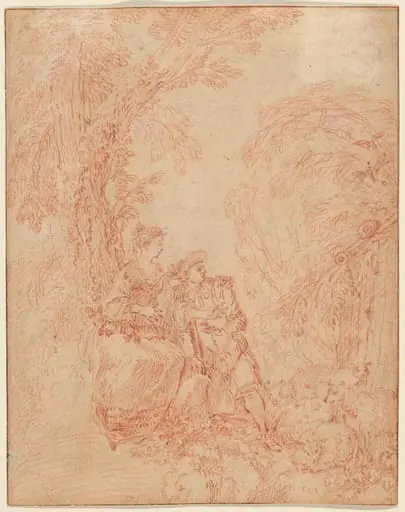 A Shepherd and Shepherdess Seated under a Tree
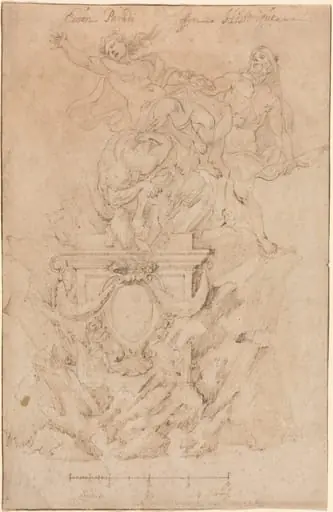 The Rescue of Deianeira
![Study for the "Madonna della Scodella" [recto], by Correggio](https://artifactworldgallery.com/img/correggio--study-for-the-madonna-della-scodella-recto--cec1475fbb0f2ca2-w320.webp) Study for the "Madonna della Scodella" [recto]
Study for the "Madonna della Scodella" [recto]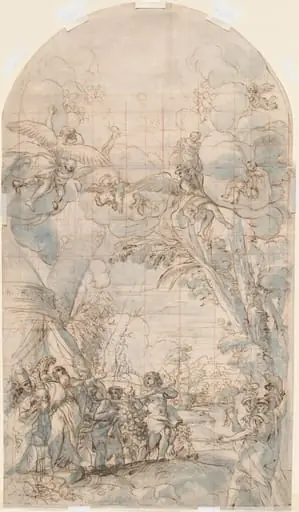 The Spies Returning from Canaan