Artwork
Study for the "Madonna della Scodella" [recto]
![Study for the "Madonna della Scodella" [recto], by Correggio, ink, 1524](https://artifactworldgallery.com/img/correggio--study-for-the-madonna-della-scodella-recto--cec1475fbb0f2ca2-w1024.webp)
Study for the "Madonna della Scodella" [recto] is an ink drawing by the Renaissance artist Correggio. It dates from 1524 and is held in the collection of the National Gallery of Art.
About this work
Overview
Executed in pen and brown ink with brown wash and red chalk on laid paper, it captures an early phase of compositional development.
This 1524 drawing by Correggio serves as a preparatory study for the painting Madonna della Scodella. Executed in pen and brown ink with brown wash and red chalk on laid paper, it captures an early phase of compositional development. The medium’s immediacy reveals the artist’s process of exploring form and gesture before committing to the final oil work. Its intimate scale and fluid execution reflect the function of such studies in Renaissance studio practice.
Subject & Meaning
The scene depicts the Virgin Mary holding the infant Christ, while a kneeling figure—likely Saint Joseph or a donor—reaches toward them. The composition centers on a moment of tender connection, framed by a large tree and a sky filled with soft, rounded clouds. The figures’ gestures suggest devotion and intimacy, aligning with devotional themes common in Parma’s religious art of the period. The drawing prioritizes emotional resonance over narrative detail.
Technique & Style
Correggio employed loose, rapid strokes in ink and red chalk to define forms, layered with subtle brown washes to suggest volume and shadow. The blending of media allowed him to test light effects and spatial relationships without fixed lines. His handling of chiaroscuro is understated yet effective, using tonal gradations to model flesh and fabric. The sketch’s spontaneity reveals a focus on movement and gesture rather than polished finish.
History & Provenance
Created in 1524 during Correggio’s time in Parma, the drawing is part of a series of studies linked to the Madonna della Scodella, commissioned for a private chapel. It remained in the artist’s possession until his death, later entering private collections before being acquired by a major European museum. Its survival is notable, as many preparatory drawings from this period were discarded or lost.
Context
This study emerged within the Parma school’s flourishing artistic environment, where artists like Correggio blended classical harmony with expressive naturalism. While contemporaries emphasized clarity and balance, Correggio favored dynamic poses and atmospheric depth. His use of sketching to refine composition anticipated later Baroque practices, distinguishing his work from more rigidly planned Renaissance approaches.
Legacy
The drawing exemplifies Correggio’s role in shifting Renaissance draftsmanship toward greater fluidity and emotional immediacy. Its emphasis on gesture and light influenced later artists exploring movement and intimacy in religious subjects. Though not a finished work, it preserves the creative pulse behind his painted compositions and remains a key document in understanding his transition from sketch to altar piece.
Artist & collection

Artist
Antonio Allegri da Correggio (August 1489 – 5 March 1534), usually known as just Correggio (, also UK: , US: , Italian: ), was an Italian Renaissance painter who was the foremost painter of the Parma school of the High…

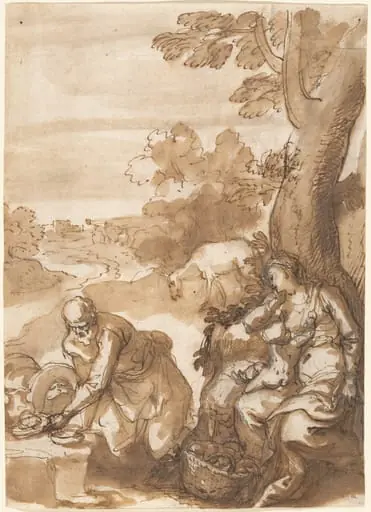 Rest on the Flight into Egypt
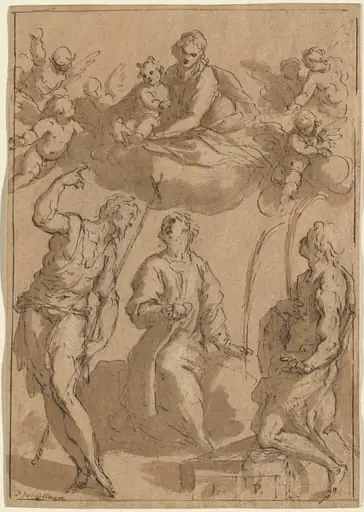 Madonna and Child in Glory with Saints John the Baptist, Stephen, and Lawrence
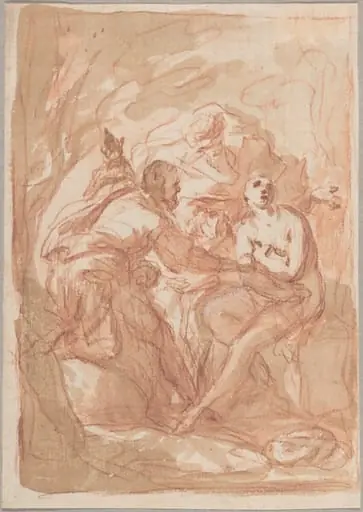 Susanna and the Elders
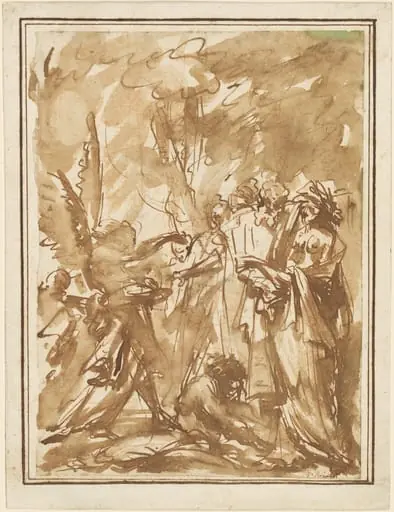 Scherzo with Antique Figures
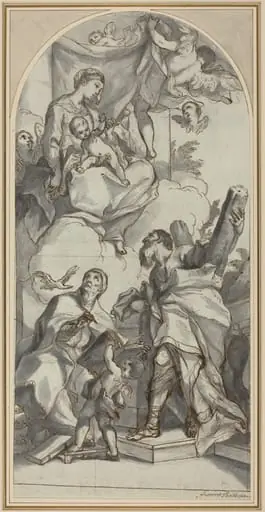 The Madonna and Child in Glory with Saints Gregory the Great and Andrew
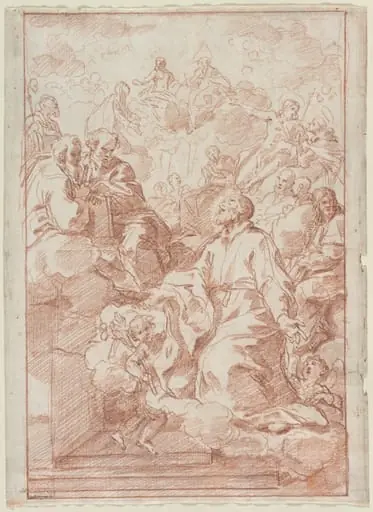 Vision of St. Philip Neri
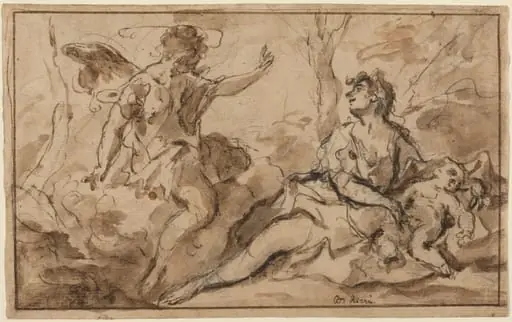 The Angel Appearing to Hagar and Ishmael
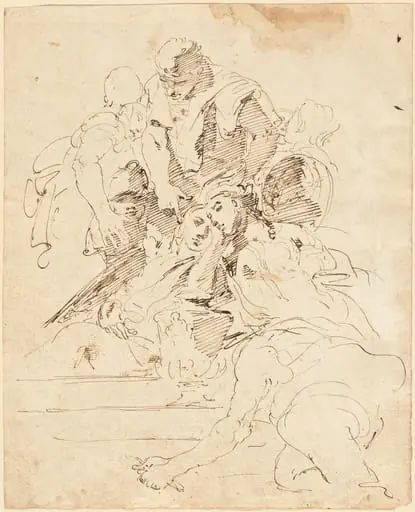 Classical Figures Gathered around an Urn
 The Birth of the Virgin
 The Madonna and Child in Glory Adored by Saints
 Ruth and Boaz (recto)
 Untitled