Artwork
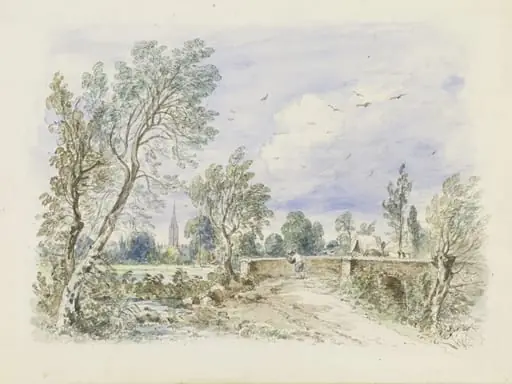
A Drover with Sheep, a Church Beyond
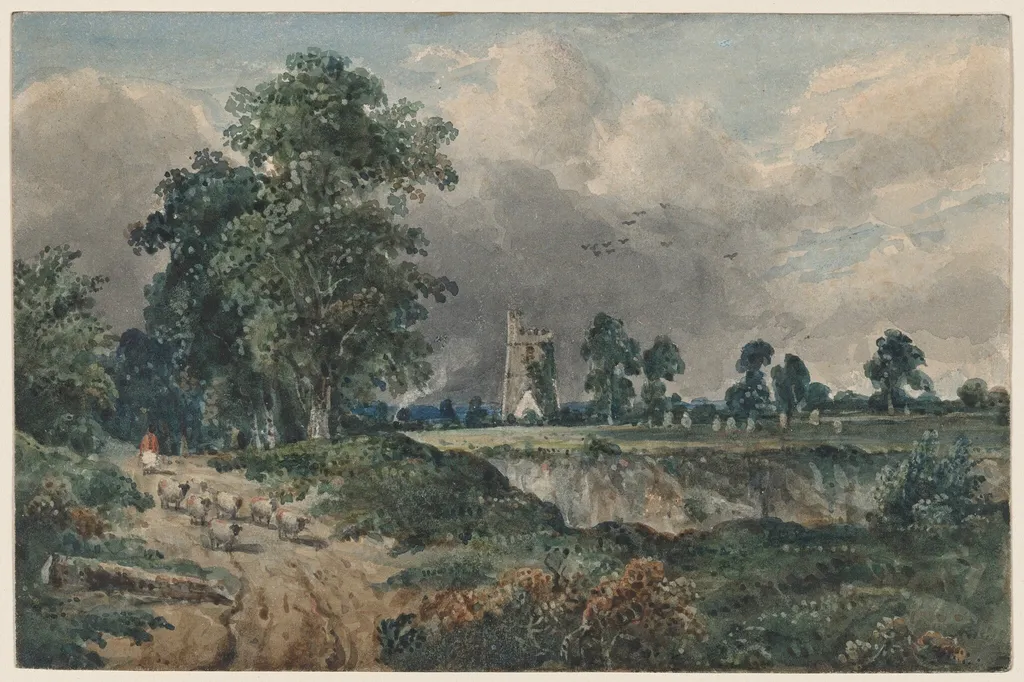
A Drover with Sheep, a Church Beyond is a watercolor drawing by the Romanticist artist Frederick William Watts. It dates from 1846 and is held in the collection of the National Gallery of Art.
About this work
Overview
A Drover with Sheep, a Church Beyond is a watercolor and graphite drawing, heightened with white gouache, created by Frederick William Watts in 1846. The work is part of the collection at the National Gallery of Art in Washington.
Subject & Meaning
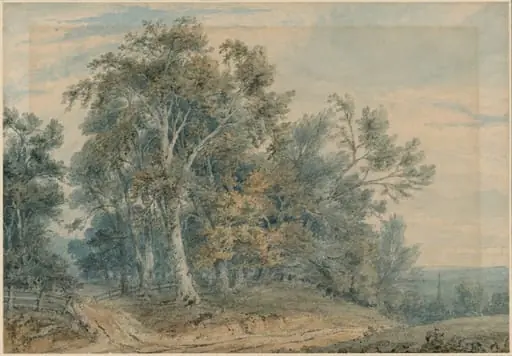
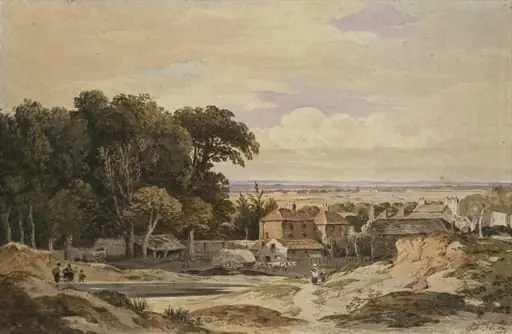
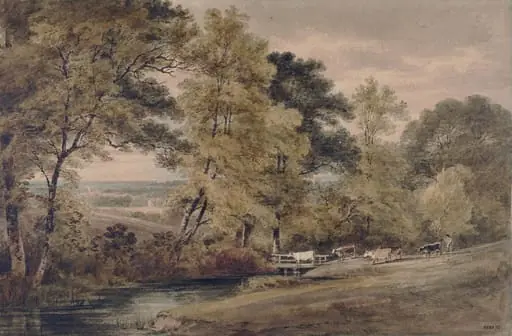
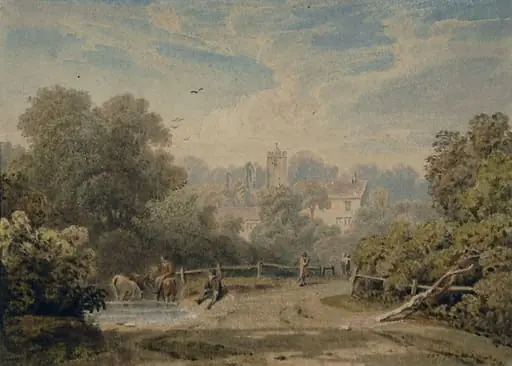
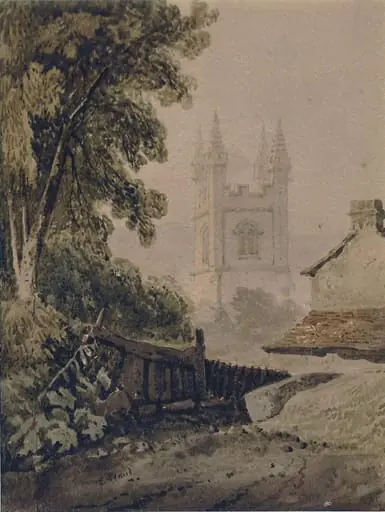
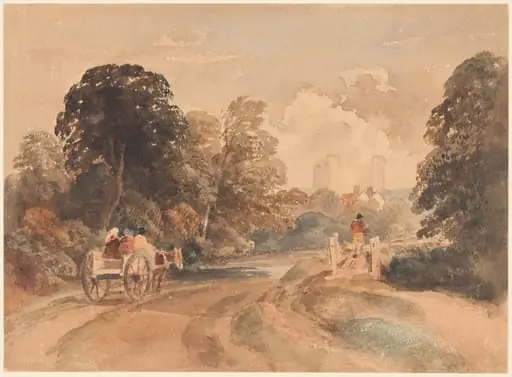
The drawing depicts a serene rural landscape with a drover, sheep, and a distant stone church tower. The composition conveys a sense of peacefulness, with the church adding a subtle layer of historical depth to the natural scene.
Technique & Style
Watts employed loose, light brushstrokes in watercolor, combined with graphite and strategic highlights of white gouache, to achieve a dreamy, soft effect. This technique emphasizes the play of light, particularly in the fluffy clouds and the textured depiction of foliage and sheep's wool.
History & Provenance
Created in 1846, the work is now held in the permanent collection of the National Gallery of Art, Washington, though specific details of its provenance prior to acquisition are not provided here.
Context
The use of watercolor and gouache highlights aligns with 19th-century landscape painting practices, where artists often sought to capture the ephemeral qualities of natural light and atmosphere. The dreamy quality may also reflect the Romantic era's emphasis on serene, idyllic landscapes.
Legacy
While specific influences or direct artistic lineage are not detailed here, the piece contributes to the broader tradition of 19th-century watercolor landscape painting, valued for its technical approach to capturing light and its portrayal of a tranquil, historicized countryside.
Own this work as a print
Artist & collection