Artwork
Landscape
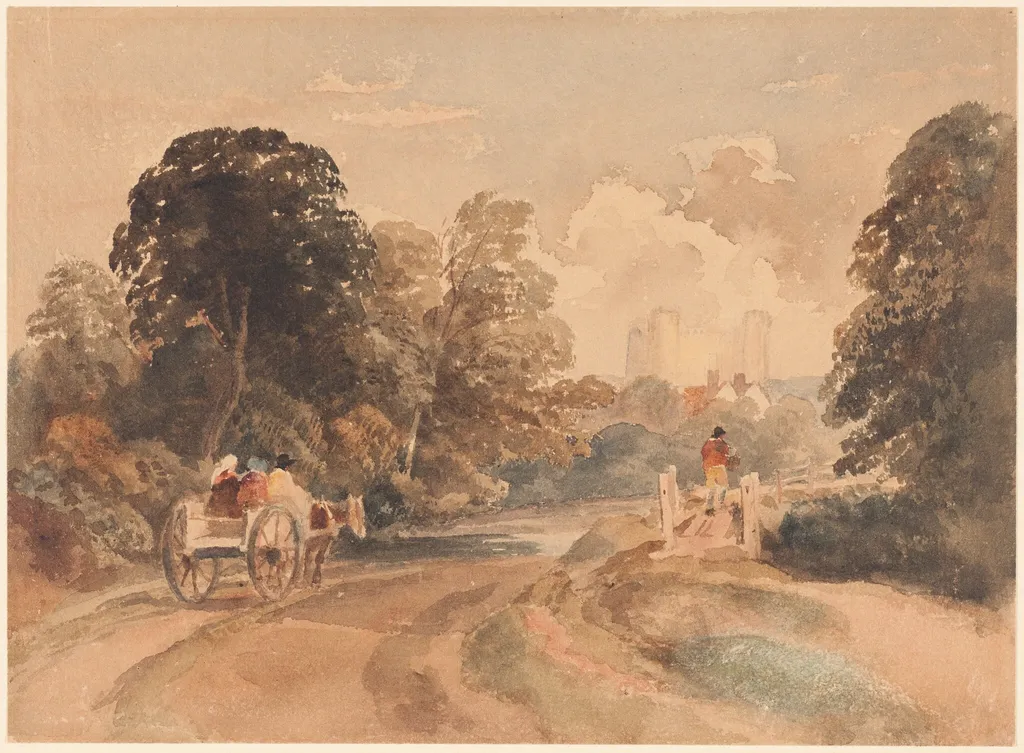
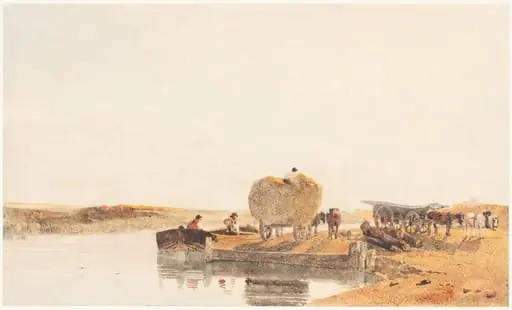
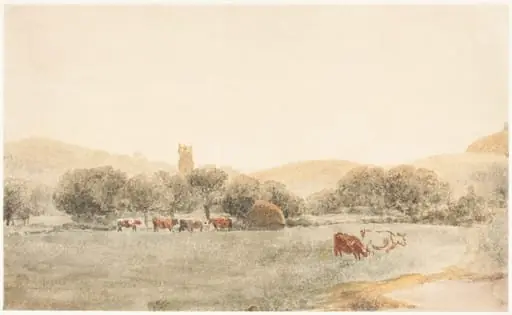
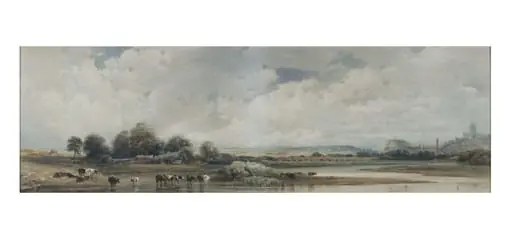
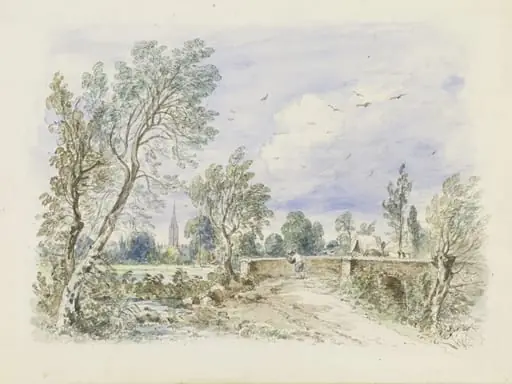
Landscape is a watercolor drawing by the Romanticist artist Peter De Wint. It dates from 1816 and is held in the collection of the National Gallery of Art.
About this work
Overview
Painted in 1816, this watercolor landscape is the work of English artist Peter De Wint. Executed on paper, it exemplifies his dedication to capturing the English countryside with quiet precision. The medium’s transparency and fluidity allowed De Wint to convey subtle shifts in light and atmosphere, characteristic of his approach to topographical realism.
Subject & Meaning
The scene depicts a rural English vista, likely from the Midlands or Lincolnshire, with rolling fields, scattered trees, and a distant horizon. There is no human presence, emphasizing the tranquility and enduring character of the land. The composition reflects a contemplative engagement with nature, rooted in the tradition of topographical drawing rather than romantic idealization.
Technique & Style
De Wint employed a restrained watercolor technique, layering thin washes to build tone and texture without heavy outlines. His brushwork is deliberate yet fluid, using wet-on-dry methods to define forms like foliage and distant hills. The palette is muted, dominated by earth tones and soft greens, reinforcing the work’s observational integrity and calm rhythm.
History & Provenance
Created during a period when watercolor was gaining recognition as a serious medium, this piece belongs to De Wint’s early mature phase. It likely originated from his travels through rural England, possibly as part of a series of studies. The work remained in private hands for much of the 19th century before entering institutional collections.
Context
In the early 1800s, British artists increasingly turned to watercolor for landscape studies, moving away from oil’s dominance. De Wint was part of a generation that elevated the medium through disciplined observation. His work aligned with the growing interest in regional topography and the natural environment, distinct from the dramatic sublime favored by contemporaries like Turner.
Legacy
De Wint’s watercolors, including this one, contributed to the formal acceptance of watercolor as a legitimate artistic medium in Britain. His emphasis on quiet observation influenced later topographical artists and helped shape the aesthetic of English landscape drawing in the 19th century, leaving a quiet but enduring mark on the tradition.
Own this work as a print
Artist & collection


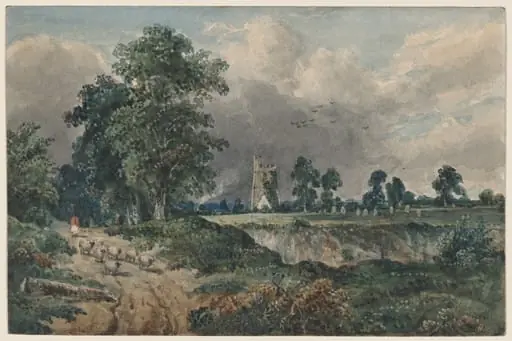 A Drover with Sheep, a Church Beyond
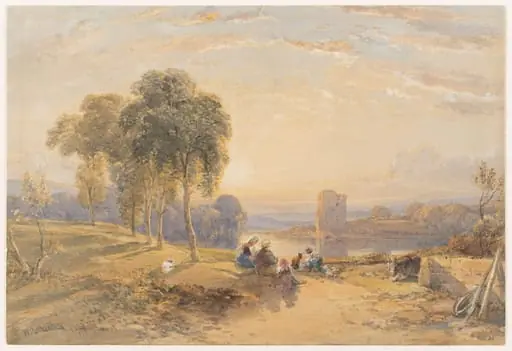 Landscape : Evening
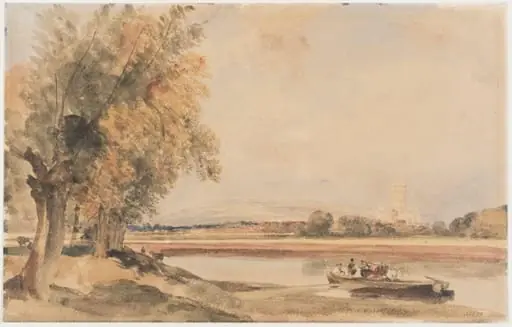 Ferry on the Severn, near Tewkesbury
 Trees, Rustic Bridge, etc
 The River Thames and Windsor Castle
 Landscape with wagon and cattle
 Lincoln Cathedral from the Castle Moat
 On the Bure, near Aylsham, Norfolk
 Crowhurst near Hastings
 View near Little Bushey
 Stowe: a church in the distance, seen amid trees
 Milford Bridge, with a distant view of Salisbury