Artwork
Untitled
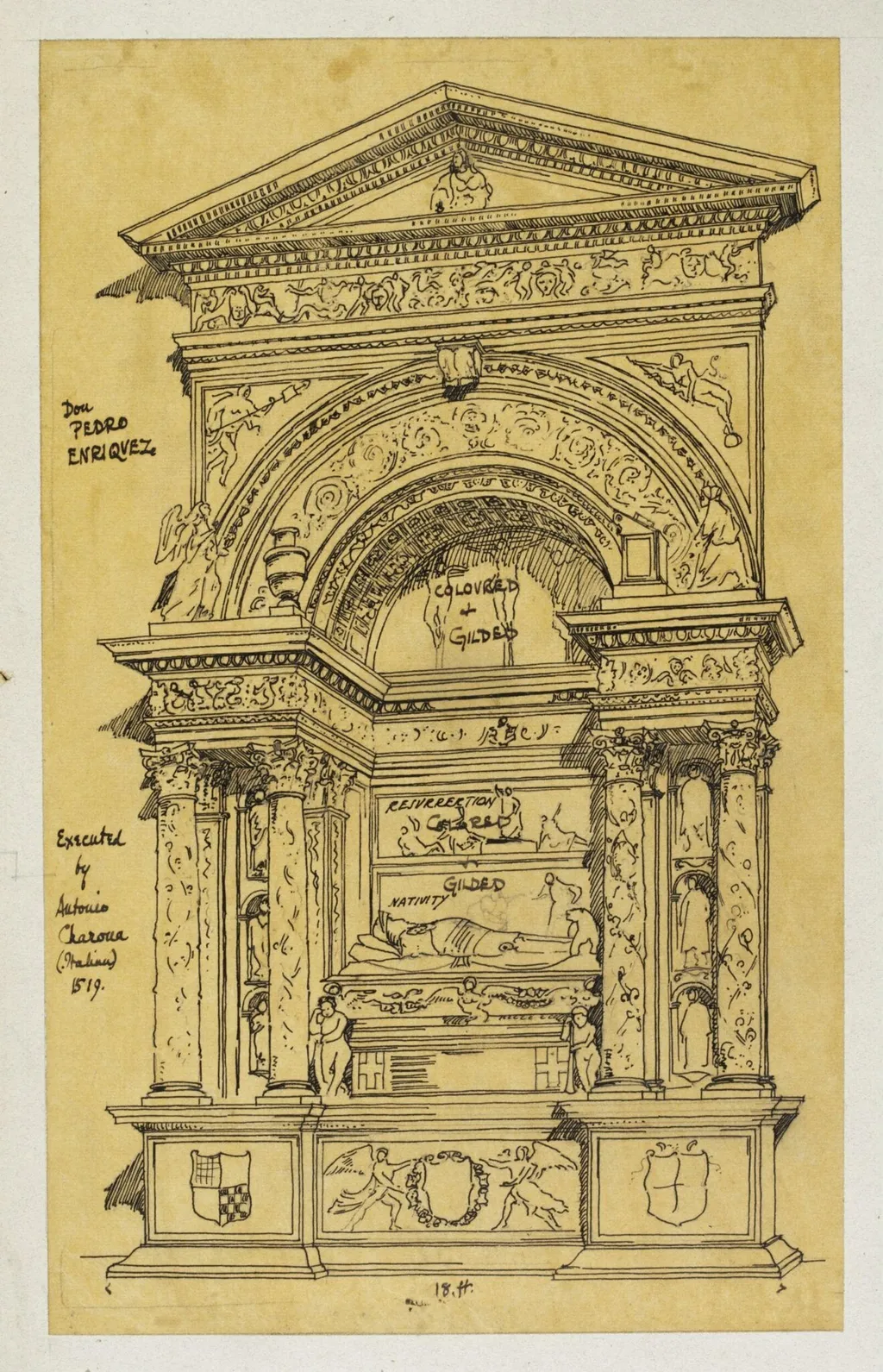
Untitled is a drawing by the Impressionist artist Bernard H. Esq. Webb. It dates from 1873 and is held in the collection of the Victoria and Albert Museum. This is a preparatory drawing for a funerary monument, executed in ink and possibly wash, with annotations indicating intended finishes.
About this work
Overview
This is a preparatory drawing for a funerary monument, executed in ink and possibly wash, with annotations indicating intended finishes.
This is a preparatory drawing for a funerary monument, executed in ink and possibly wash, with annotations indicating intended finishes. The composition centers on a structured tomb form, suggesting it was designed as a blueprint for a real architectural commission rather than a standalone artwork. Annotations such as 'coloured & gilded' and 'Resurrection' point to its functional purpose in guiding craftsmen.
Subject & Meaning
The central figure lies recumbent, representing the deceased, framed within a niche that evokes both solemnity and spiritual hope. Above, a triangular pediment with small figures and ornamental swirls alludes to divine ascent. The inclusion of 'Resurrection' signals a Christian theological intent, aligning the monument with beliefs in afterlife and redemption, common in 19th-century memorial design.
Technique & Style
Rendered with precise linework and minimal shading, the drawing reflects a draftsperson’s approach—clear contours define architectural elements without finish. Decorative motifs like shields, columns, and scrollwork are outlined but not fully detailed, indicating stages of development. Annotations in script guide future execution, revealing a working method common in studio practices of the period.
History & Provenance
The drawing likely originated in a British workshop active in the mid- to late-1800s, possibly connected to ecclesiastical or aristocratic commissions. Its survival suggests it was retained in an artist’s archive or studio collection. Similar sketches are held in the Victoria and Albert Museum, indicating a broader tradition of documented memorial designs from this era.
Context
During the Victorian era, elaborate tombs became popular among the affluent, blending Gothic revival aesthetics with personal symbolism. Architects and designers often produced detailed drawings for approval before construction. This piece reflects that practice, where visual planning was essential to coordinate sculptors, gilders, and masons in executing complex commemorative structures.
Legacy
As a functional document rather than a finished work, this drawing preserves the process behind memorial art of its time. It offers insight into how religious, aesthetic, and technical concerns were negotiated in design. Such sketches remain valuable for understanding the collaborative nature of 19th-century funerary art and the transition from concept to stone.
Artist & collection
Artist
This artist left a small paper trail: three drawings filed by date, each labeled simply Untitled and made between 1873 and 1919.

 Amiens Cathedral
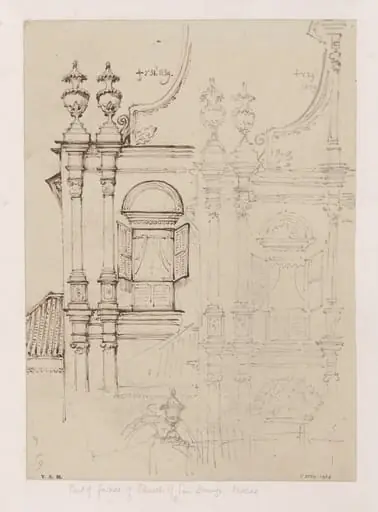 The church of S. Domingos, Macau
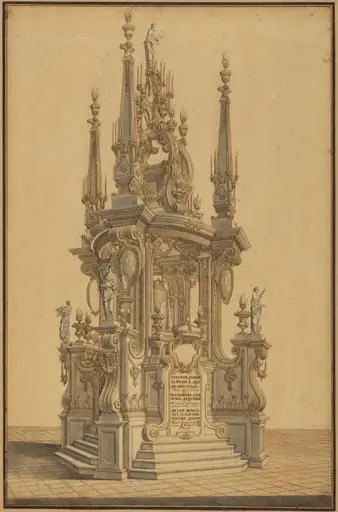 Magnificent Catafalque in Honor of John III, King of Poland
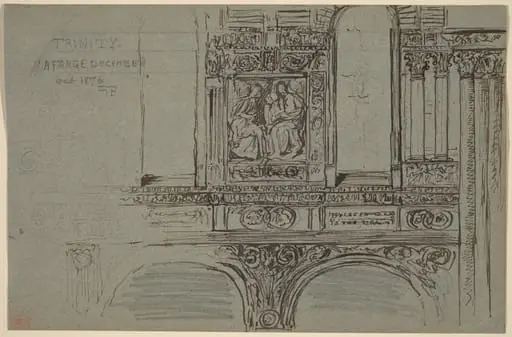 Trinity Church, Boston (nave) - Mural Study
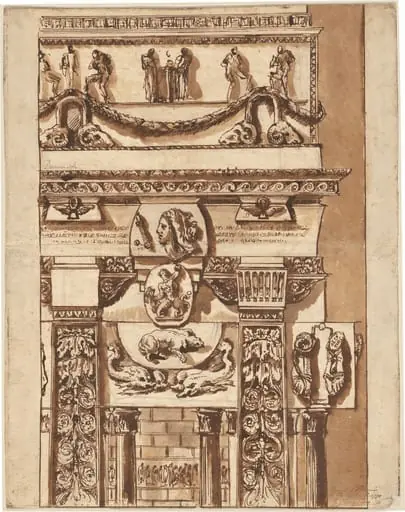 Fantasy of a Façade with Bizarre Ornaments
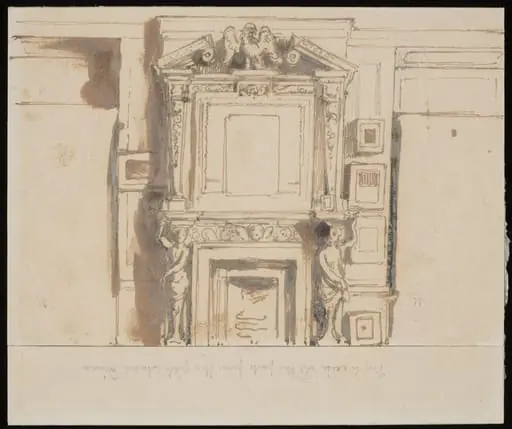 Ornamental Fireplace
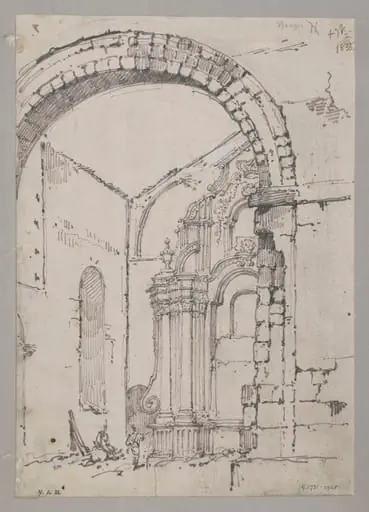 Large archway in the centre nave of St. Paul's Church, Macao, after it was burnt (December 1835)
![Palatial Mantelpiece with Mercury and Hope [recto], by Austrian 16th Century](https://artifactworldgallery.com/img/austrian-16th-century--palatial-mantelpiece-with-mercury-and-hope-recto--35fcb50c5d0e2044-w320.webp) Palatial Mantelpiece with Mercury and Hope [recto]
Palatial Mantelpiece with Mercury and Hope [recto]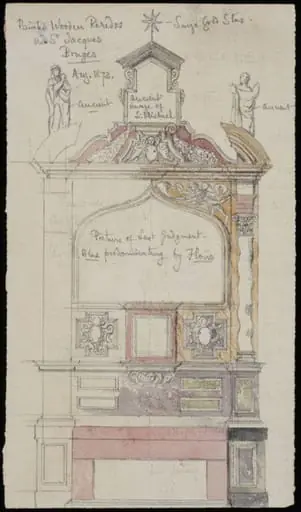 Reredos, fonts, a pulpit and monuments
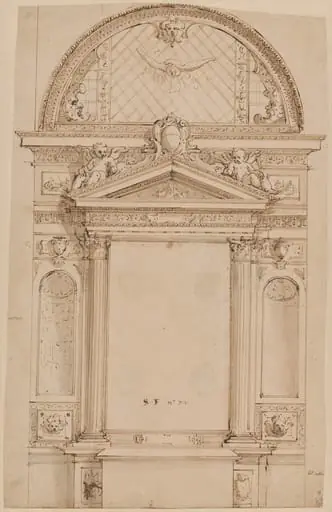 Design for an Altar
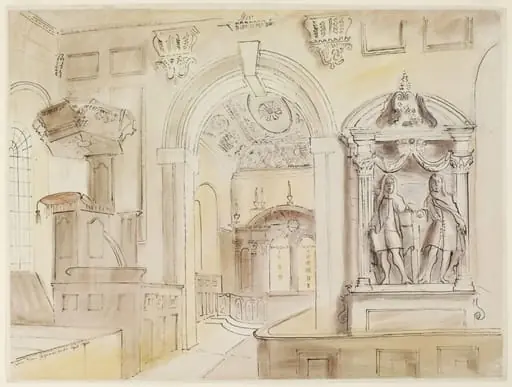 Interior of St. Peter's Church, Gayhurst
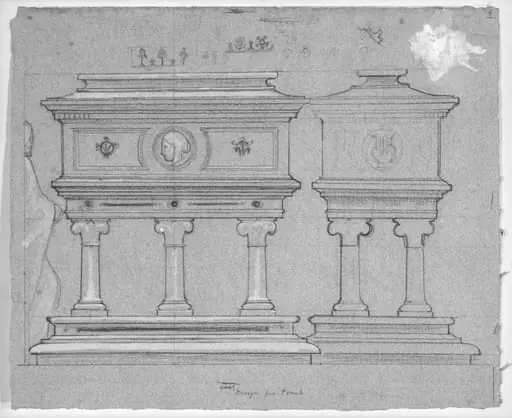 Studies for Mrs Browning's Tomb at Florence, side and end elevation with some small details of ornament