Artwork
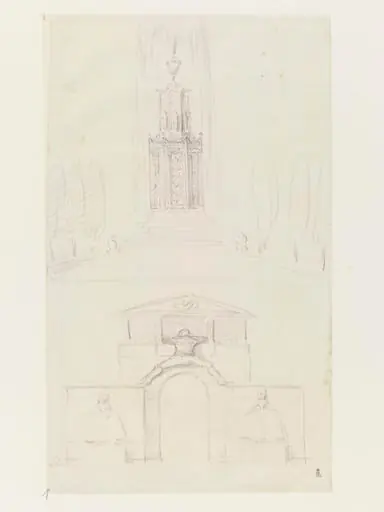
Studies for Mrs Browning's Tomb at Florence, side and end elevation with some small details of ornament
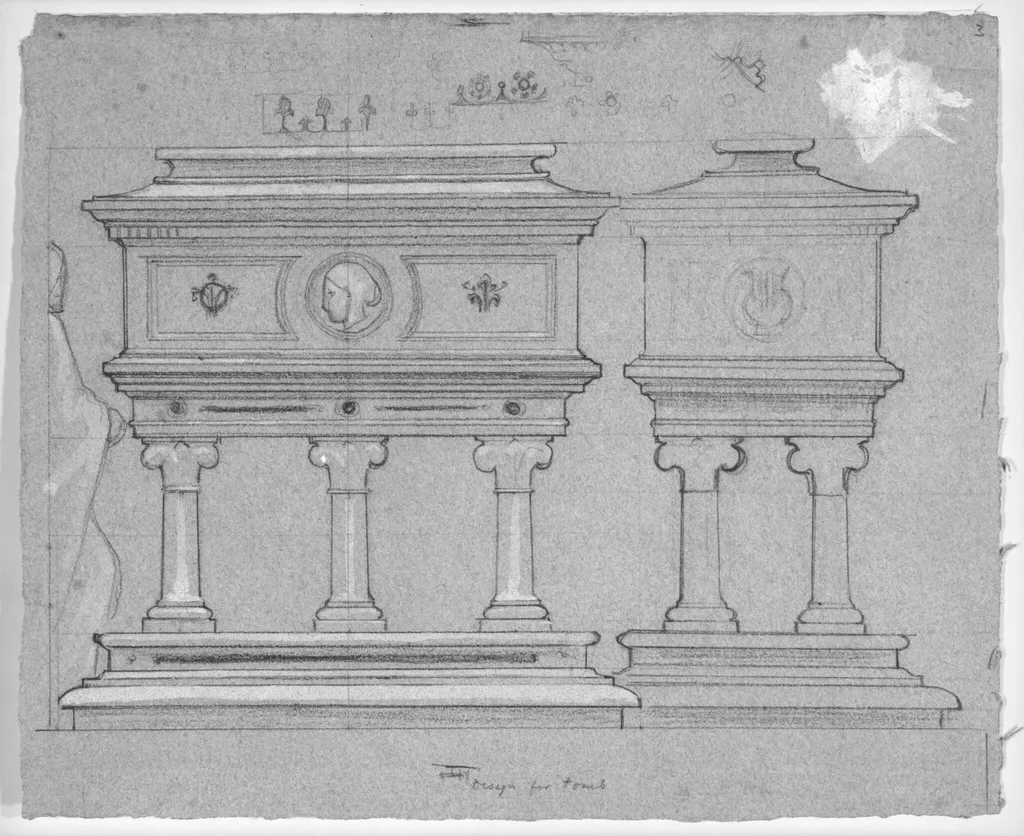
Studies for Mrs Browning's Tomb at Florence, side and end elevation with some small details of ornament is a drawing by the Impressionist artist Frederic, Lord Leighton. It dates from 1861 and is held in the collection of the Victoria and Albert Museum.
About this work
Overview
It features two orthogonal views—side and end elevations—along with minor ornamental details.
This pencil drawing by Frederic Leighton, dated around 1861, presents architectural studies for a funerary monument intended for the poet Elizabeth Barrett Browning. It features two orthogonal views—side and end elevations—along with minor ornamental details. Executed in light, fluid strokes, the work reflects a preliminary stage in design development, capturing structural proportions and decorative elements before final execution.
Subject & Meaning
The tomb was conceived as a memorial to Elizabeth Barrett Browning, who died in Florence in 1861. Leighton’s design incorporates classical motifs—columns, a flat entablature, and a central medallion—suggesting timeless dignity. The inclusion of a face within the medallion and subtle floral patterns implies a quiet reverence, aligning the monument with Victorian ideals of mourning and poetic legacy rather than overt grandeur.
Technique & Style
Leighton rendered the design in delicate pencil, using loose, rapid lines to define forms without heavy shading. Smudges and faint erasures reveal an exploratory process, emphasizing the drawing’s function as a working sketch. Ornamental details like wreaths and leaf motifs are rendered with precision in the margins, indicating careful attention to decorative harmony despite the overall spontaneity of the composition.
History & Provenance
The drawing was created shortly after Barrett Browning’s death, during Leighton’s early engagement with commemorative architecture. It remained in the artist’s possession until his death in 1896, after which it entered the Victoria and Albert Museum’s collection as part of his bequest. The sketch is one of several related studies preserved there, documenting his evolving approach to funerary design.
Context
In the 1860s, British artists increasingly turned to classical forms for memorials, blending archaeological accuracy with emotional restraint. Leighton, influenced by his travels in Italy and his association with the Pre-Raphaelite circle, sought to elevate domestic commemoration through architectural elegance. This drawing reflects a broader cultural moment in which poetry and sculpture converged in public and private mourning practices.
Legacy
Though the tomb was never built, the drawing remains a significant record of Leighton’s architectural thinking and his personal response to Barrett Browning’s legacy. It illustrates how artists of the period engaged with literary figures beyond portraiture, using design as a form of intellectual and emotional tribute. The sketch continues to inform scholarly understanding of Victorian memorial culture.
Artist & collection


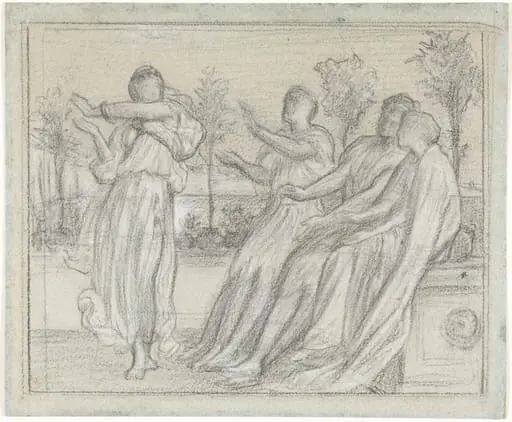 Study for "Greek Girl Dancing"
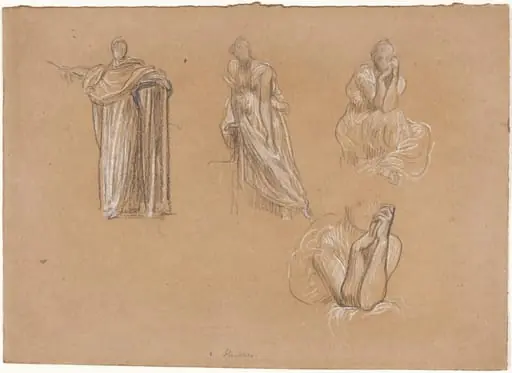 Figure Studies
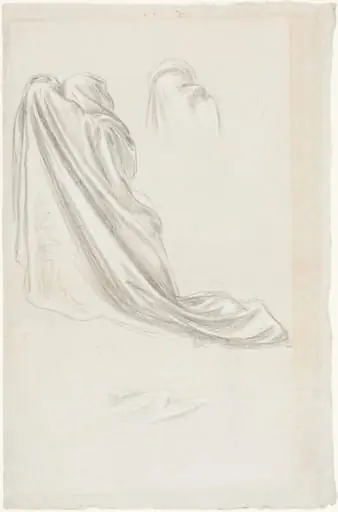 Study for "The Wise and Foolish Virgins"
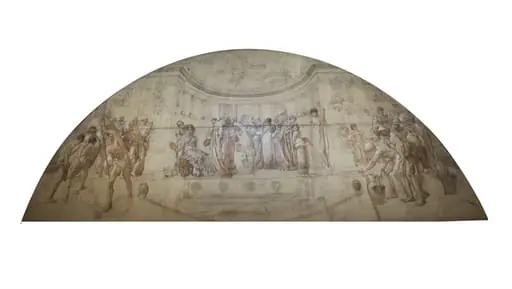 Full-scale monochrome cartoon for 'The Arts of Industry as Applied to Peace'
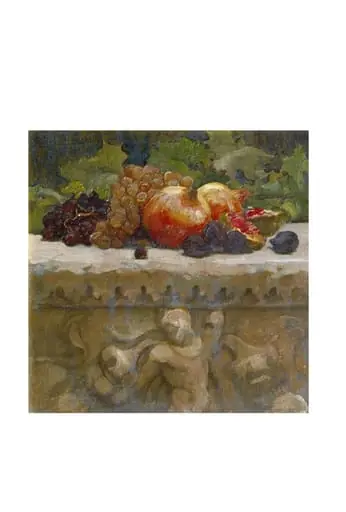 Still-life study of fruit on a marble sarcophagus, used as a preparatory study for <i>Clytie</i>
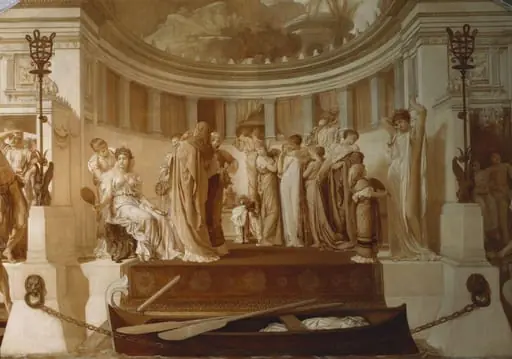 Half-size monochrome cartoon for the spirit fresco 'The Arts of Industry as Applied to Peace'
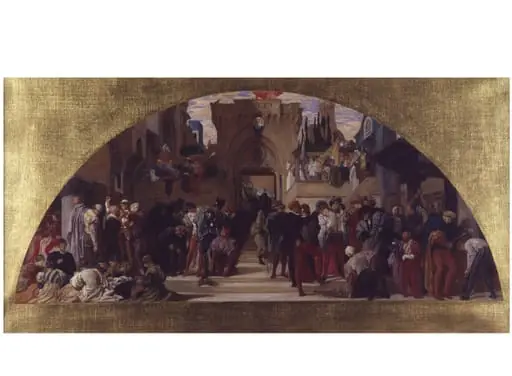 Colour sketch for spirit fresco 'The Arts of Industry as Applied to War'
 Nicola Pisano: design for a mosaic in the Museum (the 'Kensington Valhalla')
 Nouveaux Desseins de Pieds de Tables et de Vases et Consoles de sculpture en bois Inventes par le sieur Pineau sculpteur
 Untitled
 Design for Breakfront
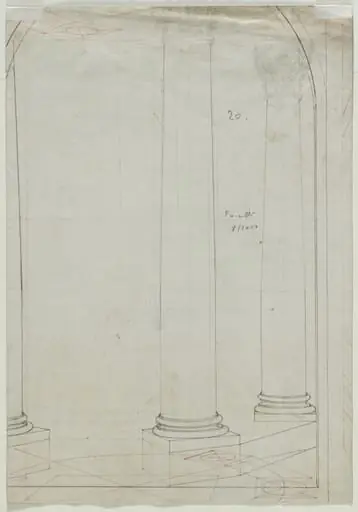 Architectural Drawing of Columns (verso)
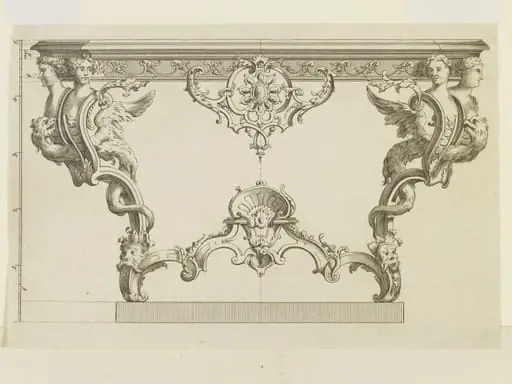 Nouveaux Desseins de Pieds de Tables et de Vases et Consoles de Sculpture
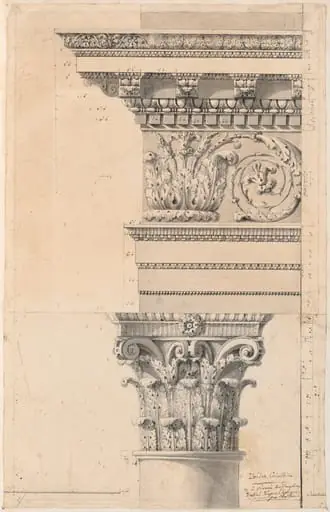 L'Ordre Corinthian
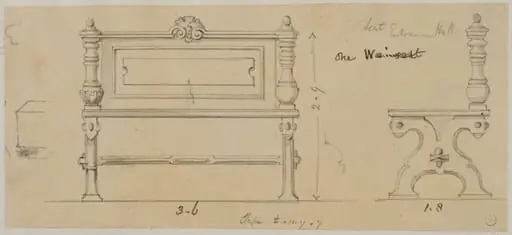 Designs for furniture for Kneller Hall, London
 Drawing attributed to Pugin
 Pencil drawing of a fountain and entryway
 Magnificent Catafalque in Honor of John III, King of Poland